Baranowski Ryan W, Braun Jessica L, Hockey Briana L, Yumol Jenalyn L, Geromella Mia S, Watson Colton J F, Kurgan Nigel, Messner Holt N, Whitley Kennedy C, MacNeil Adam J, Gauquelin-Koch Guillemette, Bertile Fabrice, Gittings William, Vandenboom Rene, Ward Wendy E, Fajardo Val A
Department of Kinesiology, Brock University, St. Catharines, ON, Canada.
Centre for Bone and Muscle Health, Brock University, St. Catharines, ON, Canada.
iScience. 2023 Jun 8;26(7):107047. doi: 10.1016/j.isci.2023.107047. eCollection 2023 Jul 21.
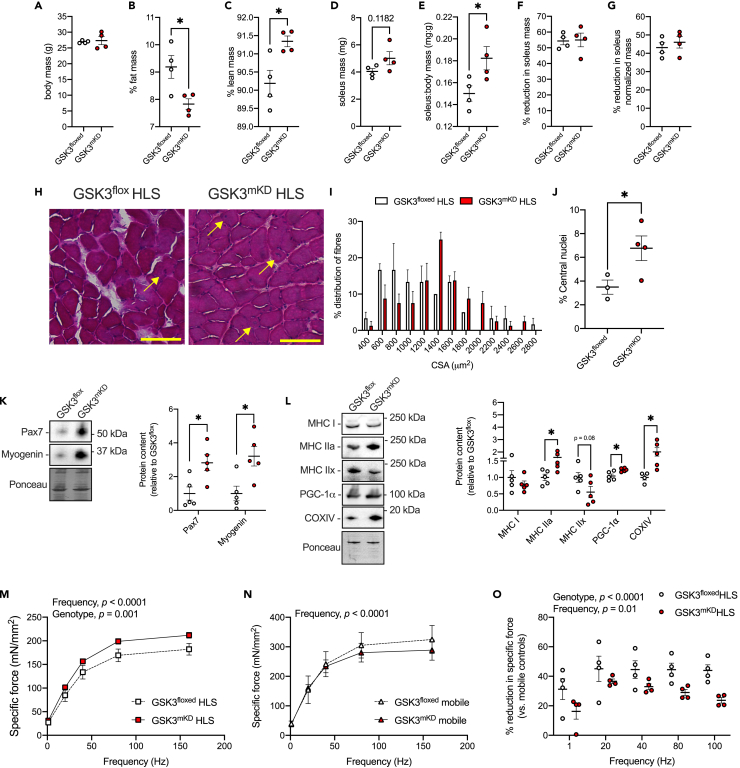
We examined the effects of ∼30 days of spaceflight on glycogen synthase kinase 3 (GSK3) content and inhibitory serine phosphorylation in murine muscle and bone samples from four separate missions (BION-M1, rodent research [RR]1, RR9, and RR18). Spaceflight reduced GSK3β content across all missions, whereas its serine phosphorylation was elevated with RR18 and BION-M1. The reduction in GSK3β was linked to the reduction in type IIA fibers commonly observed with spaceflight as these fibers are particularly enriched with GSK3. We then tested the effects of inhibiting GSK3 before this fiber type shift, and we demonstrate that muscle-specific knockdown increased muscle mass, preserved muscle strength, and promoted the oxidative fiber type with Earth-based hindlimb unloading. In bone, GSK3 activation was enhanced after spaceflight; and strikingly, muscle-specific deletion increased bone mineral density in response to hindlimb unloading. Thus, future studies should test the effects of GSK3 inhibition during spaceflight.
我们研究了约30天的太空飞行对来自四个不同任务(BION-M1、啮齿动物研究[RR]1、RR9和RR18)的小鼠肌肉和骨骼样本中糖原合酶激酶3(GSK3)含量及抑制性丝氨酸磷酸化的影响。太空飞行在所有任务中均降低了GSK3β含量,而其丝氨酸磷酸化在RR18和BION-M1任务中升高。GSK3β的减少与太空飞行中常见的IIA型纤维减少有关,因为这些纤维中特别富含GSK3。然后,我们在这种纤维类型转变之前测试了抑制GSK3的效果,结果表明,肌肉特异性敲低增加了肌肉质量,保留了肌肉力量,并在地面后肢卸载的情况下促进了氧化型纤维类型的形成。在骨骼方面,太空飞行后GSK3的激活增强;而且引人注目的是,肌肉特异性缺失会增加后肢卸载情况下的骨矿物质密度。因此,未来的研究应该测试太空飞行期间抑制GSK3的效果。