Woodman Marc, Salkeld Jo, Sharrock Connor, Alice Oborne C, Nguyen Hanna, Sobti Alka, Goodman Anna L
COVID team, Pharmacy & Infection, Guy's and St Thomas' NHS Foundation Trust, 1 Westminster Bridge Road, London SE1 7EH, United Kingdom.
Institute of Child Health, University College London, 30 Guilford St, London WC1N 1EH, United Kingdom.
Clin Infect Pract. 2023 Mar 31:100223. doi: 10.1016/j.clinpr.2023.100223.
The evidence around COVID-19 management is continuously evolving. Ensuring awareness of, and adherence to current guidance is challenging. As the second wave of COVID-19 emerged, we recognised the urgent need for better standardisation of patient care in the context of increasing patient load and acuity and the resulting redeployment of staff.
COVID-19 patients admitted to adult medical wards were identified via their positive swab results. An e-prescribing protocol which included five drugs was introduced and adherence to prescribing guidelines assessed via the electronic noting and prescribing system. Doctors' views of the prescribing protocol were assessed.
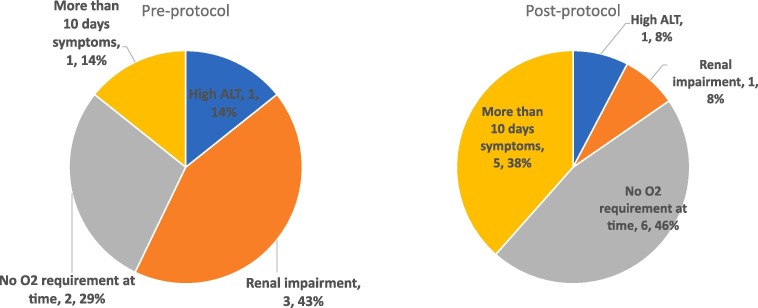
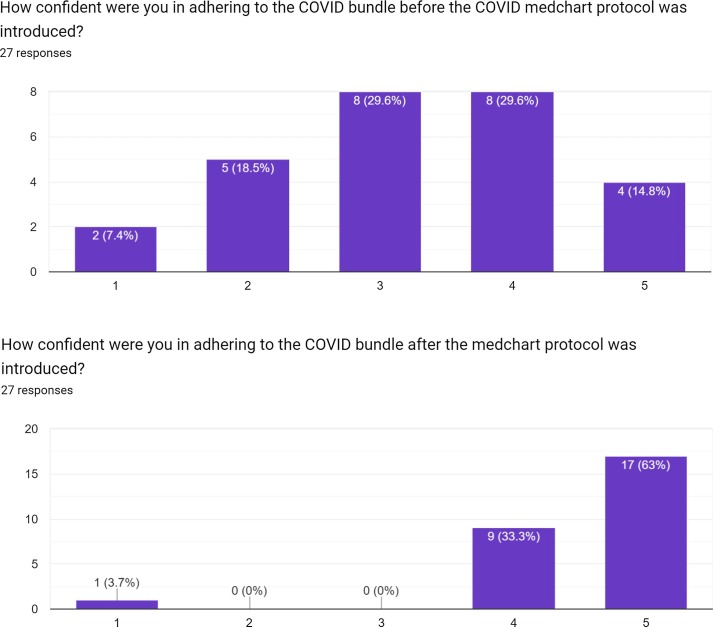
Following introduction of the protocol, adherence to guidelines improved. The proportion of patients either prescribed dexamethasone or with a valid contraindication documented increased from 85% to 97% and for remdesivir this increased from 60% to 79%. There was also significant improvement in the prescription of 'as required' insulin for patients on steroids (26% to 48%) and oxygen (43% to 79%).93% of doctors surveyed were aware of the e-prescribing protocol and 81% had used it. Confidence in adhering to the protocols increased from an average of 3.3 to 4.5 out of 5 and 93% of respondents agreed that the protocol was easy to use.
Overall, this demonstrates that electronic prescribing protocols can be effective in increasing adherence to guidelines and doctors felt this was a useful tool. This is especially important in a pandemic situation in which many doctors were redeployed outside of their usual specialties.
关于新冠肺炎管理的证据在不断演变。确保对当前指南的认识和遵循具有挑战性。随着新冠肺炎第二波疫情的出现,我们认识到在患者数量增加、病情加重以及工作人员因此重新调配的情况下,迫切需要更好地规范患者护理。
通过成人内科病房入院患者的拭子检测阳性结果来识别新冠肺炎患者。引入了一个包含五种药物的电子处方方案,并通过电子记录和处方系统评估对处方指南的遵循情况。评估了医生对该处方方案的看法。
引入该方案后,对指南的遵循情况有所改善。开具地塞米松或记录有有效禁忌证的患者比例从85%增至97%,瑞德西韦的这一比例从60%增至79%。对于使用类固醇的患者,“按需”开具胰岛素的比例(从26%增至48%)以及使用氧气的比例(从43%增至79%)也有显著改善。接受调查的医生中有93%知晓电子处方方案,81%使用过该方案。遵循方案的信心平均从5分制中的3.3分提高到4.5分,93%的受访者认为该方案易于使用。
总体而言,这表明电子处方方案可有效提高对指南的遵循情况,医生们认为这是一个有用的工具。这在大流行情况下尤为重要,因为许多医生被重新调配到其常规专业领域之外工作。