Division of Health Economics, German Cancer Research Center (DKFZ), Heidelberg, Germany.
Mannheim Medical Faculty, University of Heidelberg, Mannheim, Germany.
Patient. 2023 Sep;16(5):515-536. doi: 10.1007/s40271-023-00632-z. Epub 2023 Jun 27.
Multiple studies have indicated a socioeconomic impact of cancer and cancer care on patients and their families. Existing instruments designed to measure this impact lack consensus in their conceptualization of the issue. Further, various terminologies have been used in the literature (e.g., financial burden, financial hardship, financial stress) without clear definitions and consistent conceptual background. Based on a targeted review of existing models addressing the socioeconomic impact of cancer, our goal was to develop a comprehensive framework from a European perspective.
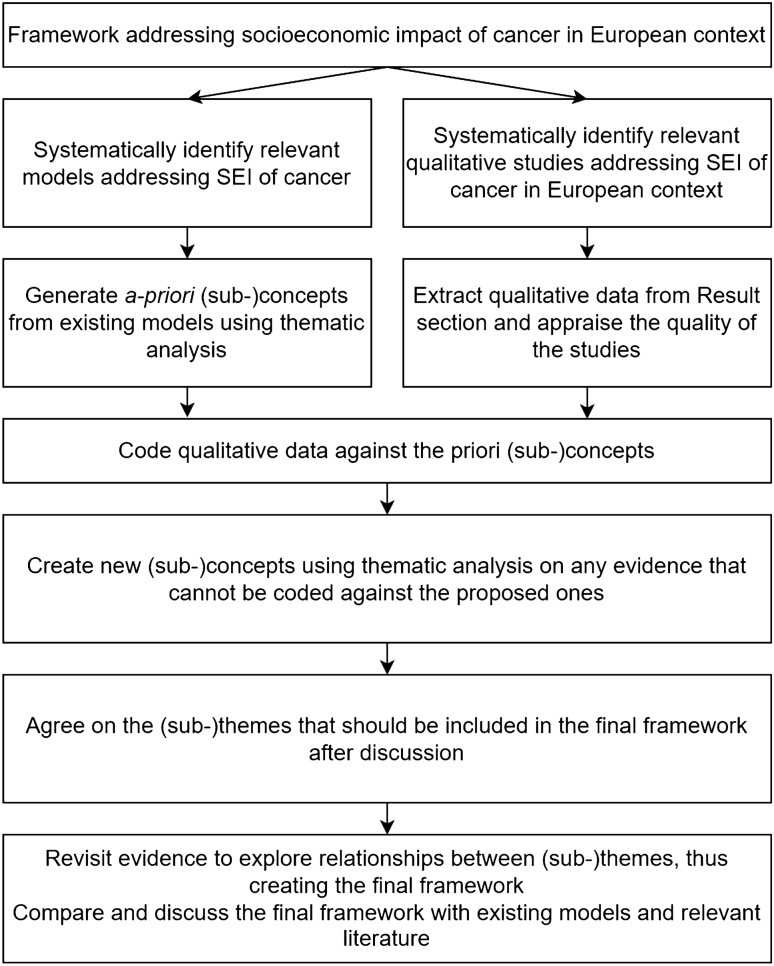
A 'best-fit' framework synthesis was applied. First, we systematically identified existing models to generate a priori concepts. Second, we systematically identified relevant European qualitative studies and coded their results against these a priori concepts. Inclusion and exclusion criteria were predefined and applied thoroughly in these processes. Thematic analysis and team discussions were applied to finalize the (sub)themes in our proposed conceptual framework. Third, we examined model structures and quotes from qualitative studies to explore relationships among (sub)themes. This process was repeated until no further change in (sub)themes and their relationships emerged.
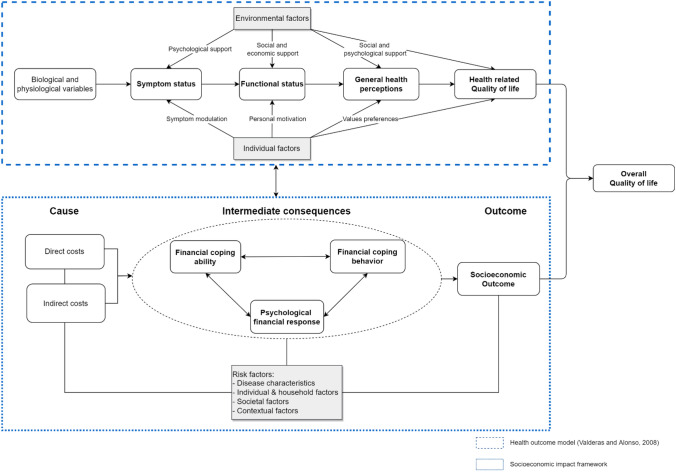
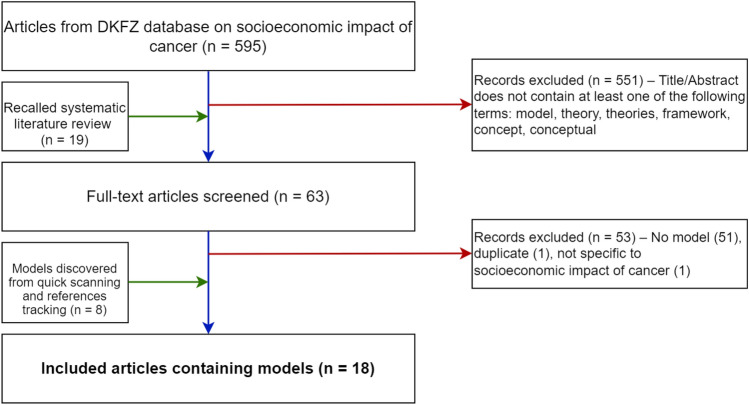
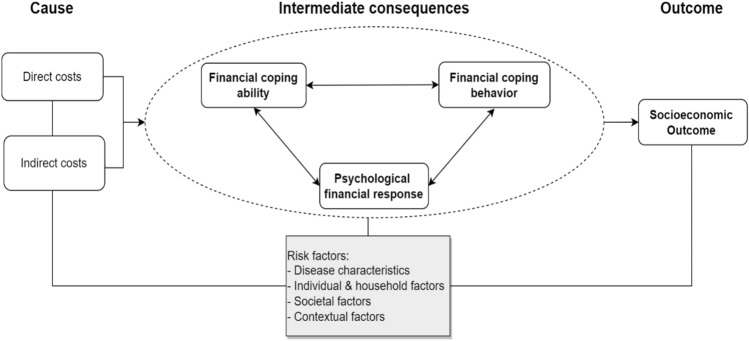
Eighteen studies containing conceptual models and seven qualitative studies were identified. Eight concepts and 20 sub-concepts were derived from the included models. After coding the included qualitative studies against the a priori concepts and following discussions among team members, seven themes and 15 sub-themes were included in our proposed conceptual framework. Based on the identified relationships, we categorized themes into four groups: causes, intermediate consequences, outcomes and risk factors.
We propose a Socioeconomic Impact Framework based on a targeted review and synthesis of existing models in the field and adapted to the European perspective. Our work contributes as an input to a European consensus project on socioeconomic impact research by an Organization European Cancer Institute (OECI) Task Force.
多项研究表明,癌症及其治疗对患者及其家庭具有社会经济影响。现有的旨在衡量这种影响的工具在概念上缺乏一致性。此外,文献中使用了各种术语(例如经济负担、经济困难、经济压力),但没有明确的定义和一致的概念背景。基于对现有癌症社会经济影响模型的针对性审查,我们的目标是从欧洲角度制定一个全面的框架。
采用“最佳拟合”框架综合法。首先,我们系统地确定了现有的模型,以生成先验概念。其次,我们系统地确定了相关的欧洲定性研究,并根据这些先验概念对其结果进行编码。纳入和排除标准在这些过程中进行了预先定义和严格应用。主题分析和团队讨论被应用于最终确定我们提出的概念框架中的(子)主题。第三,我们检查了模型结构和定性研究中的引语,以探索(子)主题之间的关系。这个过程一直重复,直到(子)主题及其关系不再发生变化。
确定了包含概念模型的 18 项研究和 7 项定性研究。从纳入的模型中得出了 8 个概念和 20 个子概念。在根据先验概念对纳入的定性研究进行编码并在团队成员之间进行讨论之后,我们提出的概念框架中包括了 7 个主题和 15 个子主题。根据确定的关系,我们将主题分为四组:原因、中间后果、结果和风险因素。
我们基于该领域现有模型的有针对性的审查和综合,提出了一个社会经济影响框架,并根据欧洲视角进行了调整。我们的工作为欧洲癌症研究所(OECI)工作组的一项关于社会经济影响研究的欧洲共识项目做出了贡献。