Operto Francesca Felicia, Viggiano Andrea, Perfetto Antonio, Citro Gabriella, Olivieri Miriam, Simone Valeria de, Bonuccelli Alice, Orsini Alessandro, Aiello Salvatore, Coppola Giangennaro, Pastorino Grazia Maria Giovanna
Child Neuropsychiatry Unit, Department of Medicine, Surgery and Dentistry, University of Salerno, 84081 Salerno, Italy.
Pediatric Neurology, Pediatric University Department, University of Pisa, 56126 Pisa, Italy.
Children (Basel). 2023 May 28;10(6):960. doi: 10.3390/children10060960.
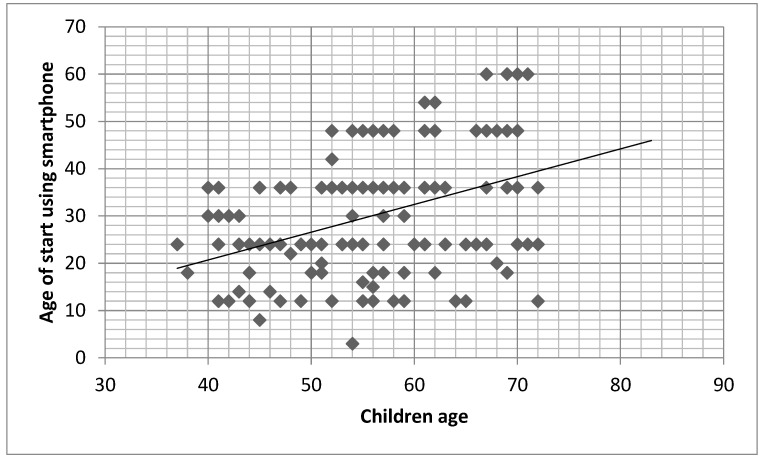
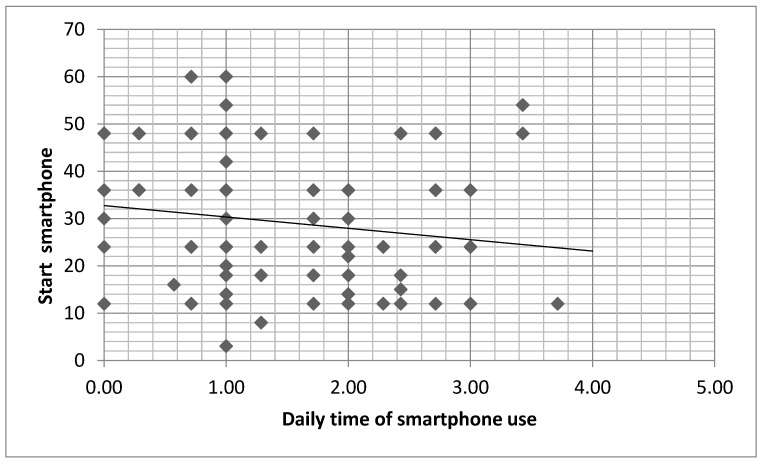
(1) Background: The principal aim of our research was to explore the relationship between digital devices use and fine motor skills in children aged three to six years and to explore the effect of some socio-demographic factors. (2) Methods: we enrolled 185 children aged between three to six years. The parents of all the participants fulfilled a questionnaire to explore the digital device use, and their children performed a standardized test to assess fine motor skills (APCM-2). We performed the Spearman correlation test to explore the relationship between different variables. (3) Results: the children spent an average of 3.08 ± 2.30 h/day on digital devices. We did not find a significant association between the time of use of digital devices and fine motor skills ( = 0.640; r = -0.036). The youngest children experienced digital tools earlier than older ones ( < 0.001; r = 0.424) and they were also the ones who used digital tools more time afterwards ( = 0.012; -0.202). The children who had working parents spent more time on digital devices ( = 0.028; r = 0.164/ = 0.037; r = 0.154) and used digital devices earlier ( = 0.023; r = 0.171). (4) Conclusions: This data suggest that it would be useful to monitor the use of digital tools, especially in the very first years of life. Future studies are needed to further explore this topic.
(1) 背景:我们研究的主要目的是探讨3至6岁儿童使用数字设备与精细运动技能之间的关系,并探讨一些社会人口学因素的影响。(2) 方法:我们招募了185名3至6岁的儿童。所有参与者的父母填写了一份问卷以探讨数字设备的使用情况,他们的孩子进行了一项标准化测试以评估精细运动技能(APCM - 2)。我们进行了Spearman相关性测试以探讨不同变量之间的关系。(3) 结果:孩子们平均每天花3.08±2.30小时使用数字设备。我们未发现数字设备使用时间与精细运动技能之间存在显著关联( = 0.640;r = -0.036)。最小的孩子比大一些的孩子更早接触数字工具( < 0.001;r = 0.424),并且他们也是之后使用数字工具时间更长的孩子( = 0.012; -0.202)。有工作的父母的孩子在数字设备上花费的时间更多( = 0.028;r = 0.164/ = 0.037;r = 0.154),并且更早使用数字设备( = 0.023;r = 0.171)。(4) 结论:这些数据表明监测数字工具的使用是有用的,尤其是在生命的最初几年。未来需要进一步研究来深入探讨这个话题。