Smirni Daniela, Garufo Elide, Di Falco Luca, Lavanco Gioacchino
Department of Psychology, Educational Science and Human Movement, University of Palermo, 90128 Palermo, Italy.
Pediatr Rep. 2021 Jul 14;13(3):401-415. doi: 10.3390/pediatric13030047.
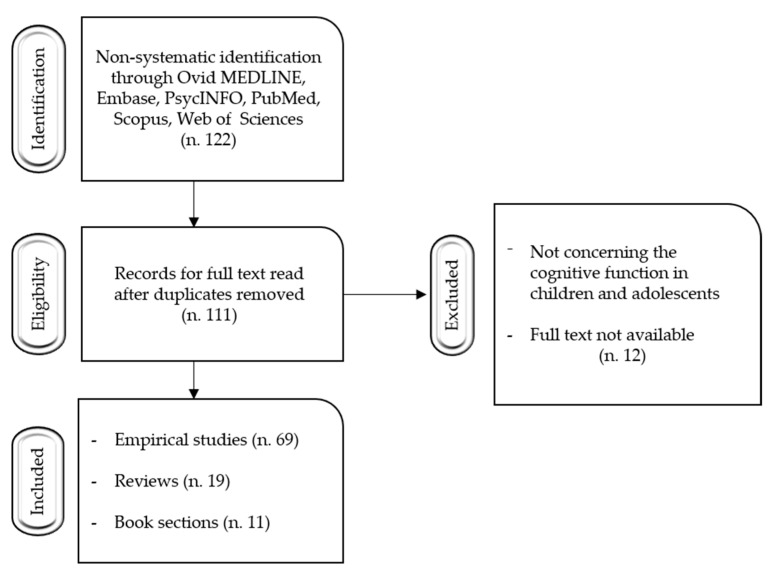
A growing number of children and adolescents play video games (VGs) for long amounts of time. The current outbreak of the Coronavirus pandemic has significantly reduced outdoor activities and direct interpersonal relationships. Therefore, a higher use of VGs can become the response to stress and fear of illness. VGs and their practical, academic, vocational and educational implications have become an issue of increasing interest for scholars, parents, teachers, pediatricians and youth public policy makers. The current systematic review aims to identify, in recent literature, the most relevant problems of the complex issue of playing VGs in children and adolescents in order to provide suggestions for the correct management of VG practice. The method used searches through standardized search operators using keywords related to video games and the link with cognition, cognitive control and behaviors adopted during the pandemic. Ninety-nine studies were reviewed and included, whereas twelve studies were excluded because they were educationally irrelevant. Any debate on the effectiveness of VGs cannot refer to a dichotomous approach, according to which VGs are rigidly 'good' or 'bad'. VGs should be approached in terms of complexity and differentiated by multiple dimensions interacting with each other.
越来越多的儿童和青少年长时间玩电子游戏(VG)。当前的冠状病毒大流行显著减少了户外活动和直接的人际关系。因此,更多地使用电子游戏可能成为应对压力和疾病恐惧的方式。电子游戏及其实际、学术、职业和教育意义已成为学者、家长、教师、儿科医生和青年公共政策制定者日益关注的问题。当前的系统评价旨在在近期文献中确定儿童和青少年玩电子游戏这一复杂问题中最相关的问题,以便为正确管理电子游戏实践提供建议。所使用的方法是通过标准化搜索运算符,使用与电子游戏以及与大流行期间所采用的认知、认知控制和行为的关联相关的关键词进行搜索。共审查并纳入了99项研究,而12项研究因与教育无关而被排除。关于电子游戏有效性的任何辩论都不能采用二分法,即认为电子游戏绝对“好”或“坏”。应从复杂性角度看待电子游戏,并按相互作用的多个维度进行区分。