Masalova Olga V, Lesnova Ekaterina I, Kalsin Vladimir A, Klimova Regina R, Fedorova Natalya E, Kozlov Vyacheslav V, Demidova Natalya A, Yurlov Kirill I, Konoplyannikov Mikhail A, Nikolaeva Tatyana N, Pronin Alexander V, Baklaushev Vladimir P, Kushch Alla A
Gamaleya National Research Center for Epidemiology and Microbiology, Ministry of Health of the Russian Federation, 123098 Moscow, Russia.
Federal Research Clinical Center of Specialized Medical Care and Medical Technologies, Federal Medical-Biological Agency of the Russian Federation, 115682 Moscow, Russia.
Biology (Basel). 2023 May 30;12(6):792. doi: 10.3390/biology12060792.
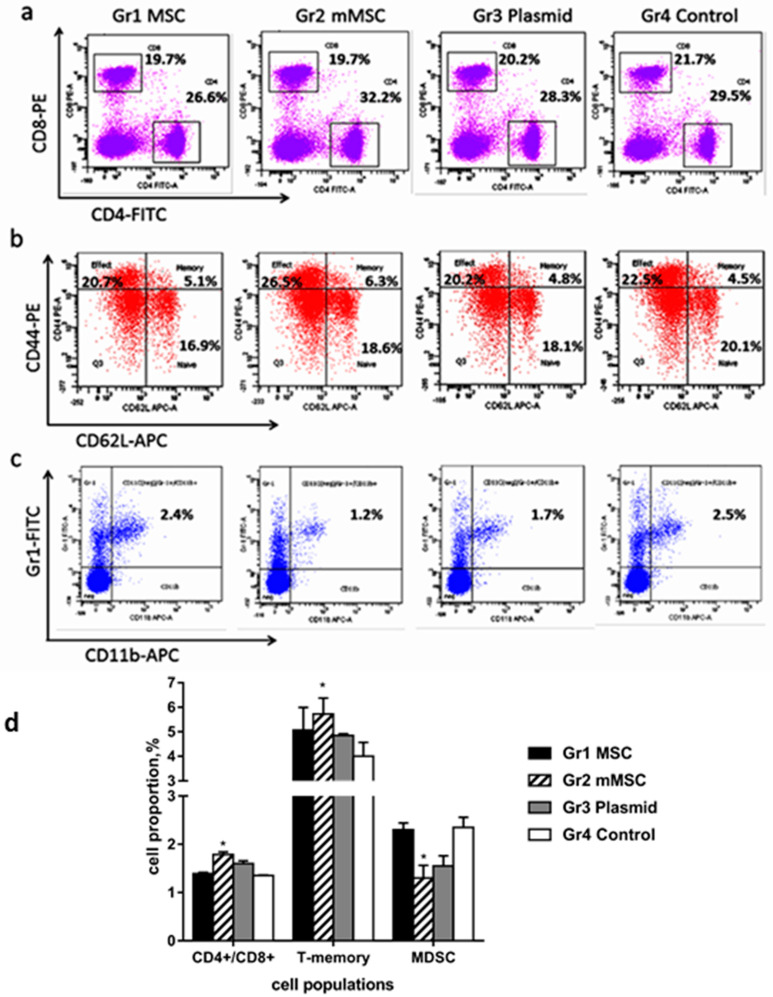
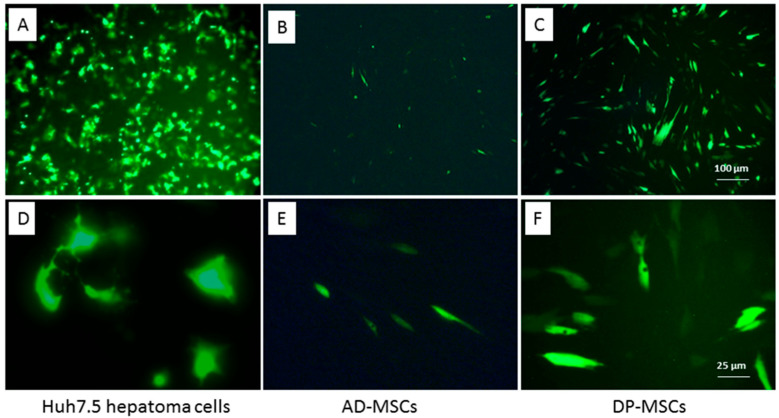
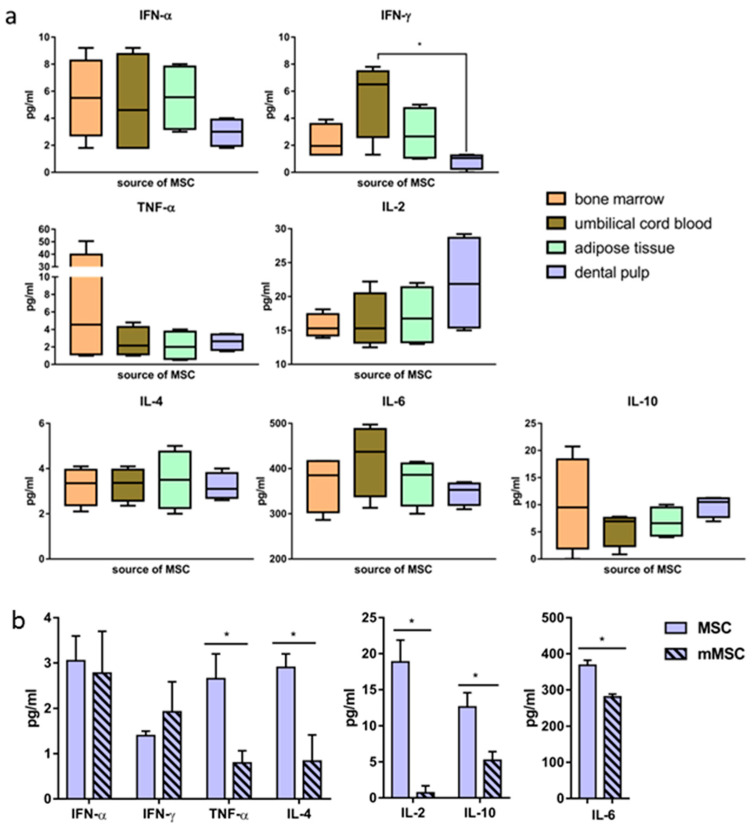
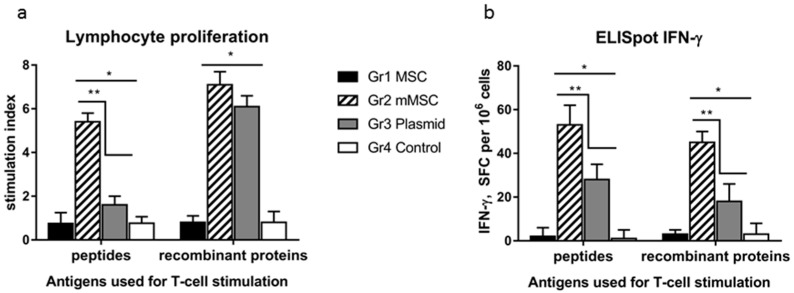
Hepatitis C virus (HCV) is one of the basic culprits behind chronic liver disease, which may result in cirrhosis and hepatocarcinoma. In spite of the extensive research conducted, a vaccine against HCV has not been yet created. We have obtained human mesenchymal stem cells (hMSCs) and used them for expressing the HCV NS5A protein as a model vaccination platform. Sixteen hMSC lines of a different origin were transfected with the pcNS5A-GFP plasmid to obtain genetically modified MSCs (mMSCs). The highest efficiency was obtained by the transfection of dental pulp MSCs. C57BL/6 mice were immunized intravenously with mMSCs, and the immune response was compared with the response to the pcNS5A-GFP plasmid, which was injected intramuscularly. It was shown that the antigen-specific lymphocyte proliferation and the number of IFN-γ-synthesizing cells were two to three times higher after the mMSC immunization compared to the DNA immunization. In addition, mMSCs induced more CD4+ memory T cells and an increase in the CD4+/CD8+ ratio. The results suggest that the immunostimulatory effect of mMSCs is associated with the switch of MSCs to the pro-inflammatory phenotype and a decrease in the proportion of myeloid derived suppressor cells. Thus, the possibility of using human mMSCs for the creation of a vaccine against HCV has been shown for the first time.
丙型肝炎病毒(HCV)是慢性肝病的主要病因之一,慢性肝病可能导致肝硬化和肝癌。尽管已经进行了广泛的研究,但尚未研制出针对HCV的疫苗。我们获取了人间充质干细胞(hMSCs),并将其用作表达HCV NS5A蛋白的模型疫苗接种平台。用pcNS5A-GFP质粒转染16种不同来源的hMSC系,以获得基因修饰的间充质干细胞(mMSCs)。牙髓间充质干细胞转染效率最高。将mMSCs静脉注射免疫C57BL/6小鼠,并将免疫反应与肌肉注射pcNS5A-GFP质粒后的反应进行比较。结果显示,与DNA免疫相比,mMSC免疫后抗原特异性淋巴细胞增殖和IFN-γ合成细胞数量高出两到三倍。此外,mMSCs诱导产生更多的CD4+记忆T细胞,且CD4+/CD8+比值增加。结果表明,mMSCs的免疫刺激作用与间充质干细胞向促炎表型的转变以及髓源性抑制细胞比例的降低有关。因此,首次证明了使用人mMSCs制备抗HCV疫苗的可能性。