Lim Bong Soon, Seok Ji Eun, Lim Chi Hong, Kim Gyung Soon, Shin Hyun Chul, Lee Chang Seok
Department of Bio & Environmental Technology, Seoul Women's University, Seoul 01797, Republic of Korea.
National Institute of Ecology, Seocheon 33657, Republic of Korea.
Biology (Basel). 2023 Jun 6;12(6):826. doi: 10.3390/biology12060826.
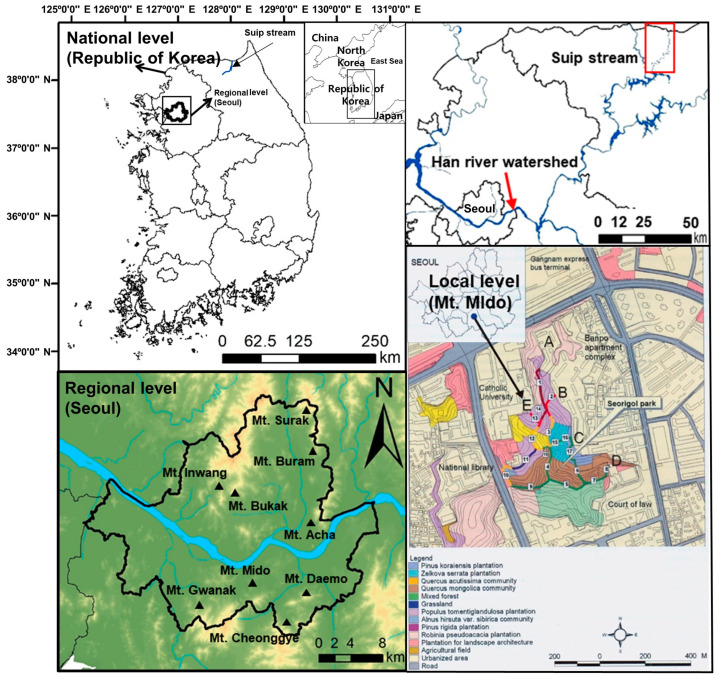
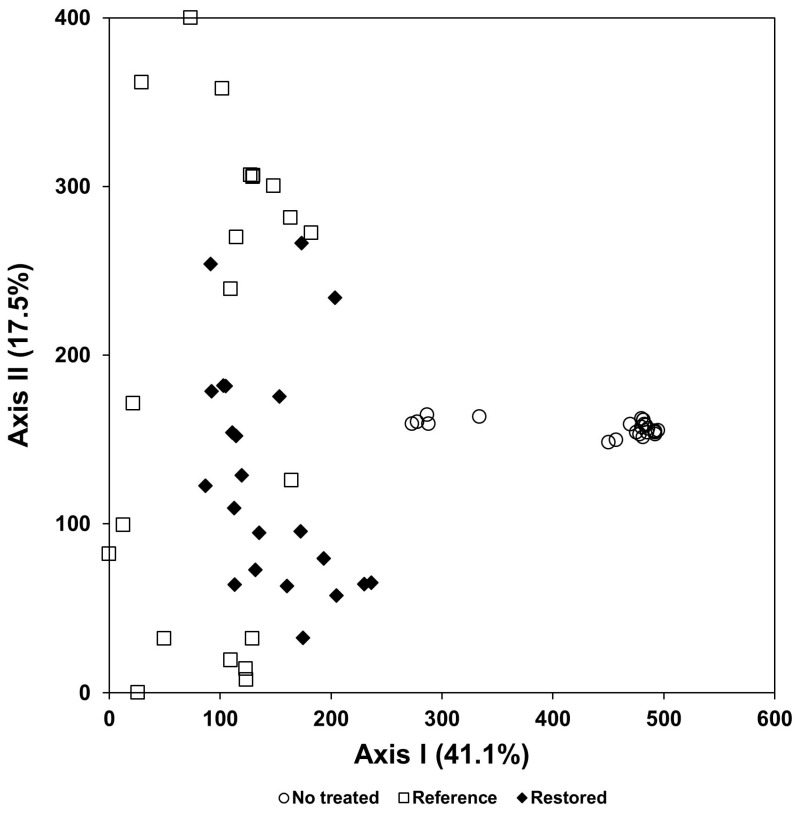
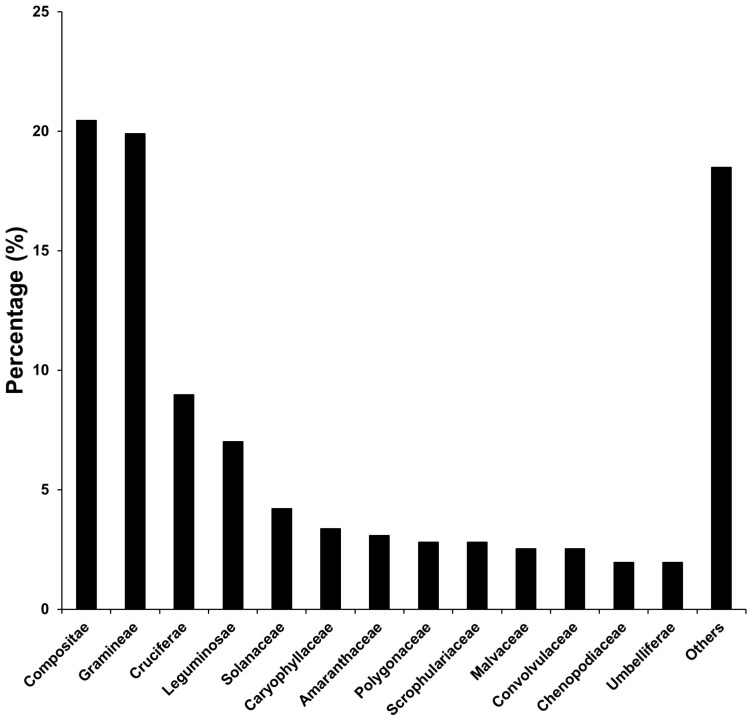
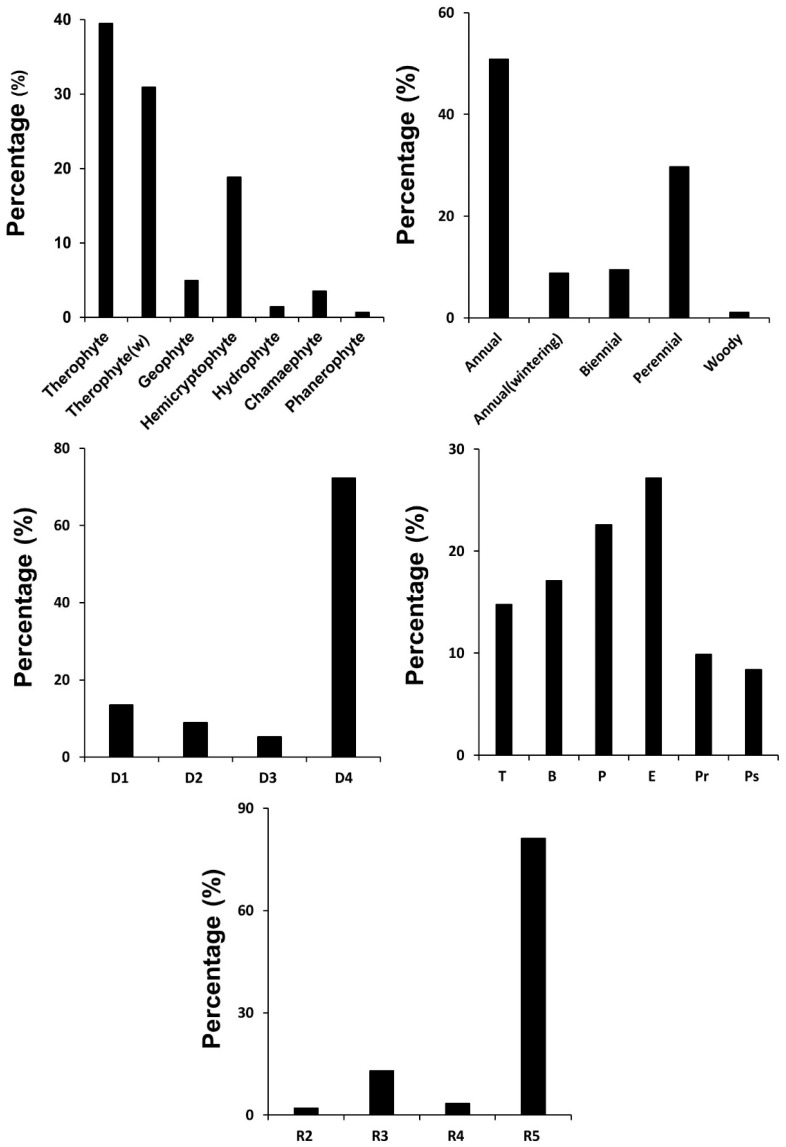
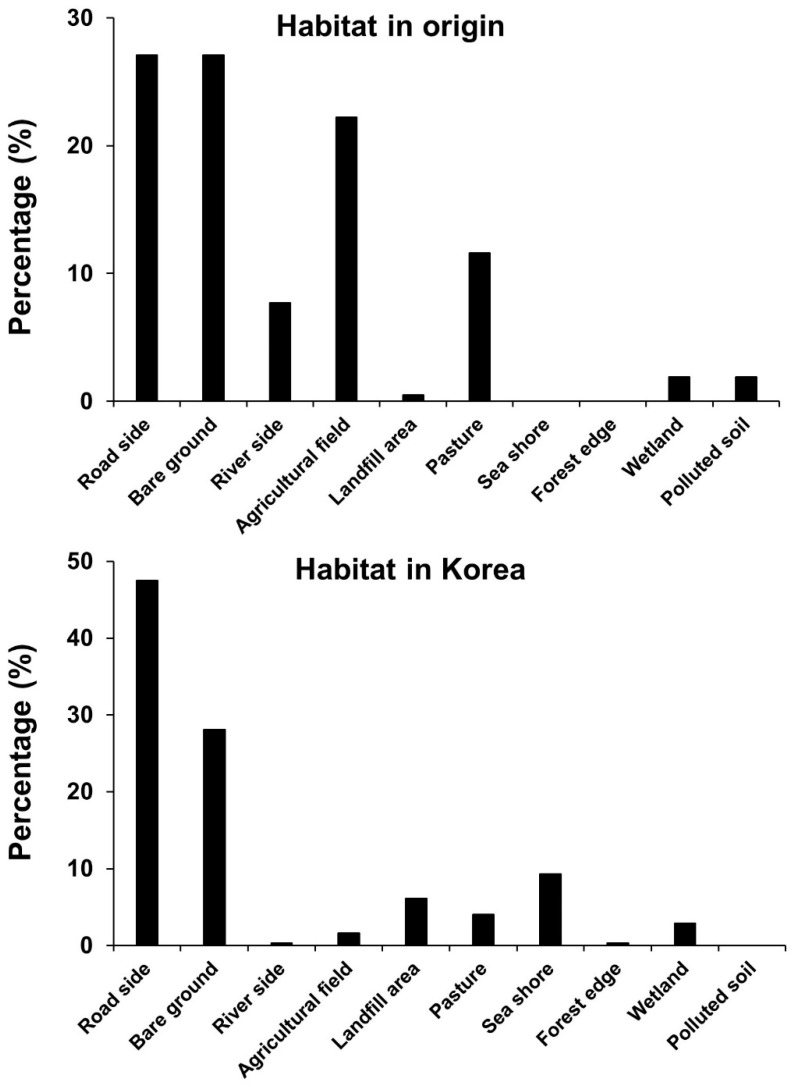
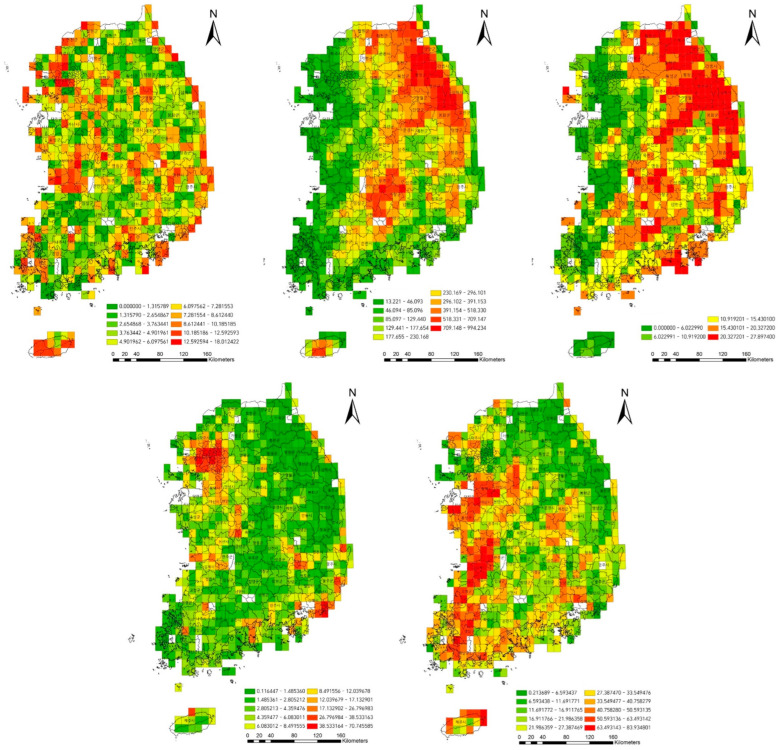
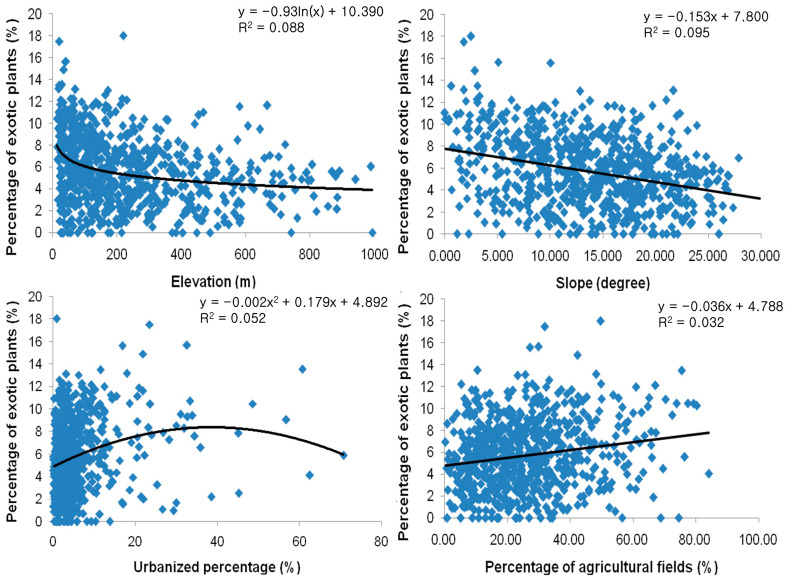
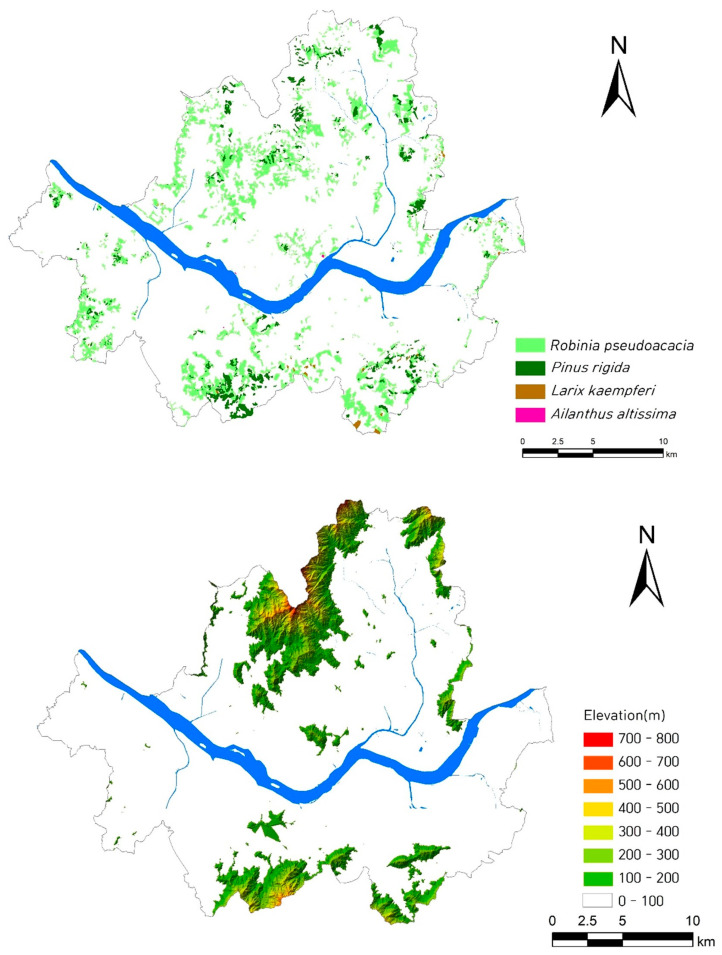
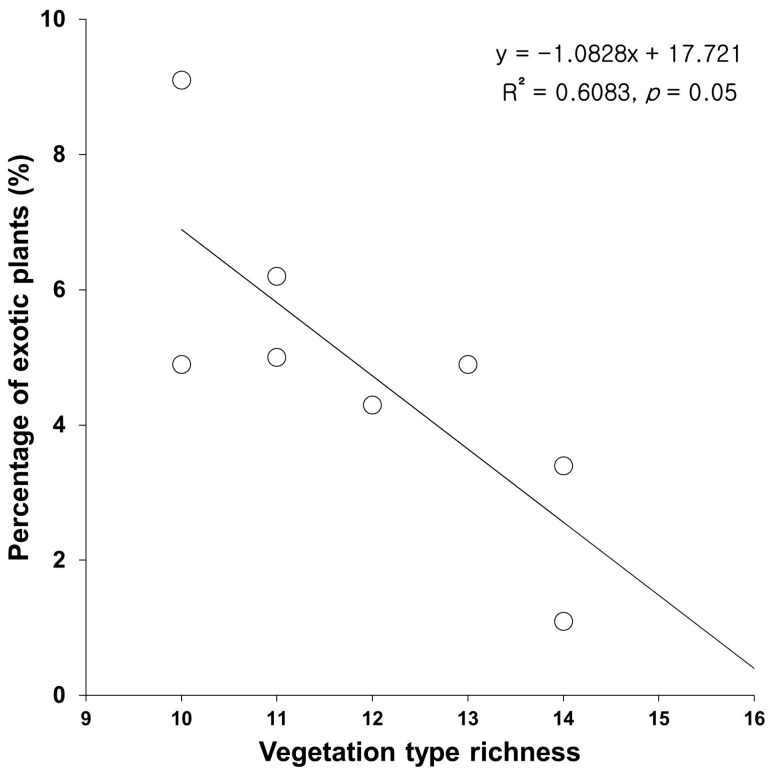
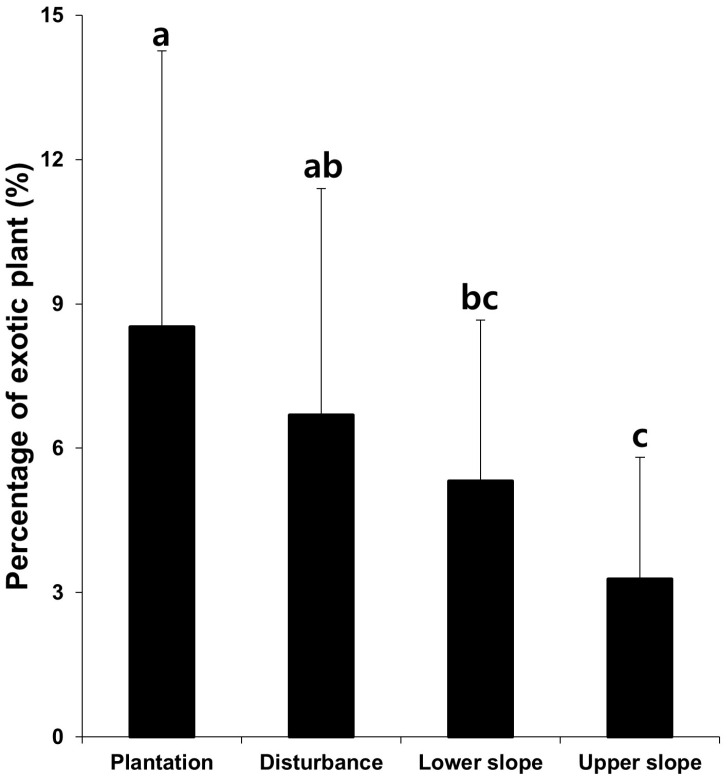
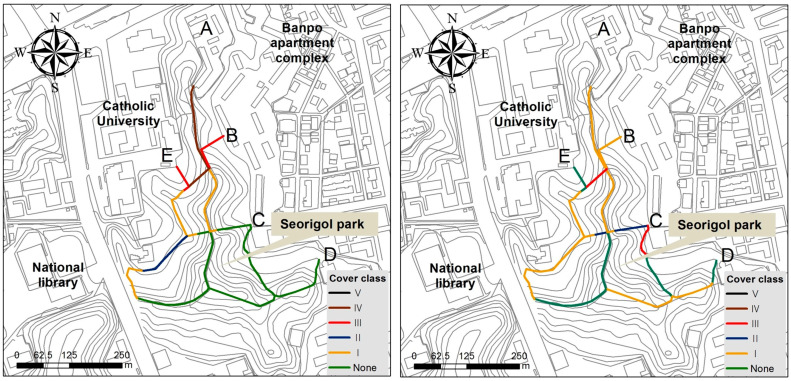
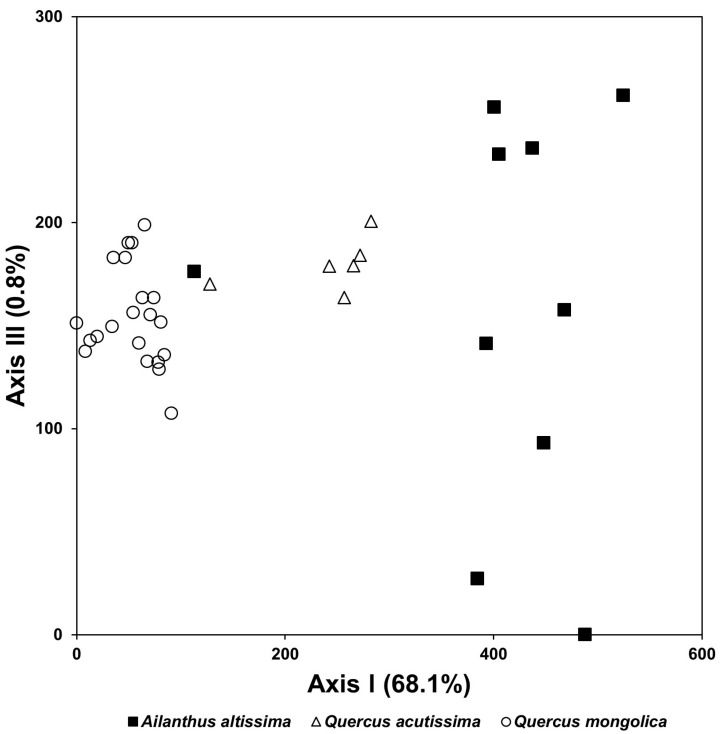
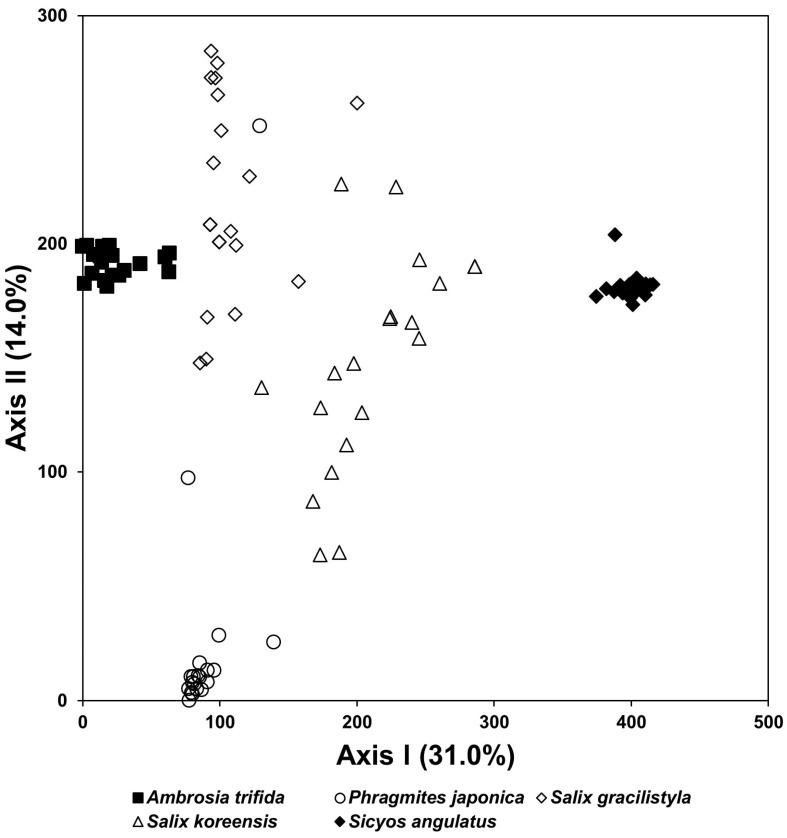
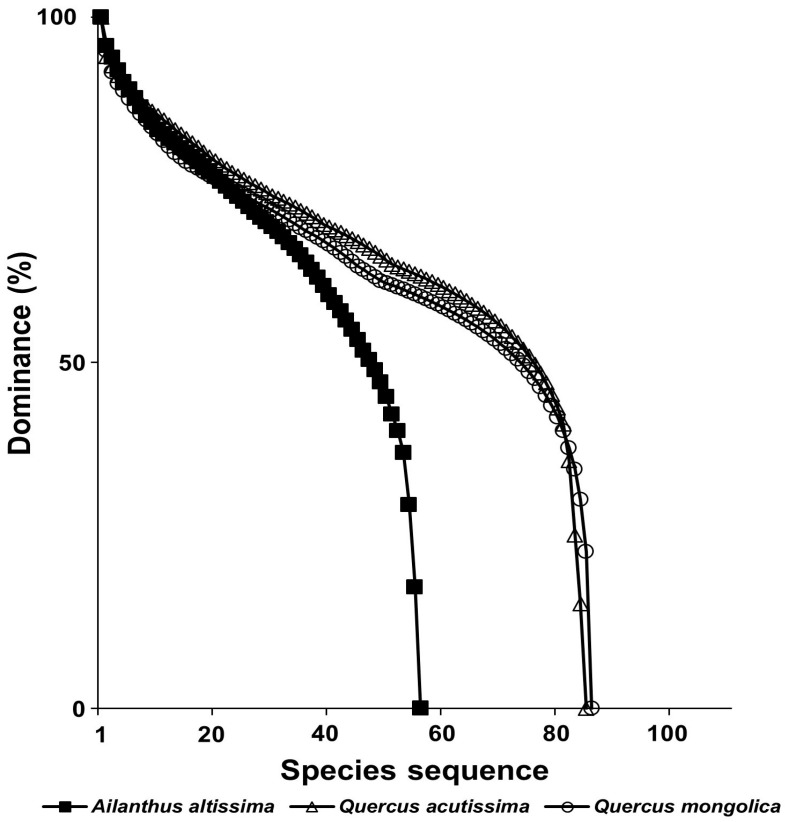
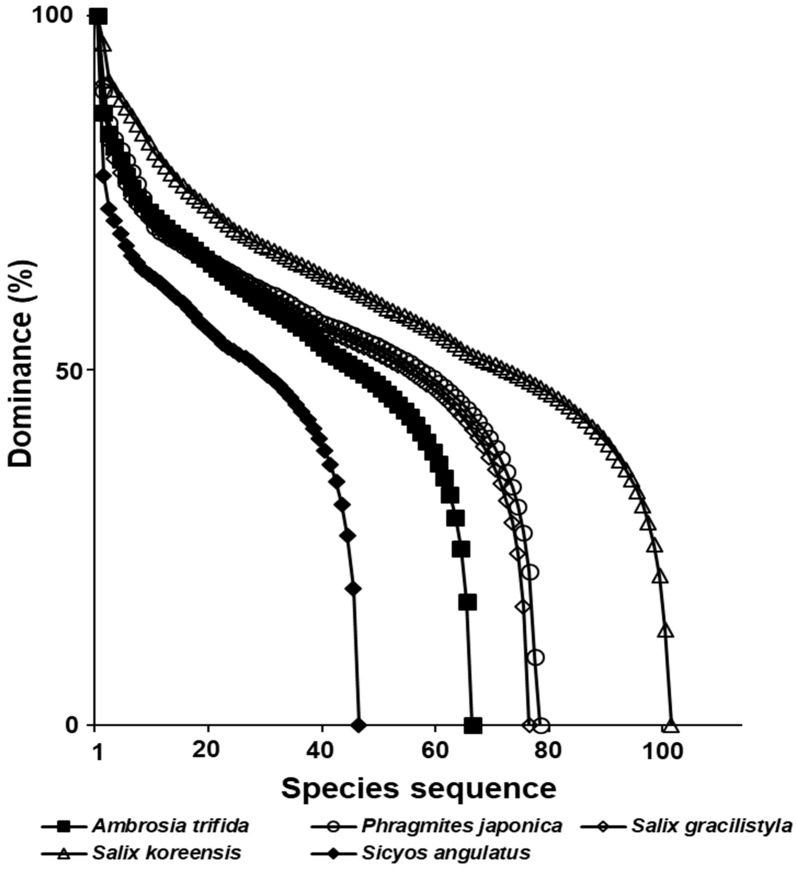
This study was carried out to clarify the spatial distribution of exotic plants at national, regional, and local levels, as well as their ecological impacts, and to prepare a strategy to reduce the impacts in Republic of Korea. This study was attempted at the national, regional, and local levels throughout Republic of Korea. Compositae occupied the highest percentage among invading exotic plants in Republic of Korea. A review of the biological attributes of exotic plants based on the dormancy form, longevity, disseminule form, growth form, and radicoid form showed that therophytes, annual plants, plants that disperse seeds by gravity (D), erect form (E), and nonclonal growth form (R) occupied the highest proportion. At the national level, the spatial distribution of exotic plants tended to depend on topographic conditions such as elevation and slope degree, and to increase around urbanized areas, agricultural fields, and coastal areas. The habitat types that exotic plants established were similar in their native habitat and in Korea, where they invaded. They preferred disturbed land such as roadsides, bare ground, agricultural fields, and so on. The spatial distribution of vegetation types dominated by exotic plants was restricted in the lowland. The proportion of the exotic/native plants tended to proportionate reversely to the vegetation type richness (the number of vegetation types); that is, the ecological diversity. The proportion of the exotic plants was higher in artificial plantations, vegetation due to disturbance, and vegetation established on lower slopes compared with upper slopes. Even at the local level, the exotic plants appeared abundantly in the introduced vegetation, while they were rare in the native ones. In the vegetation infected by exotic species, not only the species composition changed significantly, but the species diversity also decreased. Restorative treatment by introducing mantle vegetation around the hiking trail inhibited the establishment of exotic plants. Further, the restoration practice recovered the similarity of the species composition compared to the reference vegetation and increased the species diversity.
本研究旨在阐明外来植物在国家、区域和地方层面的空间分布及其生态影响,并制定减少其在大韩民国影响的策略。本研究在大韩民国全国、区域和地方层面展开。菊科在韩国入侵外来植物中所占比例最高。基于休眠形式、寿命、传播体形式、生长形式和根状形式对外来植物的生物学特性进行的综述表明,一年生植物、一年生草本植物、靠重力传播种子的植物(D)、直立形态(E)和非克隆生长形态(R)所占比例最高。在国家层面,外来植物的空间分布往往取决于海拔和坡度等地形条件,并在城市化地区、农田和沿海地区周围增加。外来植物建立的栖息地类型在其原生栖息地和入侵的韩国栖息地相似。它们更喜欢路边、裸地、农田等受干扰的土地。由外来植物主导的植被类型的空间分布在低地受到限制。外来/本地植物的比例往往与植被类型丰富度(植被类型数量)成反比,即与生态多样性成反比。与上坡相比,人工种植园、受干扰形成的植被以及下坡形成的植被中外来植物的比例更高。即使在地方层面,外来植物在引入的植被中大量出现,而在本地植被中则很少见。在受外来物种感染的植被中,不仅物种组成发生了显著变化,物种多样性也有所下降。在徒步小径周围引入地被植被进行恢复性处理抑制了外来植物的生长。此外,恢复实践恢复了与参考植被相比的物种组成相似性,并增加了物种多样性。