Amendola-Pires Marcia Maria, Fakoury Max K, Salazar Hellen, De Oliveira Silvia B, Brandão-Mello Carlos Eduardo, Schmidt Sergio L
Postgraduate Program in Neurology, Neurobehavioral Laboratory, Department of Neurology, Federal University of the State of Rio de Janeiro, Rio de Janeiro 20270-901, Brazil.
Gastroenterology & Liver Unit, Gaffrée e Guinle University Hospital, Federal University of the State of Rio de Janeiro, Rio de Janeiro 20270-901, Brazil.
J Clin Med. 2023 Jun 8;12(12):3910. doi: 10.3390/jcm12123910.
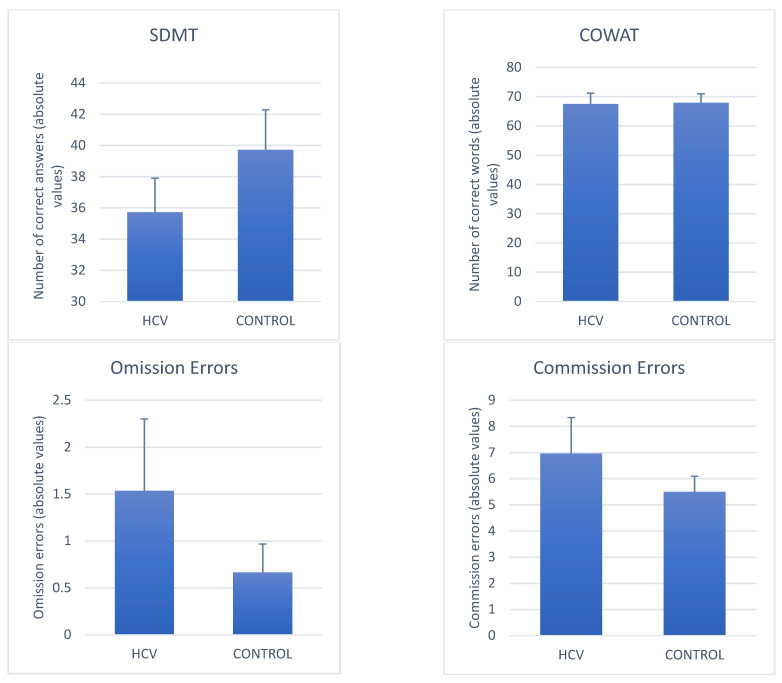
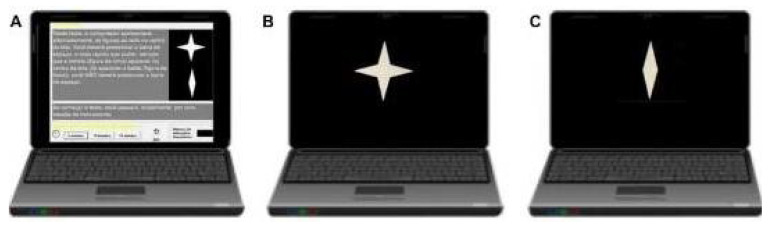
Hepatitis C virus (HCV) infection is a leading cause of liver cirrhosis, hepatocellular carcinoma, and liver-related deaths. It is estimated that 40-74% of patients with hepatitis C will experience at least one extrahepatic manifestation within their lifetime. The finding of HCV-RNA sequences in post-mortem brain tissue raises the possibility that HCV infection may affect the central nervous system and be the source of subtle neuropsychological symptoms, even in non-cirrhotic. Our investigation aimed to evaluate whether asymptomatic, HCV-infected subjects showed cognitive dysfunctions. Twenty-eight untreated asymptomatic HCV subjects and 18 healthy controls were tested using three neuropsychological instruments in a random sequence: Symbol Digit Modalities Test (SDMT), Controlled Oral Word Association Test (COWAT), and Continuous Visual Attention Test (CVAT). We performed depression screening, liver fibrosis assessment, blood tests, genotyping, and HCV-RNA viral load. A MANCOVA and univariate ANCOVAS were performed to examine group differences (HCV vs. healthy controls) in four scores of the CVAT (omission errors, commission errors, reaction time-RT, and variability of RT-VRT), and the scores derived from the SDMT, and the COWAT. A discriminant analysis was performed to identify which test variables effectively discriminate HCV-infected subjects from healthy controls. There were no group differences in the scores of the COWAT, SDMT, and in two variables of the CVAT (omission and commission errors). In contrast, the performance of the HCV group was poorer than the controls in RT ( = 0.047) and VRT ( = 0.046). The discriminant analysis further indicated that the RT was the most reliable variable to discriminate the two groups with an accuracy of 71.7%. The higher RT exhibited by the HCV group may reflect deficits in the intrinsic-alertness attention subdomain. As the RT variable was found to be the best discriminator between HCV patients and controls, we suggest that intrinsic-alertness deficits in HCV patients may affect the stability of response times increasing VRT and leading to significant lapses in attention. In conclusion, HCV subjects with mild disease showed deficits in RT and intraindividual VRT as compared to healthy controls.
丙型肝炎病毒(HCV)感染是肝硬化、肝细胞癌和肝脏相关死亡的主要原因。据估计,40%-74%的丙型肝炎患者在其一生中至少会出现一种肝外表现。在尸检脑组织中发现HCV-RNA序列,这增加了HCV感染可能影响中枢神经系统并成为细微神经心理症状来源的可能性,即使在非肝硬化患者中也是如此。我们的研究旨在评估无症状的HCV感染受试者是否存在认知功能障碍。28名未经治疗的无症状HCV受试者和18名健康对照者按照随机顺序使用三种神经心理学测试工具进行测试:符号数字模式测试(SDMT)、受控口语联想测试(COWAT)和连续视觉注意力测试(CVAT)。我们进行了抑郁筛查、肝纤维化评估、血液检查、基因分型以及HCV-RNA病毒载量检测。进行了多变量协方差分析(MANCOVA)和单变量协方差分析(ANCOVAS),以检验CVAT的四个得分(遗漏错误、误判错误、反应时间-RT和反应时间变异性-VRT)、SDMT得分以及COWAT得分在两组(HCV组与健康对照组)之间的差异。进行判别分析以确定哪些测试变量能够有效地区分HCV感染受试者与健康对照者。COWAT、SDMT的得分以及CVAT的两个变量(遗漏和误判错误)在两组之间没有差异。相比之下,HCV组在反应时间(p = 0.047)和反应时间变异性(p = 0.046)方面的表现比对照组差。判别分析进一步表明,反应时间是区分两组最可靠的变量,准确率为71.7%。HCV组表现出的较高反应时间可能反映了内在警觉性注意力子领域的缺陷。由于发现反应时间变量是HCV患者与对照组之间的最佳判别指标,我们认为HCV患者的内在警觉性缺陷可能会影响反应时间的稳定性,增加反应时间变异性并导致注意力显著下降。总之,与健康对照者相比,轻度疾病的HCV受试者在反应时间和个体内反应时间变异性方面存在缺陷。