Ahmed Kawsar, Bui Francis M, Wu Fang-Xiang
Department of Electrical and Computer Engineering, University of Saskatchewan, 57 Campus Drive, Saskatoon, SK S7N 5A9, Canada.
Division of Biomedical Engineering, Department of Computer Science and Department of Mechanical Engineering, University of Saskatchewan, Saskatoon, SK S7N 5A9, Canada.
Micromachines (Basel). 2023 May 31;14(6):1174. doi: 10.3390/mi14061174.
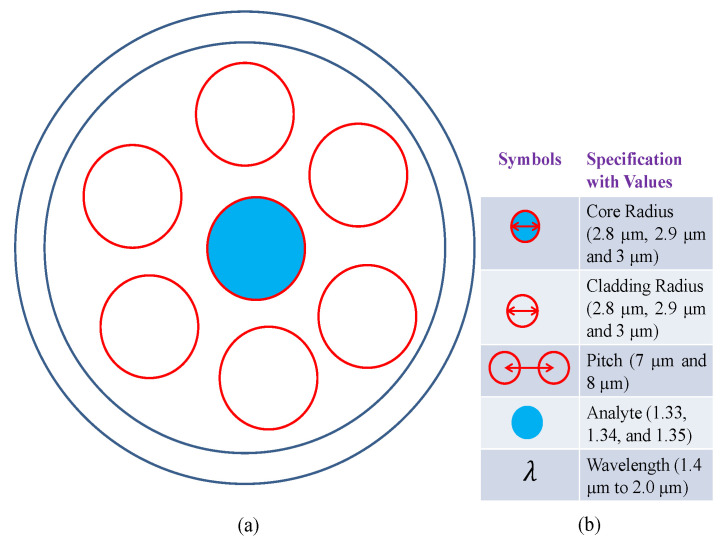
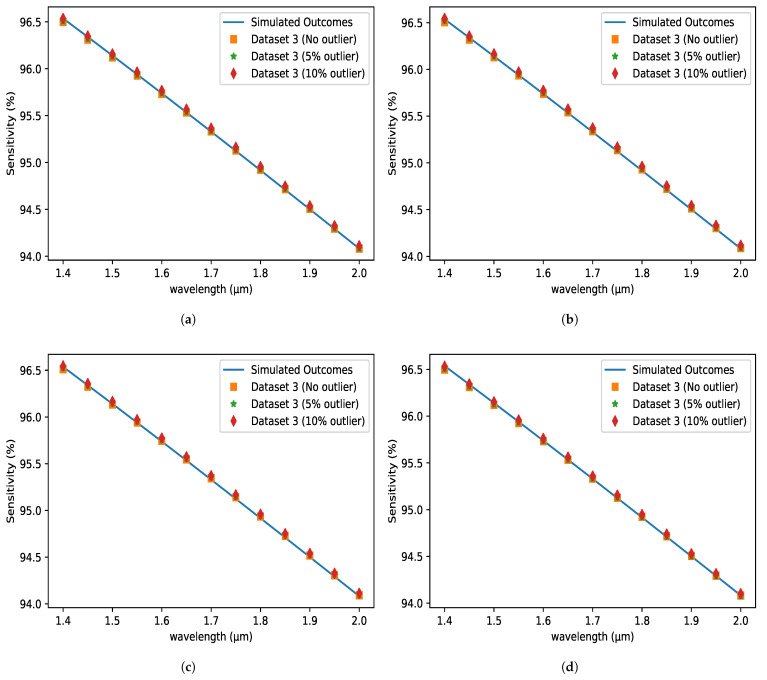
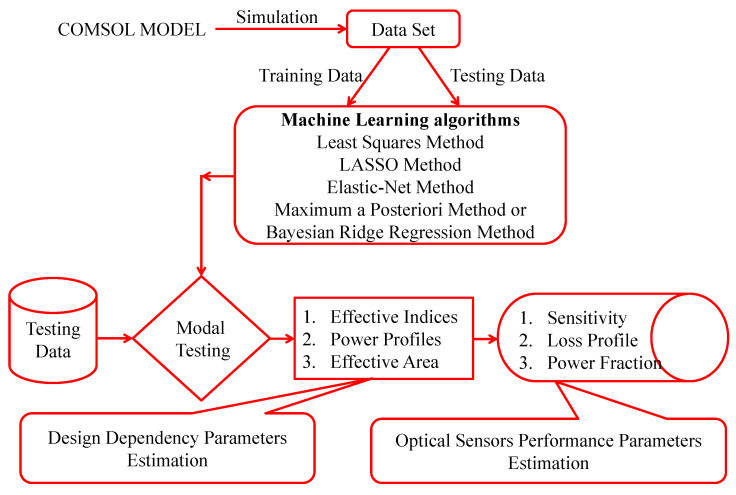
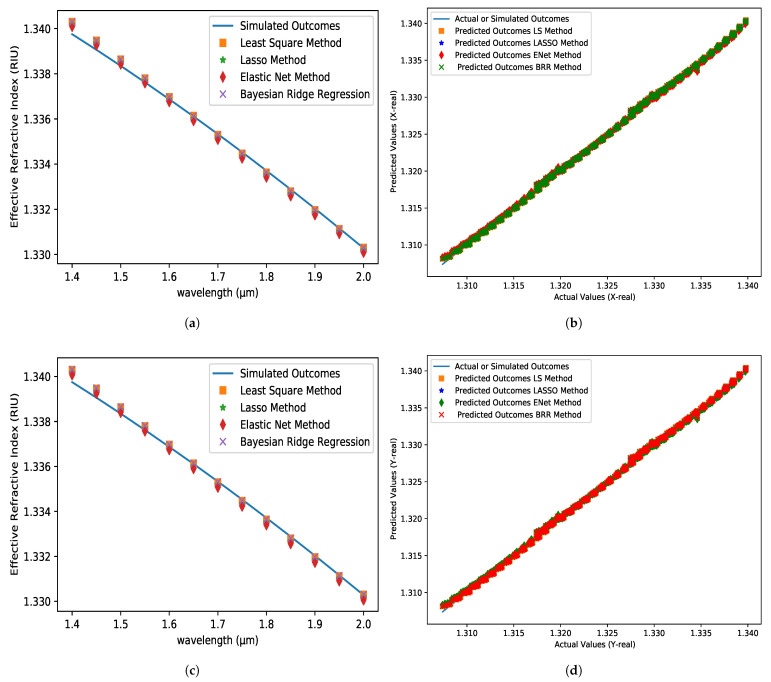
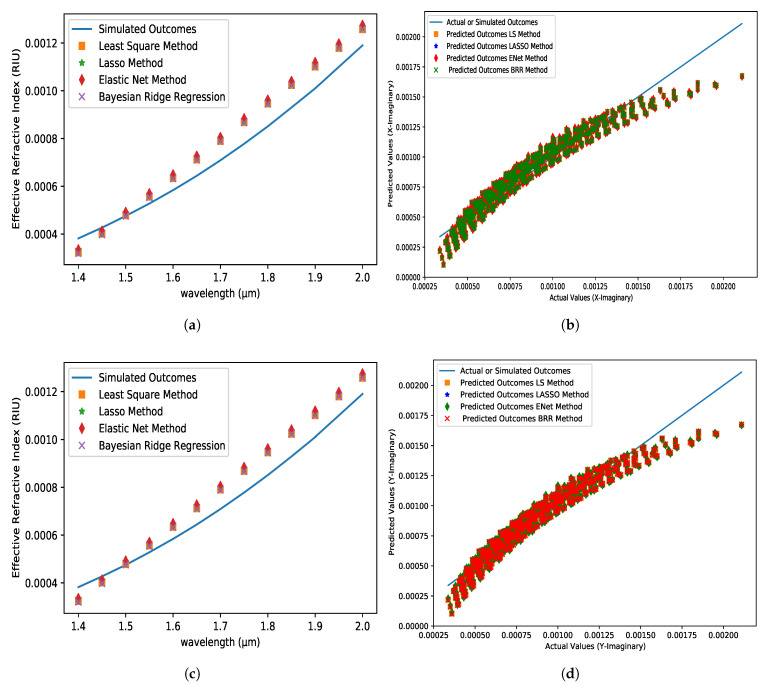
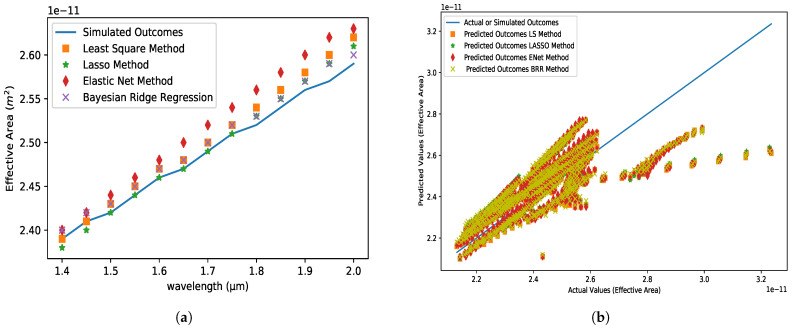
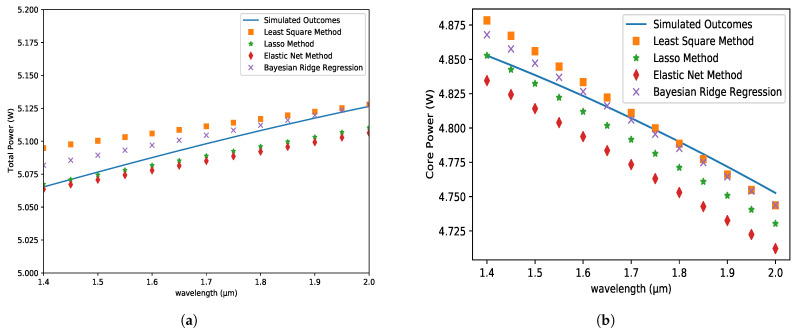
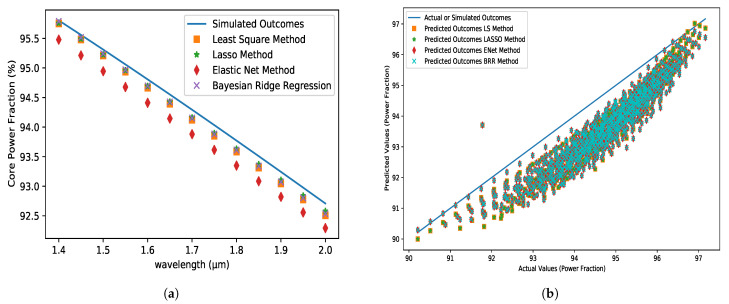
To develop standard optical biosensors, the simulation procedure takes a lot of time. For reducing that enormous amount of time and effort, machine learning might be a better solution. Effective indices, core power, total power, and effective area are the most crucial parameters for evaluating optical sensors. In this study, several machine learning (ML) approaches have been applied to predict those parameters while considering the core radius, cladding radius, pitch, analyte, and wavelength as the input vectors. We have utilized least squares (LS), LASSO, Elastic-Net (ENet), and Bayesian ridge regression (BRR) to make a comparative discussion using a balanced dataset obtained with the COMSOL Multiphysics simulation tool. Furthermore, a more extensive analysis of sensitivity, power fraction, and confinement loss is also demonstrated using the predicted and simulated data. The suggested models were also examined in terms of R2-score, mean average error (MAE), and mean squared error (MSE), with all of the models having an R2-score of more than 0.99, and it was also shown that optical biosensors had a design error rate of less than 3%. This research might pave the way for machine learning-based optimization approaches to be used to improve optical biosensors.
为了开发标准的光学生物传感器,模拟过程需要花费大量时间。为了减少大量的时间和精力,机器学习可能是一个更好的解决方案。有效折射率、纤芯功率、总功率和有效面积是评估光传感器的最关键参数。在本研究中,几种机器学习(ML)方法已被应用于预测这些参数,同时将纤芯半径、包层半径、节距、分析物和波长作为输入向量。我们利用最小二乘法(LS)、套索回归(LASSO)、弹性网络(ENet)和贝叶斯岭回归(BRR),使用通过COMSOL Multiphysics模拟工具获得的平衡数据集进行比较讨论。此外,还使用预测数据和模拟数据对灵敏度、功率分数和限制损耗进行了更广泛的分析。还根据R2分数、平均平均误差(MAE)和均方误差(MSE)对所提出的模型进行了检验,所有模型的R2分数均超过0.99,并且还表明光学生物传感器的设计误差率小于3%。这项研究可能为基于机器学习的优化方法用于改进光学生物传感器铺平道路。