Department of Food Science and Engineering, Ningbo University, Ningbo 315211, China.
China Rural Technology Development Center, Beijing 100045, China.
Nutrients. 2023 Jun 14;15(12):2743. doi: 10.3390/nu15122743.
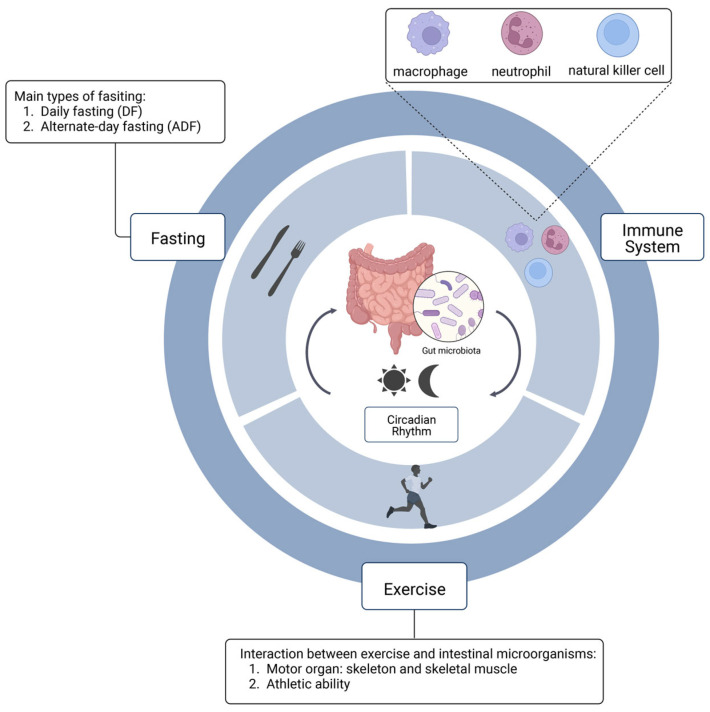
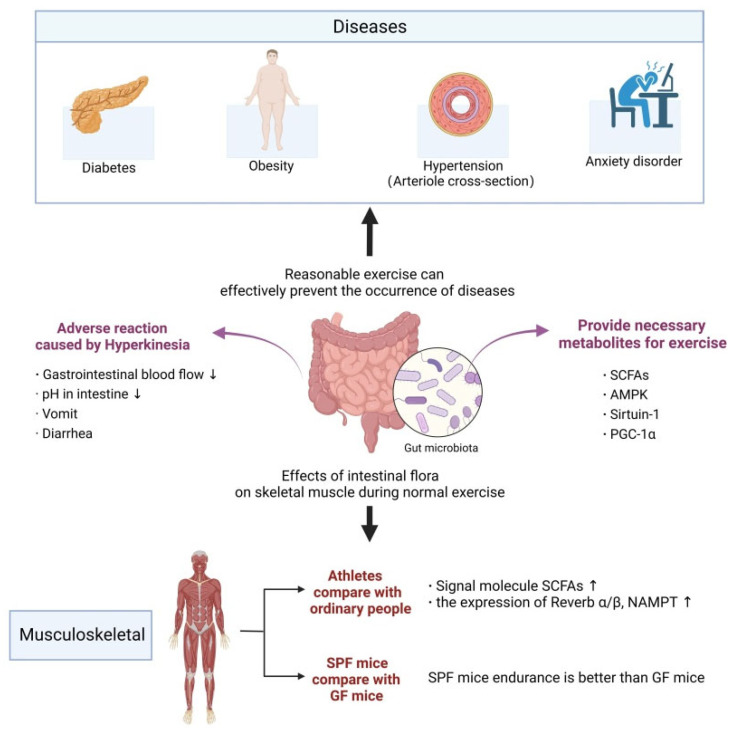
A close relationship exists between the intestinal microbiota and the circadian rhythm, which is mainly regulated by the central-biological-clock system and the peripheral-biological-clock system. At the same time, the intestinal flora also reflects a certain rhythmic oscillation. A poor diet and sedentary lifestyle will lead to immune and metabolic diseases. A large number of studies have shown that the human body can be influenced in its immune regulation, energy metabolism and expression of biological-clock genes through diet, including fasting, and exercise, with intestinal flora as the vector, thereby reducing the incidence rates of diseases. This article mainly discusses the effects of diet and exercise on the intestinal flora and the immune and metabolic systems from the perspective of the circadian rhythm, which provides a more effective way to prevent immune and metabolic diseases by modulating intestinal microbiota.
肠道微生物群与昼夜节律之间存在密切关系,主要受中枢生物钟系统和外周生物钟系统调节。同时,肠道菌群也呈现出一定的节律性波动。不良的饮食和久坐不动的生活方式会导致免疫和代谢疾病。大量研究表明,人体可以通过饮食(包括禁食和运动)以及肠道菌群作为载体来影响其免疫调节、能量代谢和生物钟基因的表达,从而降低疾病的发病率。本文主要从昼夜节律的角度探讨了饮食和运动对肠道菌群以及免疫和代谢系统的影响,为通过调节肠道菌群来预防免疫和代谢性疾病提供了更有效的方法。