Kang Xuejia, Jadhav Sanika, Annaji Manjusha, Huang Chung-Hui, Amin Rajesh, Shen Jianzhong, Ashby Charles R, Tiwari Amit K, Babu R Jayachandra, Chen Pengyu
Department of Drug Discovery and Development, Harrison College of Pharmacy, Auburn University, Auburn, AL 36849, USA.
Materials Research and Education Center, Materials Engineering, Department of Mechanical Engineering, Auburn University, Auburn, AL 36849, USA.
Pharmaceutics. 2023 May 23;15(6):1567. doi: 10.3390/pharmaceutics15061567.
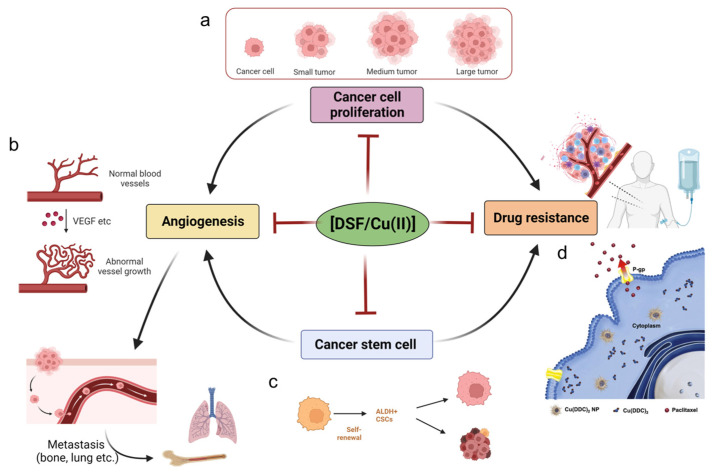
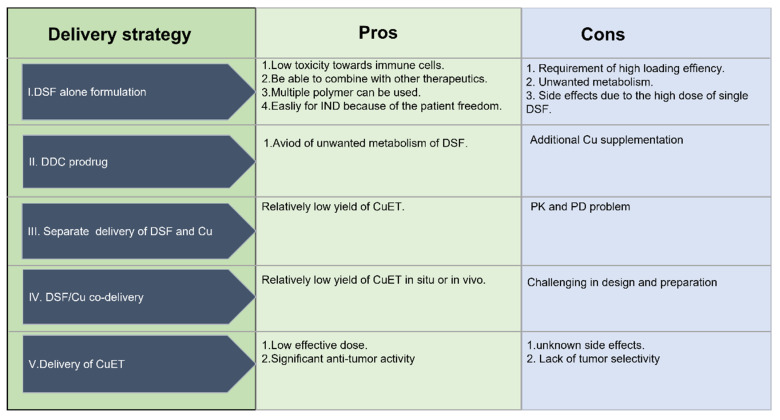
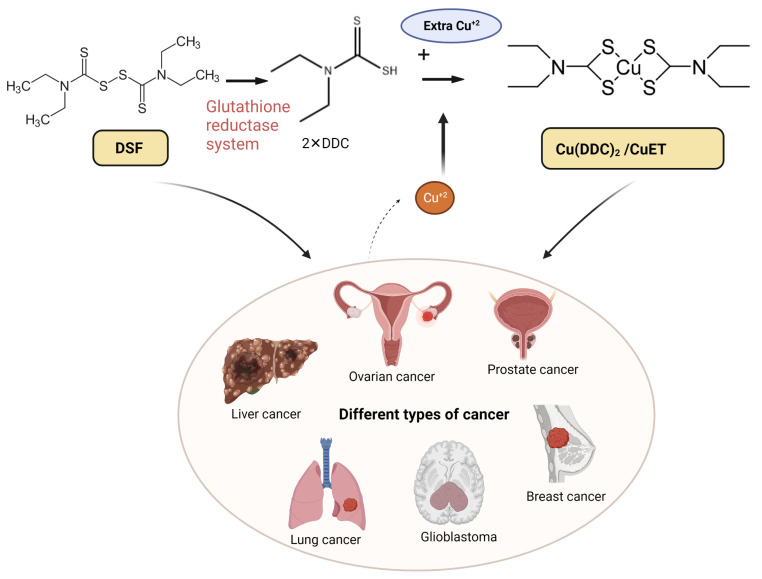
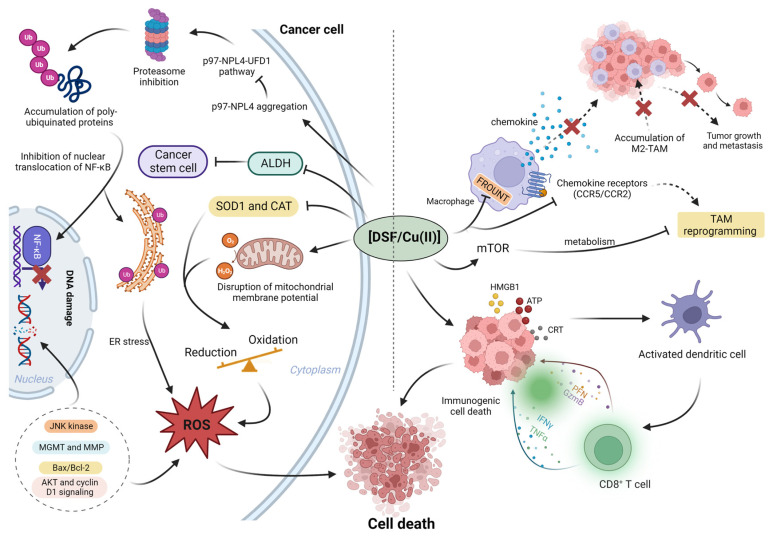
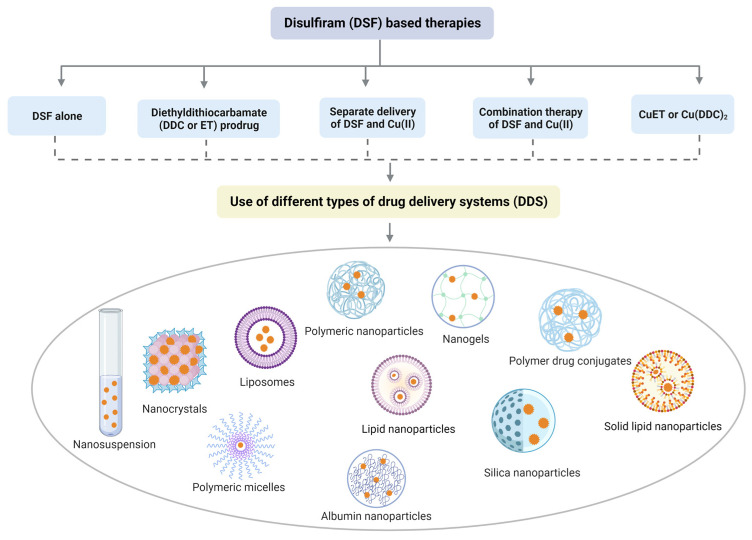
Disulfiram (DSF) is a thiocarbamate based drug that has been approved for treating alcoholism for over 60 years. Preclinical studies have shown that DSF has anticancer efficacy, and its supplementation with copper (CuII) significantly potentiates the efficacy of DSF. However, the results of clinical trials have not yielded promising results. The elucidation of the anticancer mechanisms of DSF/Cu (II) will be beneficial in repurposing DSF as a new treatment for certain types of cancer. DSF's anticancer mechanism is primarily due to its generating reactive oxygen species, inhibiting aldehyde dehydrogenase (ALDH) activity inhibition, and decreasing the levels of transcriptional proteins. DSF also shows inhibitory effects in cancer cell proliferation, the self-renewal of cancer stem cells (CSCs), angiogenesis, drug resistance, and suppresses cancer cell metastasis. This review also discusses current drug delivery strategies for DSF alone diethyldithocarbamate (DDC), Cu (II) and DSF/Cu (II), and the efficacious component Diethyldithiocarbamate-copper complex (CuET).
双硫仑(DSF)是一种基于硫代氨基甲酸盐的药物,已被批准用于治疗酒精中毒超过60年。临床前研究表明,DSF具有抗癌功效,并且补充铜(CuII)可显著增强DSF的疗效。然而,临床试验结果并未产生令人满意的结果。阐明DSF/Cu(II)的抗癌机制将有助于将DSF重新用作某些类型癌症的新治疗方法。DSF的抗癌机制主要是由于其产生活性氧、抑制醛脱氢酶(ALDH)活性、降低转录蛋白水平。DSF还对癌细胞增殖、癌症干细胞(CSC)的自我更新、血管生成、耐药性具有抑制作用,并抑制癌细胞转移。本综述还讨论了目前单独使用DSF、二乙二硫代氨基甲酸盐(DDC)、Cu(II)和DSF/Cu(II)以及有效成分二乙二硫代氨基甲酸盐-铜络合物(CuET)的药物递送策略。