
压片过程中药物粉末的水分行为
Moisture Behavior of Pharmaceutical Powder during the Tableting Process.
作者信息
Koumbogle Komlan, Gosselin Ryan, Gitzhofer François, Abatzoglou Nicolas
机构信息
Department of Chemical and Biotechnological Engineering, Université de Sherbrooke, 2500 Boulevard de l'Université, Sherbrooke, QC J1K 2R1, Canada.
出版信息
Pharmaceutics. 2023 Jun 4;15(6):1652. doi: 10.3390/pharmaceutics15061652.
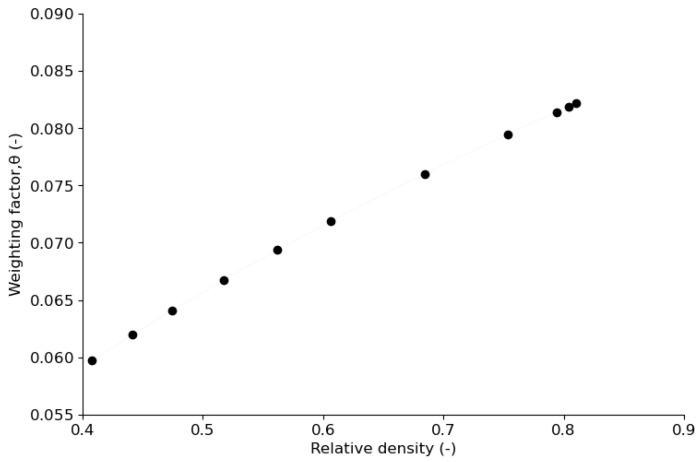
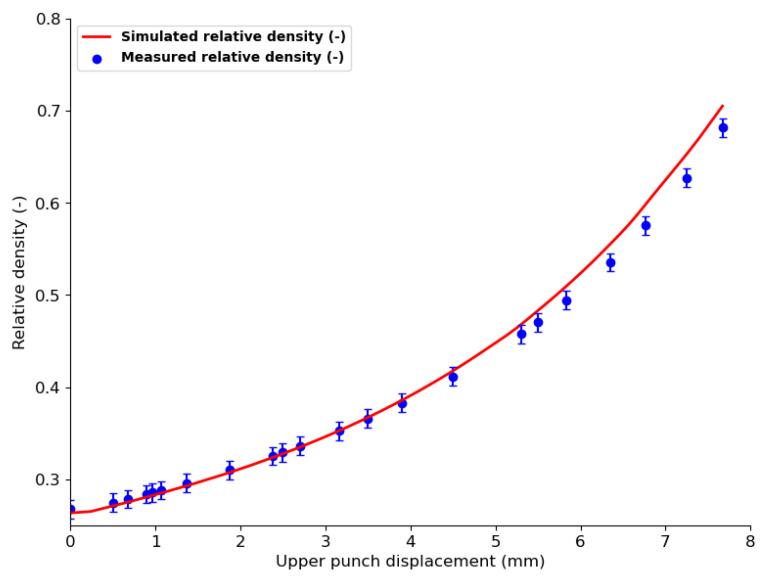
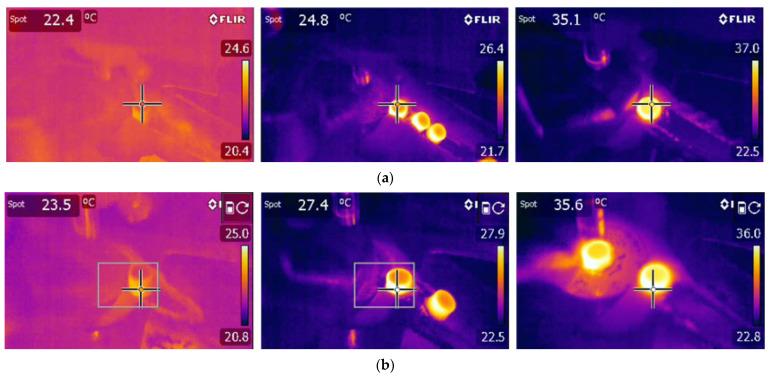
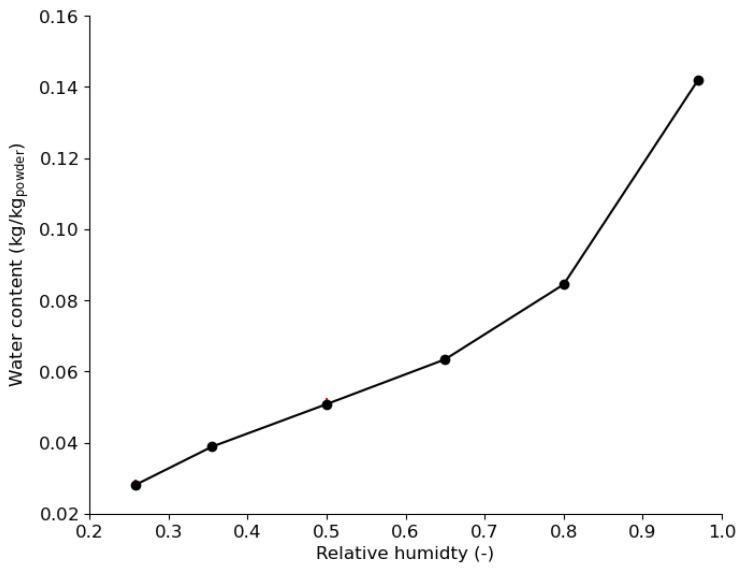
The moisture content of pharmaceutical powder is a key parameter contributing to tablet sticking during the tableting process. This study investigates powder moisture behavior during the compaction phase of the tableting process. Finite element analysis software COMSOL Multiphysics 5.6 was used to simulate the compaction microcrystalline cellulose (VIVAPUR PH101) powder and predict temperature and moisture content distributions, as well as their evolution over time, during a single compaction. To validate the simulation, a near-infrared sensor and a thermal infrared camera were used to measure tablet surface temperature and surface moisture, respectively, just after ejection. The partial least squares regression (PLS) method was used to predict the surface moisture content of the ejected tablet. Thermal infrared camera images of the ejected tablet showed powder bed temperature increasing during compaction and a gradual rise in tablet temperature along with tableting runs. Simulation results showed that moisture evaporate from the compacted powder bed to the surrounding environment. The predicted surface moisture content of ejected tablets after compaction was higher compared to that of loose powder and decreased gradually as tableting runs increased. These observations suggest that the moisture evaporating from the powder bed accumulates at the interface between the punch and tablet surface. Evaporated water molecules can be physiosorbed on the punch surface and cause a capillary condensation locally at the punch and tablet interface during dwell time. Locally formed capillary bridge may induce a capillary force between tablet surface particles and the punch surface and cause the sticking.
药用粉末的水分含量是压片过程中导致片剂粘连的关键参数。本研究调查了压片过程中压实阶段的粉末水分行为。使用有限元分析软件COMSOL Multiphysics 5.6模拟了微晶纤维素(VIVAPUR PH101)粉末的压实过程,并预测了单次压实过程中的温度和水分含量分布及其随时间的变化。为了验证模拟结果,在片剂弹出后,分别使用近红外传感器和热红外相机测量片剂表面温度和表面水分。采用偏最小二乘回归(PLS)方法预测弹出片剂的表面水分含量。弹出片剂的热红外相机图像显示,压实过程中粉末床温度升高,片剂温度随着压片次数逐渐上升。模拟结果表明,水分从压实的粉末床蒸发到周围环境中。压实后弹出片剂的预测表面水分含量高于松散粉末,且随着压片次数的增加逐渐降低。这些观察结果表明,从粉末床蒸发的水分在冲头与片剂表面的界面处积聚。蒸发的水分子可以物理吸附在冲头表面,并在保压时间内在冲头与片剂界面处局部引起毛细管凝结。局部形成的毛细管桥可能会在片剂表面颗粒与冲头表面之间产生毛细管力并导致粘连。









 Zotero 插件