Wang Ying, Xu Jie, Shi Liqin, Yang Haiyan, Wang Yadong
Department of Epidemiology, School of Public Health, Zhengzhou University, Zhengzhou 450001, China.
Department of Toxicology, Henan Center for Disease Control and Prevention, Zhengzhou 450016, China.
Vaccines (Basel). 2023 Jun 11;11(6):1087. doi: 10.3390/vaccines11061087.
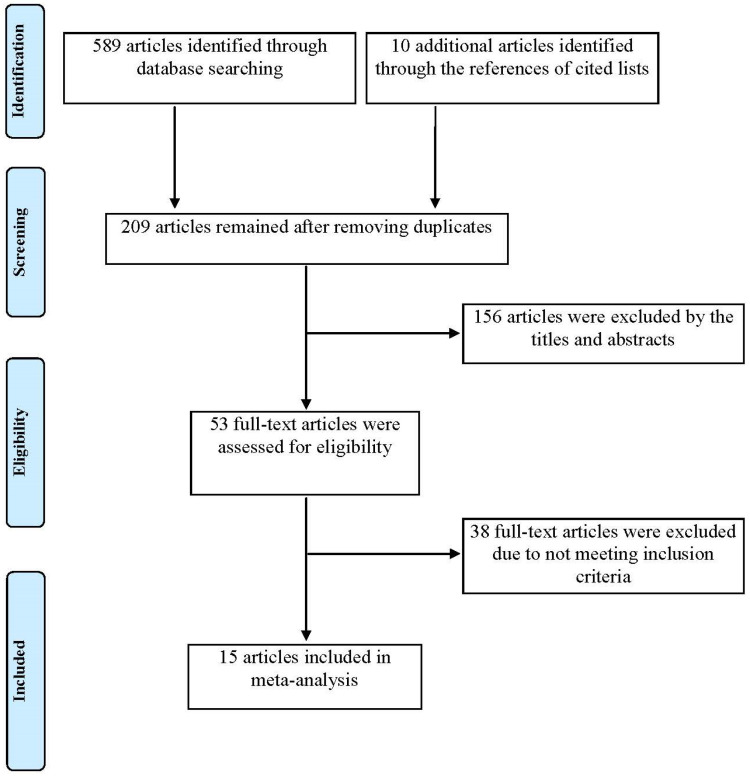
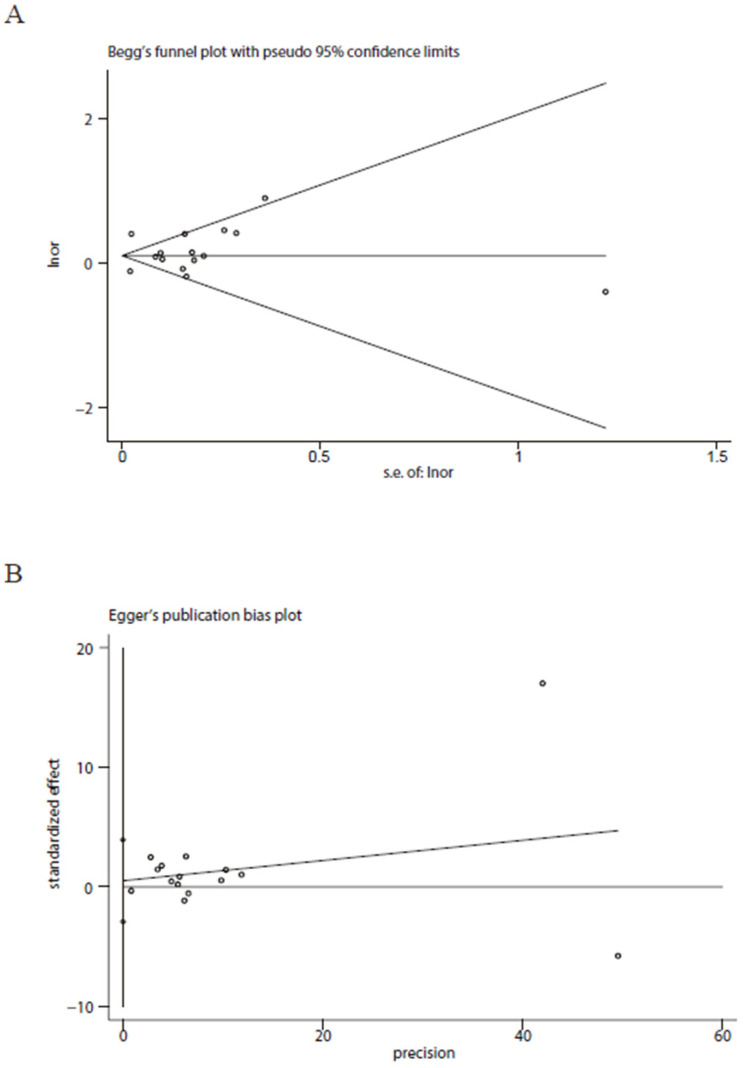
The association between peptic ulcer disease and the severity of coronavirus disease 2019 (COVID-19) is inconclusive across individual studies. Thus, this study aimed to investigate whether there was a significant association between peptic ulcer disease and COVID-19 severity through a meta-analysis. The electronic databases (Web of Science, Wiley, Springer, EMBASE, Elsevier, Cochrane Library, Scopus and PubMed) were retrieved for all eligible studies. The Stata 11.2 software was used for all statistical analyses. The pooled odds ratio (OR) with a 95% confidence interval (CI) was calculated by a random-effects meta-analysis model. The heterogeneity was evaluated by the inconsistency index (I) and Cochran's Q test. Egger's analysis and Begg's analysis were conducted to evaluate the publication bias. Meta-regression analysis and subgroup analysis were done to explore the potential source of heterogeneity. Totally, our findings based on confounding variables-adjusted data indicated that there was no significant association between peptic ulcer disease and the higher risk for COVID-19 severity (pooled OR = 1.17, 95% CI: 0.97-1.41) based on 15 eligible studies with 4,533,426 participants. When the subgroup analysis was performed by age (mean or median), there was a significant association between peptic ulcer disease and a higher risk for COVID-19 severity among studies with age ≥ 60 years old (pooled OR = 1.15, 95% CI: 1.01-1.32), but not among studies with age < 60 years old (pooled OR = 1.16, 95% CI: 0.89-1.50). Our meta-analysis showed that there was a significant association between peptic ulcer disease and a higher risk for COVID-19 severity among older patients but not among younger patients.
在各项单独研究中,消化性溃疡疾病与2019冠状病毒病(COVID-19)严重程度之间的关联尚无定论。因此,本研究旨在通过荟萃分析调查消化性溃疡疾病与COVID-19严重程度之间是否存在显著关联。检索电子数据库(Web of Science、Wiley、Springer、EMBASE、Elsevier、Cochrane图书馆、Scopus和PubMed)以获取所有符合条件的研究。所有统计分析均使用Stata 11.2软件。采用随机效应荟萃分析模型计算合并比值比(OR)及95%置信区间(CI)。通过不一致性指数(I)和Cochrane Q检验评估异质性。进行Egger分析和Begg分析以评估发表偏倚。进行荟萃回归分析和亚组分析以探索异质性的潜在来源。总体而言,基于混杂变量调整数据的研究结果表明,在纳入4,533,426名参与者的15项符合条件的研究中,消化性溃疡疾病与COVID-19严重程度较高风险之间无显著关联(合并OR = 1.17,95% CI:0.97 - 1.41)。按年龄(均值或中位数)进行亚组分析时,在年龄≥60岁的研究中,消化性溃疡疾病与COVID-19严重程度较高风险之间存在显著关联(合并OR = 1.15,95% CI:1.01 - 1.32),但在年龄<60岁的研究中无显著关联(合并OR = 1.16,95% CI:0.89 - 1.50)。我们的荟萃分析表明,老年患者中消化性溃疡疾病与COVID-19严重程度较高风险之间存在显著关联,而年轻患者中则无。