Carvalho Vergílio Pereira, Pontes João Paulo Jordão, Neto Demócrito Ribeiro de Brito, Borges Celso Eduardo Rezende, Campos Gisele Ribeiro Londe, Ribeiro Hugo Leonardo Shigenaga, Amaral Waldemar Naves do
Post-graduation course in Health Sciences at the Medical School, Federal University of Goiás (UFG), Goiânia 74690-900, GO, Brazil.
Department of Anesthesiology, Training and Teaching Center in Anesthesiology, Uberlândia 38400-448, MG, Brazil.
Vaccines (Basel). 2022 Dec 28;11(1):71. doi: 10.3390/vaccines11010071.
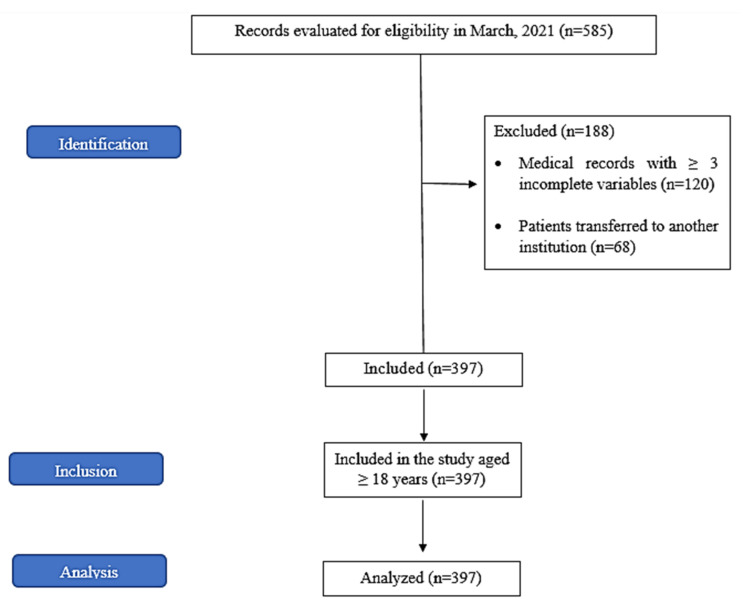
The novel virus severe acute respiratory syndrome coronavirus 2 (SARS-COV-2) is highly virulent and causes coronavirus disease 2019 (COVID-19), resulting in high morbidity and mortality mainly associated with pulmonary complications. Because this virus is highly transmissible, it was quickly spread globally, resulting in COVID-19 being declared as a pandemic. This study aimed to analyze the prevalence of mortality and the factors related to mortality due to COVID-19 in patients with severe acute respiratory syndrome (SARS) at a university hospital in the Central—West region of Brazil. This retrospective cross-sectional study was based on an analysis of the medical records of patients with SARS aged >18 years and admitted to an intensive care unit due to COVID-19 with the requirement of invasive mechanical ventilation. Hospital death was considered as an outcome variable in this study. Moreover, demographic and lifestyle-related variables as well as the therapeutic measures used during the hospital stay were recorded and correlated with the death outcome. After excluding 188 medical records, 397 were analyzed. Most of the participants were men (59.7%), and the mortality rate in patients with SARS due to COVID-19 was 46.1%. Multiple regression analysis indicated that the independent factors associated with mortality in patients with SARS due to COVID-19 were the age of >60 years (p < 0.001) and the use of azithromycin (p = 0.012). Protective factors for mortality were considered as not having the following diseases: hyperthyroidism, asthma, hepatic inheritance, and not being a smoker. The mortality rate in patients with SARS due to COVID-19 was associated with older age and the use of azithromycin.
新型病毒严重急性呼吸综合征冠状病毒2(SARS-CoV-2)具有高度传染性,可引发2019冠状病毒病(COVID-19),主要导致与肺部并发症相关的高发病率和高死亡率。由于这种病毒具有高度传播性,它迅速在全球传播,导致COVID-19被宣布为大流行病。本研究旨在分析巴西中西部地区一家大学医院中,严重急性呼吸综合征(SARS)患者因COVID-19导致的死亡率及相关因素。这项回顾性横断面研究基于对年龄大于18岁、因COVID-19入住重症监护病房且需要有创机械通气的SARS患者的病历分析。本研究将医院死亡视为结果变量。此外,记录了人口统计学和生活方式相关变量以及住院期间采取的治疗措施,并将其与死亡结果进行关联分析。在排除188份病历后,对397份病历进行了分析。大多数参与者为男性(59.7%),SARS患者因COVID-19的死亡率为46.1%。多元回归分析表明,SARS患者因COVID-19死亡的独立相关因素为年龄大于60岁(p < 0.001)和使用阿奇霉素(p = 0.012)。死亡率的保护因素被认为是没有以下疾病:甲状腺功能亢进、哮喘、肝脏遗传性疾病,且不是吸烟者。SARS患者因COVID-19的死亡率与年龄较大和使用阿奇霉素有关。