Defence Science and Technology Laboratory, Salisbury SP4 0JQ, UK.
UK Health Security Agency, Salisbury SP4 0JG, UK.
Viruses. 2023 May 31;15(6):1307. doi: 10.3390/v15061307.
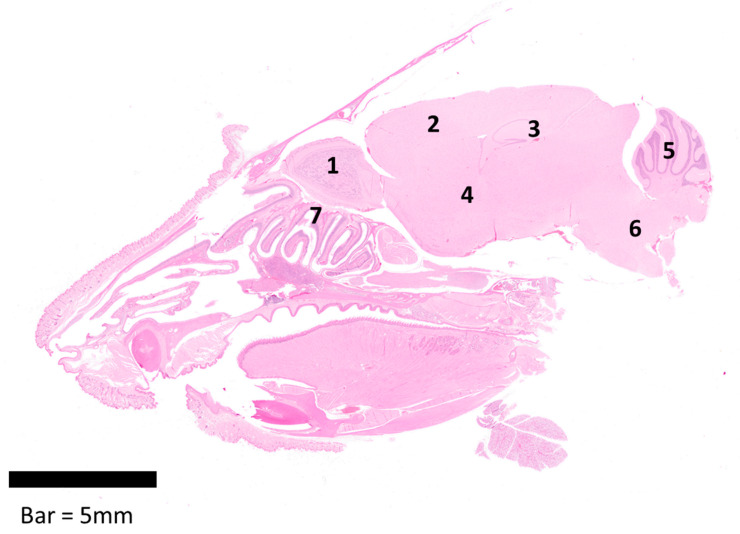
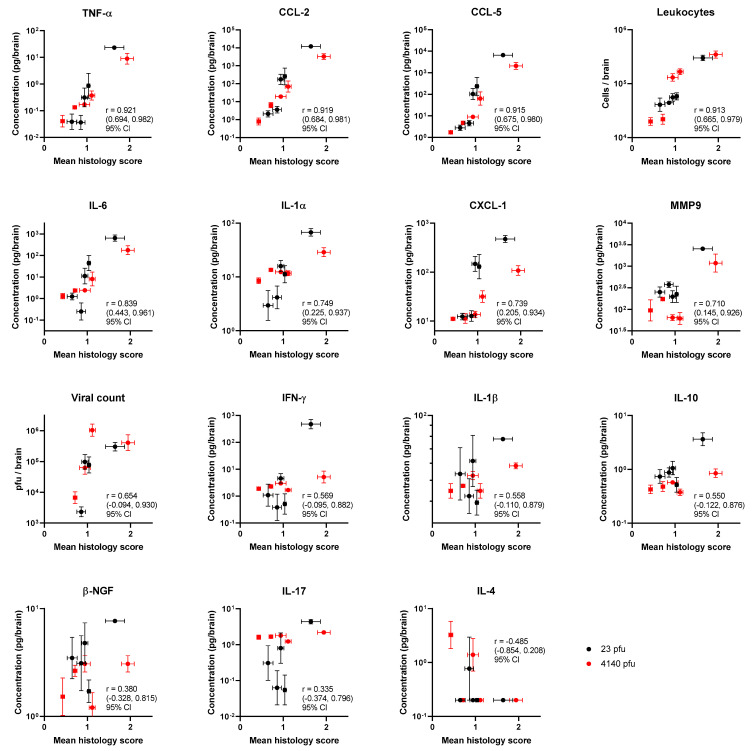
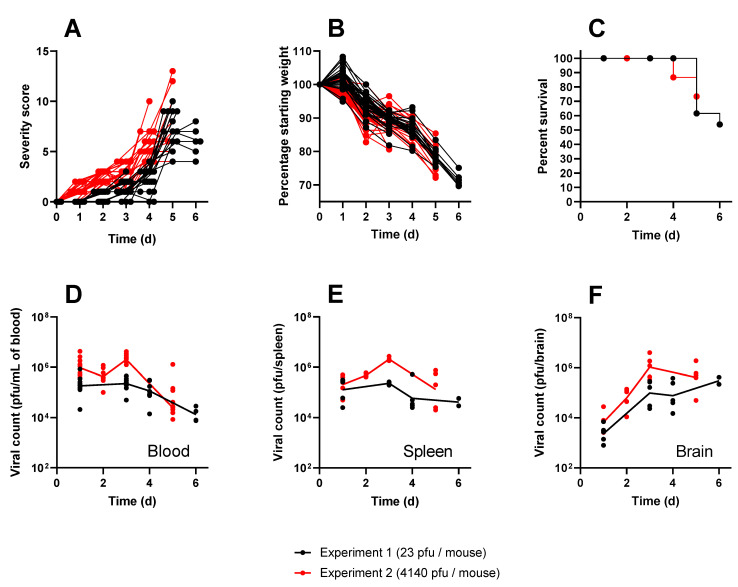
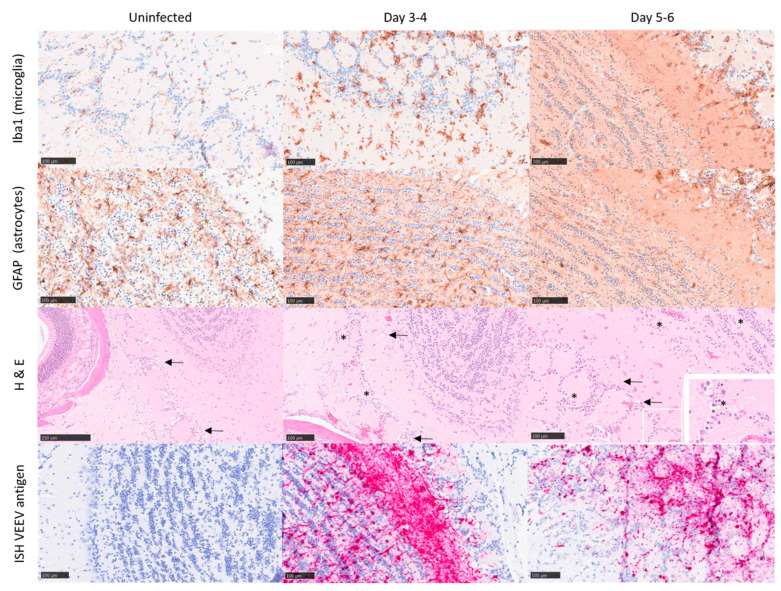
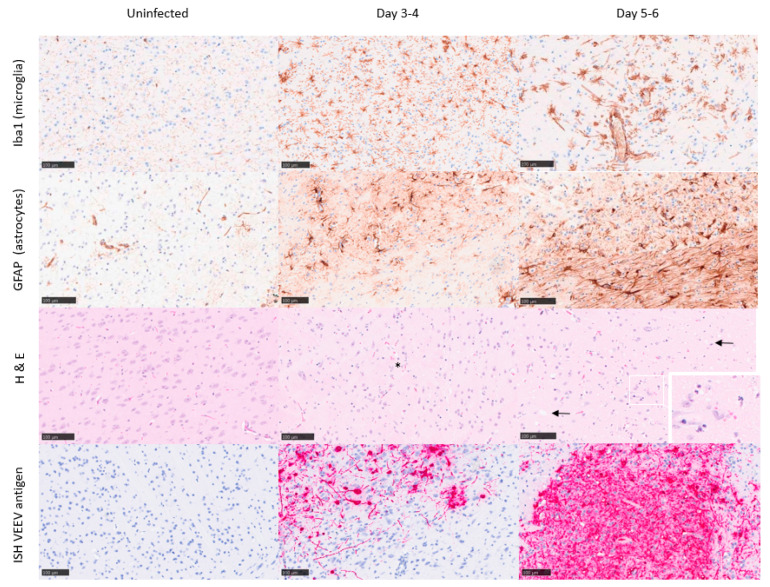
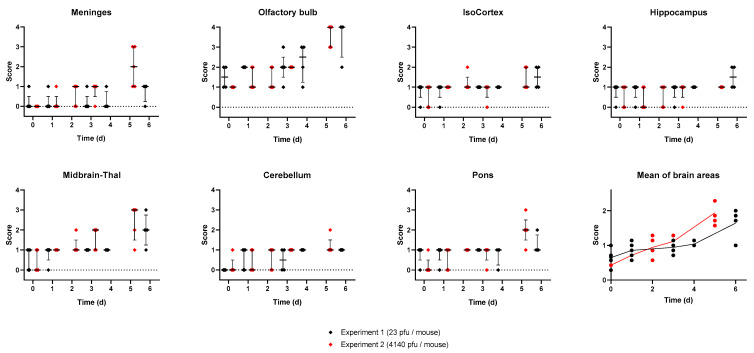
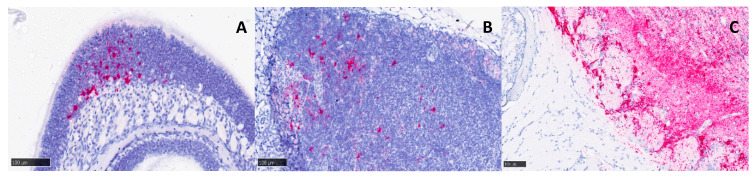
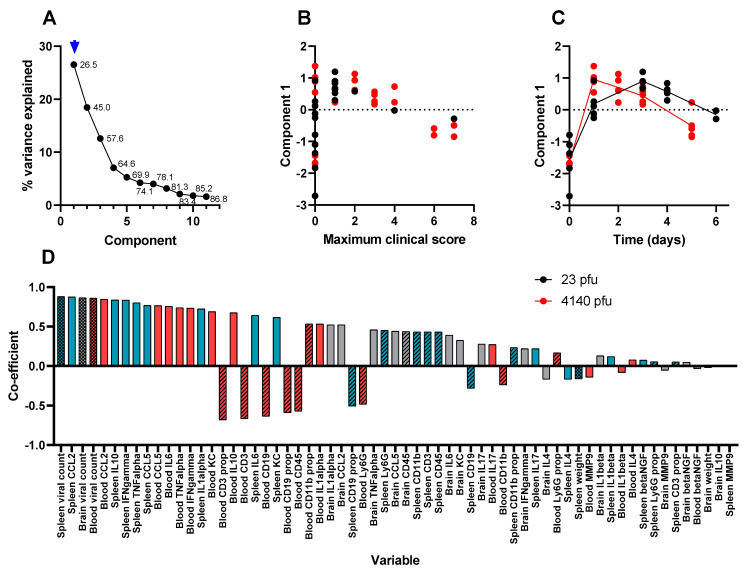
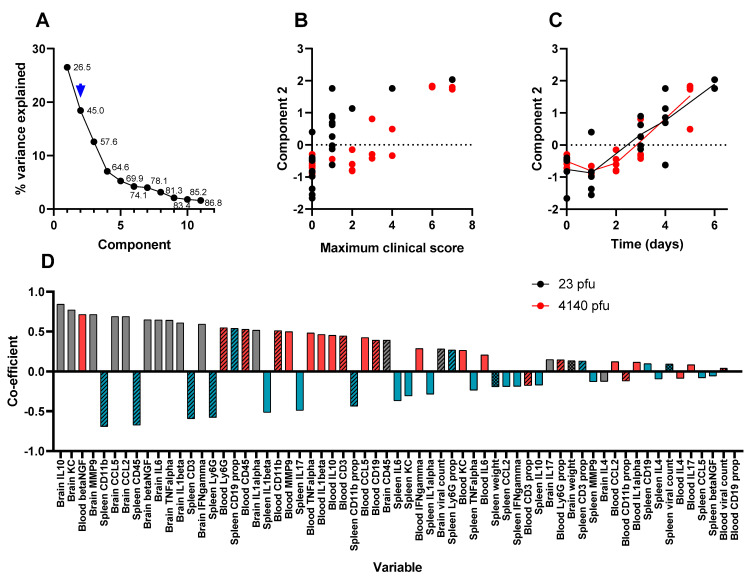
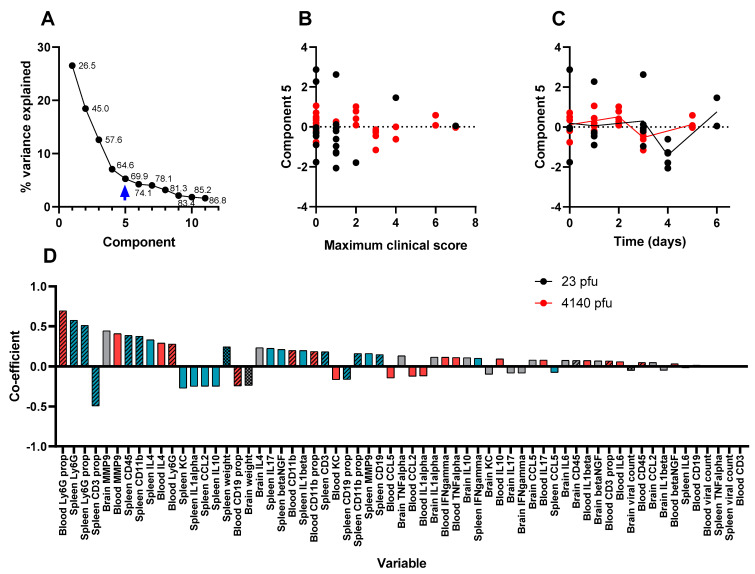
Venezuelan equine encephalitis virus (VEEV) is a disease typically confined to South and Central America, whereby human disease is characterised by a transient systemic infection and occasionally severe encephalitis, which is associated with lethality. Using an established mouse model of VEEV infection, the encephalitic aspects of the disease were analysed to identify biomarkers associated with inflammation. Sequential sampling of lethally challenged mice (infected subcutaneously) confirmed a rapid onset systemic infection with subsequent spread to the brain within 24 h of the challenge. Changes in inflammatory biomarkers (TNF-α, CCL-2, and CCL-5) and CD45 cell counts were found to correlate strongly to pathology (R>0.9) and present previously unproven biomarkers for disease severity in the model, more so than viral titre. The greatest level of pathology was observed within the olfactory bulb and midbrain/thalamus. The virus was distributed throughout the brain/encephalon, often in areas not associated with pathology. The principal component analysis identified five principal factors across two independent experiments, with the first two describing almost half of the data: (1) confirmation of a systemic Th1-biased inflammatory response to VEEV infection, and (2) a clear correlation between specific inflammation of the brain and clinical signs of disease. Targeting strongly associated biomarkers of deleterious inflammation may ameliorate or even eliminate the encephalitic syndrome of this disease.
委内瑞拉马脑炎病毒(VEEV)是一种主要局限于南美洲和中美洲的疾病,人类疾病的特征是短暂的全身感染,偶尔会出现严重的脑炎,这与死亡率有关。使用已建立的 VEEV 感染小鼠模型,分析了疾病的脑炎方面,以确定与炎症相关的生物标志物。对致死性挑战的小鼠(皮下感染)进行连续采样证实了快速发生的全身感染,随后在挑战后 24 小时内传播到大脑。炎症生物标志物(TNF-α、CCL-2 和 CCL-5)和 CD45 细胞计数的变化与病理学密切相关(R>0.9),并为该模型中的疾病严重程度提供了以前未证明的生物标志物,比病毒滴度更能说明问题。最大程度的病理学发生在嗅球和中脑/丘脑。病毒分布在整个大脑/脑,通常在与病理学无关的区域。主成分分析在两个独立的实验中确定了五个主要因素,前两个因素描述了近一半的数据:(1)证实了 VEEV 感染引起的全身性 Th1 偏向性炎症反应,(2)大脑特定炎症与疾病临床症状之间的明显相关性。针对有害炎症的强烈相关生物标志物可能会减轻甚至消除这种疾病的脑炎综合征。