School of Clinical Medicine, University of New South Wales (UNSW) Sydney, Sydney, New South Wales, Australia.
Kids Cancer Centre, Sydney Children's Hospital, Sydney, New South Wales, Australia.
Cancer. 2023 Nov 15;129(22):3620-3632. doi: 10.1002/cncr.34917. Epub 2023 Jun 29.
Germline genome sequencing in childhood cancer precision medicine trials may reveal pathogenic or likely pathogenic variants in cancer predisposition genes in more than 10% of children. These findings can have implications for diagnosis, treatment, and the child's and family's future cancer risk. Understanding parents' perspectives of germline genome sequencing is critical to successful clinical implementation.
A total of 182 parents of 144 children (<18 years of age) with poor-prognosis cancers enrolled in the Precision Medicine for Children with Cancer trial completed a questionnaire at enrollment and after the return of their child's results, including clinically relevant germline findings (received by 13% of parents). Parents' expectations of germline genome sequencing, return of results preferences, and recall of results received were assessed. Forty-five parents (of 43 children) were interviewed in depth.
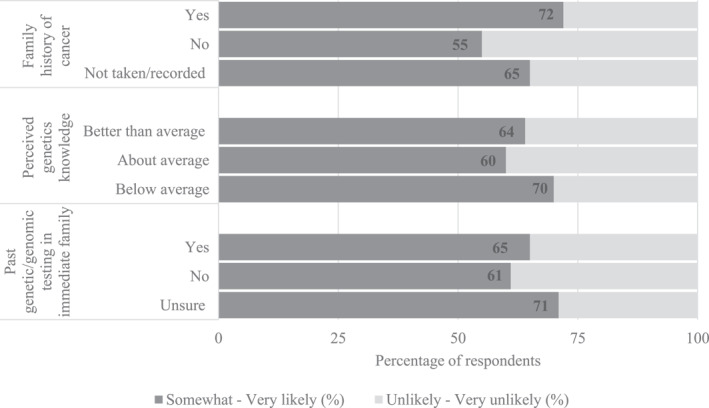
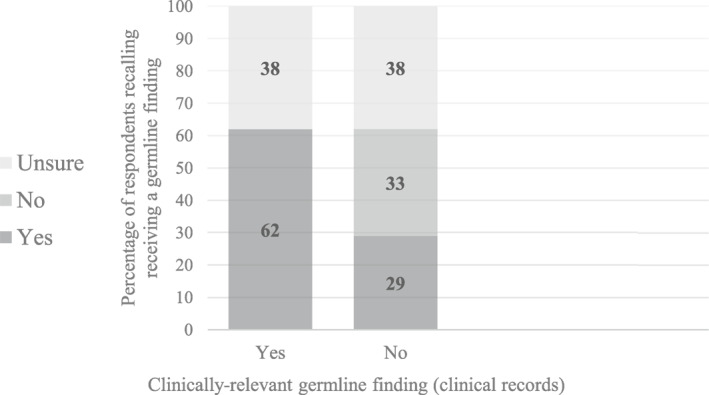
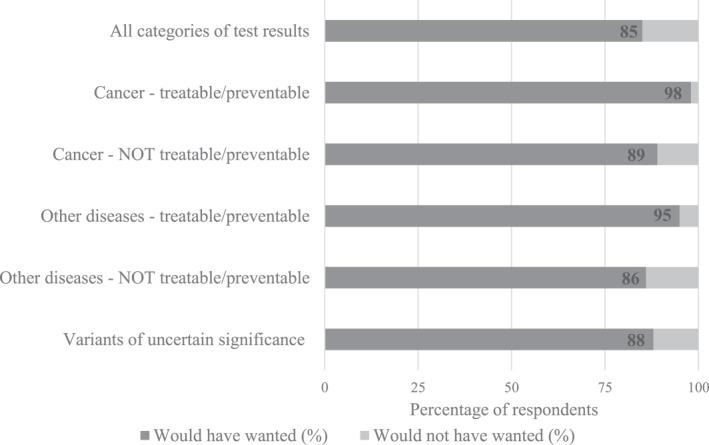
At trial enrollment, most parents (63%) believed it was at least "somewhat likely" that their child would receive a clinically relevant germline finding. Almost all expressed a preference to receive a broad range of germline genomic findings, including variants of uncertain significance (88%). Some (29%) inaccurately recalled receiving a clinically relevant germline finding. Qualitatively, parents expressed confusion and uncertainty after the return of their child's genome sequencing results by their child's clinician.
Many parents of children with poor-prognosis childhood cancer enrolled in a precision medicine trial expect their child may have an underlying cancer predisposition syndrome. They wish to receive a wide scope of information from germline genome sequencing but may feel confused by the reporting of trial results.
在儿童癌症精准医学试验中对种系基因组进行测序,可能会在超过 10%的儿童中发现癌症易感性基因中的致病变异或可能致病变异。这些发现可能会影响诊断、治疗以及儿童及其家庭的未来癌症风险。了解父母对种系基因组测序的看法对于成功实施临床应用至关重要。
共有 182 名患有预后不良癌症的 144 名儿童(<18 岁)的父母参加了“癌症患儿精准医学”试验,他们在入组时和孩子的结果返回后(13%的父母收到了具有临床相关性的种系结果)完成了一份问卷,包括对种系基因组测序的预期、结果返回偏好和收到结果的回忆。对 45 名父母(43 名儿童中的 45 名)进行了深入访谈。
在试验入组时,大多数父母(63%)认为他们的孩子至少“有可能”会得到具有临床相关性的种系发现。几乎所有父母都表示希望获得广泛的种系基因组发现,包括意义不明的变异(88%)。一些父母(29%)不准确地回忆说收到了具有临床相关性的种系发现。定性分析显示,在孩子的临床医生报告孩子的基因组测序结果后,父母感到困惑和不确定。
许多参加精准医学试验的患有预后不良儿童癌症的儿童父母预计他们的孩子可能患有潜在的癌症易感性综合征。他们希望从种系基因组测序中获得广泛的信息,但可能会对试验结果的报告感到困惑。