Target Discovery Institute, Centre for Medicines Discovery, Nuffield Department of Medicine, University of Oxford, Oxford, Oxfordshire, UK.
Target Discovery Institute, Centre for Medicines Discovery, Nuffield Department of Medicine, University of Oxford, Oxford, Oxfordshire, UK.
Mol Cell Proteomics. 2023 Aug;22(8):100609. doi: 10.1016/j.mcpro.2023.100609. Epub 2023 Jun 28.
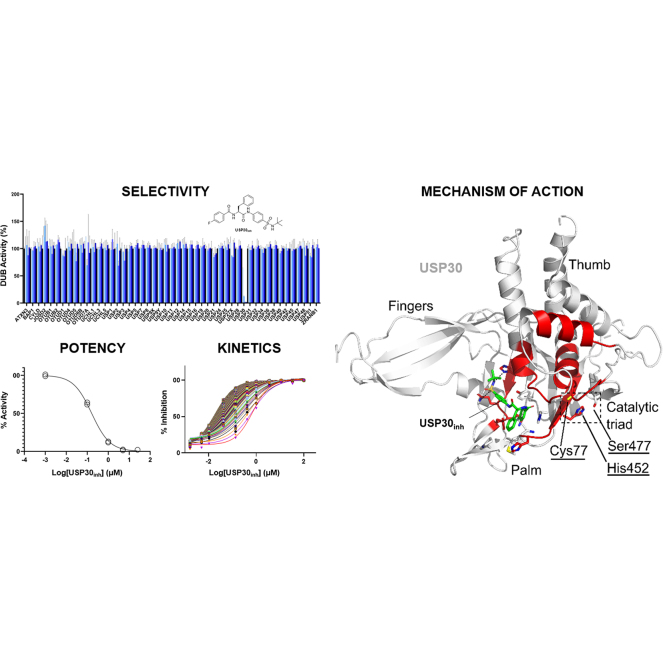
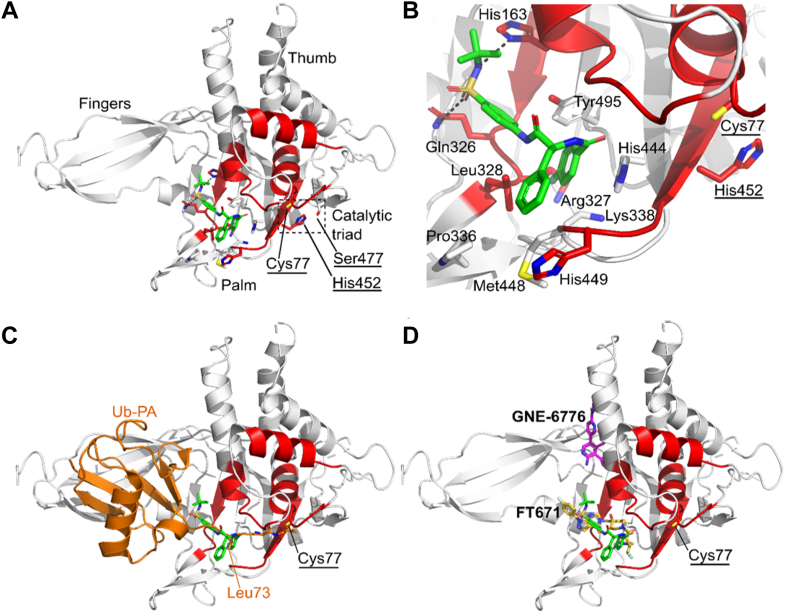
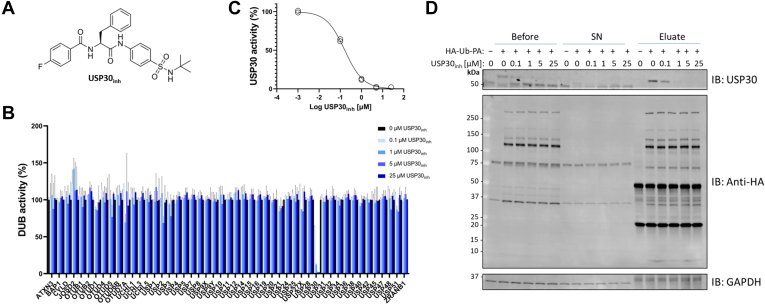
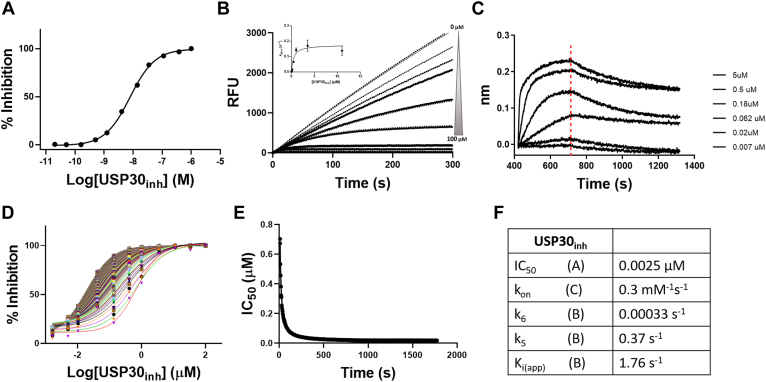
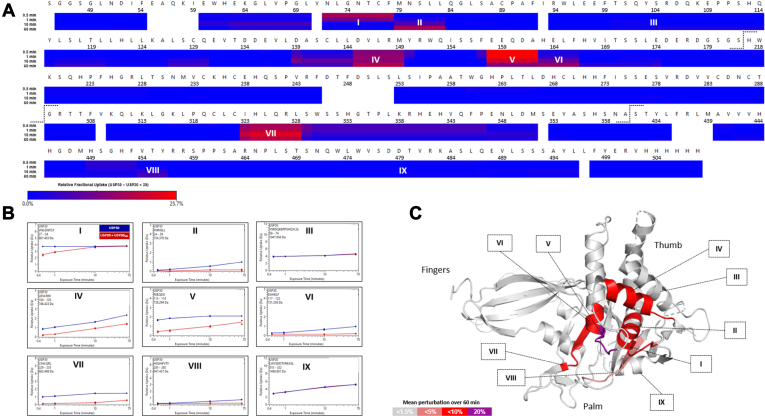
Dampening functional levels of the mitochondrial deubiquitylating enzyme Ubiquitin-specific protease 30 (USP30) has been suggested as an effective therapeutic strategy against neurodegenerative disorders such as Parkinson's Disease. USP30 inhibition may counteract the deleterious effects of impaired turnover of damaged mitochondria, which is inherent to both familial and sporadic forms of the disease. Small-molecule inhibitors targeting USP30 are currently in development, but little is known about their precise nature of binding to the protein. We have integrated biochemical and structural approaches to gain novel mechanistic insights into USP30 inhibition by a small-molecule benzosulfonamide-containing compound, USP30. Activity-based protein profiling mass spectrometry confirmed target engagement, high selectivity, and potency of USP30 for USP30 against 49 other deubiquitylating enzymes in a neuroblastoma cell line. In vitro characterization of USP30 enzyme kinetics inferred slow and tight binding behavior, which is comparable with features of covalent modification of USP30. Finally, we blended hydrogen-deuterium exchange mass spectrometry and computational docking to elucidate the molecular architecture and geometry of USP30 complex formation with USP30, identifying structural rearrangements at the cleft of the USP30 thumb and palm subdomains. These studies suggest that USP30 binds to this thumb-palm cleft, which guides the ubiquitin C terminus into the active site, thereby preventing ubiquitin binding and isopeptide bond cleavage, and confirming its importance in the inhibitory process. Our data will pave the way for the design and development of next-generation inhibitors targeting USP30 and associated deubiquitinylases.
抑制线粒体去泛素化酶泛素特异性蛋白酶 30(USP30)的功能水平已被认为是对抗神经退行性疾病(如帕金森病)的有效治疗策略。USP30 抑制可能抵消受损线粒体周转受损的有害影响,这是疾病家族和散发性形式所固有的。目前正在开发针对 USP30 的小分子抑制剂,但对它们与蛋白质的确切结合性质知之甚少。我们整合了生化和结构方法,深入了解小分子苯并磺酰胺化合物 USP30 对 USP30 的抑制机制。基于活性的蛋白质谱分析质谱法证实了靶标结合,在神经母细胞瘤细胞系中,USP30 对 USP30 具有高选择性和高效力,针对 49 种其他去泛素化酶。USP30 酶动力学的体外特性推断出缓慢而紧密的结合行为,这与 USP30 的共价修饰特征相当。最后,我们融合了氢氘交换质谱和计算对接,以阐明 USP30 与 USP30 形成复合物的分子结构和几何形状,确定 USP30 拇指和手掌亚结构裂隙处的结构重排。这些研究表明,USP30 结合到该拇指-手掌裂隙,引导泛素 C 末端进入活性位点,从而阻止泛素结合和异肽键裂解,并证实其在抑制过程中的重要性。我们的数据将为设计和开发针对 USP30 和相关去泛素化酶的下一代抑制剂铺平道路。