Xu Ren, Wang Wanning, Zhang Wenlong
Pulmonary and Critical Care Medicine Department, First Hospital of Jiliwn University, 130021, Changchun, China.
Nephrology Department, First Hospital of Jilin University, 130021, Changchun, China.
Cell Death Discov. 2023 Jun 29;9(1):197. doi: 10.1038/s41420-023-01517-8.
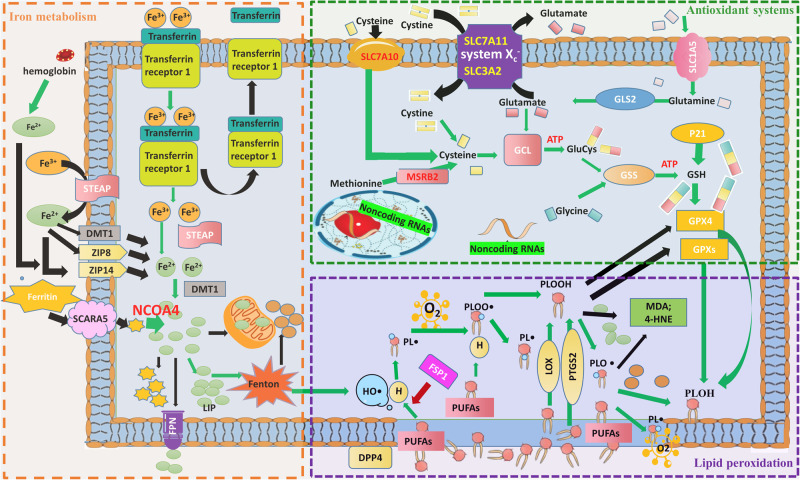
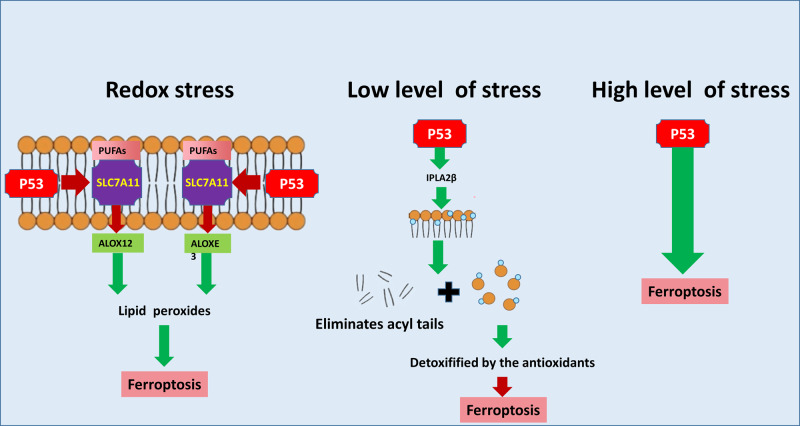
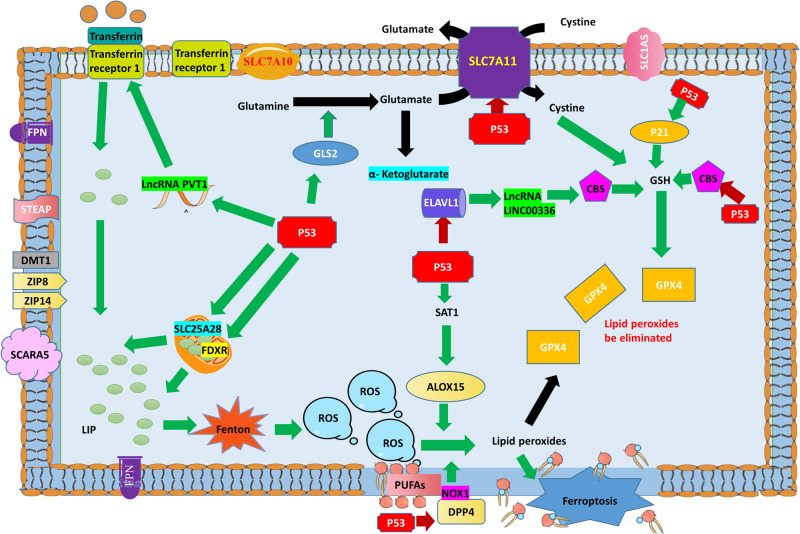
Ferroptosis is a type of regulated cell death characterized by iron-mediated lipid peroxidation, in contrast with apoptosis, autophagy, and necrosis. It can be triggered by many pathological processes, including cellular metabolism, tumors, neurodegenerative diseases, cardiovascular diseases, and ischemia-reperfusion injuries. In recent years, ferroptosis has been discovered to be associated with p53. P53 is a tumor suppressor protein with multiple and powerful functions in cell cycle arrest, senescence, cell death, repair of DNA damage, and mitophagy. Emerging evidence shows that ferroptosis plays a crucial role in tumor suppression by p53. P53 functions as a key bidirectional regulator of ferroptosis by adjusting metabolism of iron, lipids, glutathione peroxidase 4, reactive oxygen species, and amino acids via a canonical pathway. In addition, a noncanonical pathway of p53 that regulates ferroptosis has been discovered in recent years. The specific details require to be further clarified. These mechanisms provide new ideas for clinical applications, and translational studies of ferroptosis have been performed to treat various diseases.
铁死亡是一种由铁介导的脂质过氧化所特征化的程序性细胞死亡,与凋亡、自噬和坏死不同。它可由许多病理过程触发,包括细胞代谢、肿瘤、神经退行性疾病、心血管疾病和缺血再灌注损伤。近年来,已发现铁死亡与p53相关。p53是一种肿瘤抑制蛋白,在细胞周期停滞、衰老、细胞死亡、DNA损伤修复和线粒体自噬中具有多种强大功能。新出现的证据表明,铁死亡在p53介导的肿瘤抑制中起关键作用。p53通过经典途径调节铁、脂质、谷胱甘肽过氧化物酶4、活性氧和氨基酸的代谢,作为铁死亡的关键双向调节因子发挥作用。此外,近年来还发现了p53调节铁死亡的非经典途径。具体细节有待进一步阐明。这些机制为临床应用提供了新思路,并且已经开展了铁死亡的转化研究以治疗各种疾病。