Key Laboratory for Stem Cells and Tissue Engineering, Ministry of Education, Sun Yat-sen University, Guangzhou, Guangdong, China.
Rehabilitation Center, Shengjing Hospital Affiliated to China Medical University, Shenyang, Liaoning, China.
Front Immunol. 2023 Jun 14;14:1153516. doi: 10.3389/fimmu.2023.1153516. eCollection 2023.
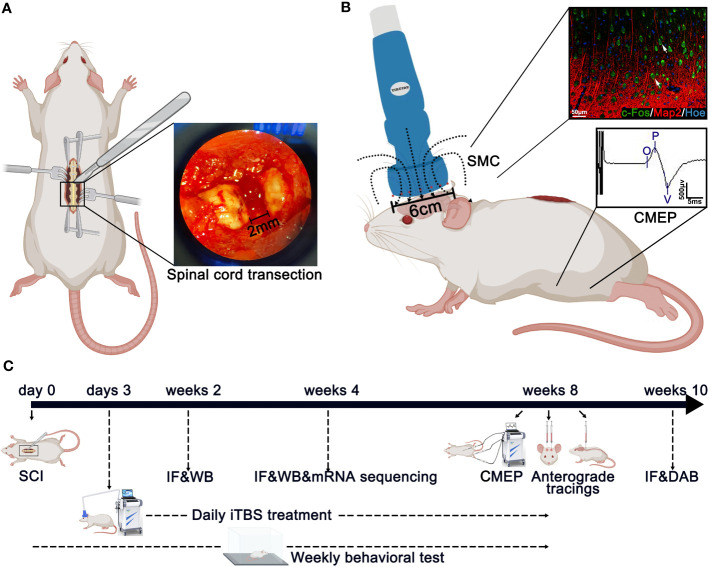
After spinal cord transection injury, the inflammatory microenvironment formed at the injury site, and the cascade of effects generated by secondary injury, results in limited regeneration of injured axons and the apoptosis of neurons in the sensorimotor cortex (SMC). It is crucial to reverse these adverse processes for the recovery of voluntary movement. The mechanism of transcranial intermittent theta-burst stimulation (iTBS) as a new non-invasive neural regulation paradigm in promoting axonal regeneration and motor function repair was explored by means of a severe spinal cord transection.
Rats underwent spinal cord transection and 2 mm resection of spinal cord at T10 level. Four groups were studied: Normal (no lesion), Control (lesion with no treatment), sham iTBS (lesion and no functional treatment) and experimental, exposed to transcranial iTBS, 72 h after spinal lesion. Each rat received treatment once a day for 5 days a week; behavioral tests were administered one a week. Inflammation, neuronal apoptosis, neuroprotective effects, regeneration and synaptic plasticity after spinal cord injury (SCI) were determined by immunofluorescence staining, western blotting and mRNA sequencing. For each rat, anterograde tracings were acquired from the SMC or the long descending propriospinal neurons and tested for cortical motor evoked potentials (CMEPs). Regeneration of the corticospinal tract (CST) and 5-hydroxytryptamine (5-HT) nerve fibers were analyzed 10 weeks after SCI.
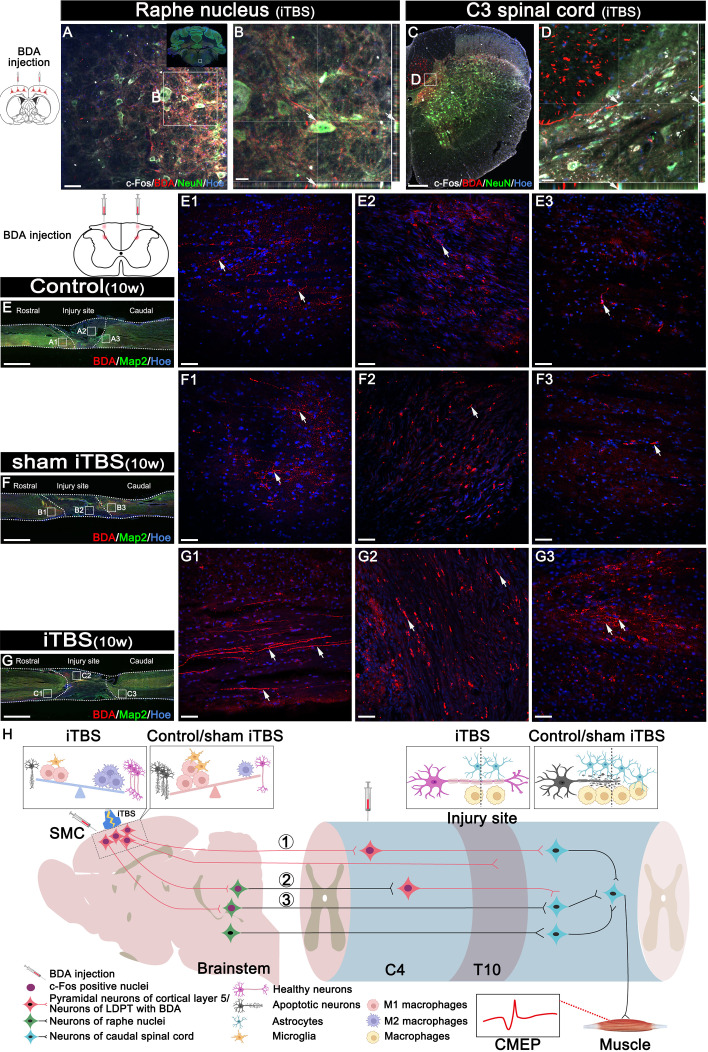
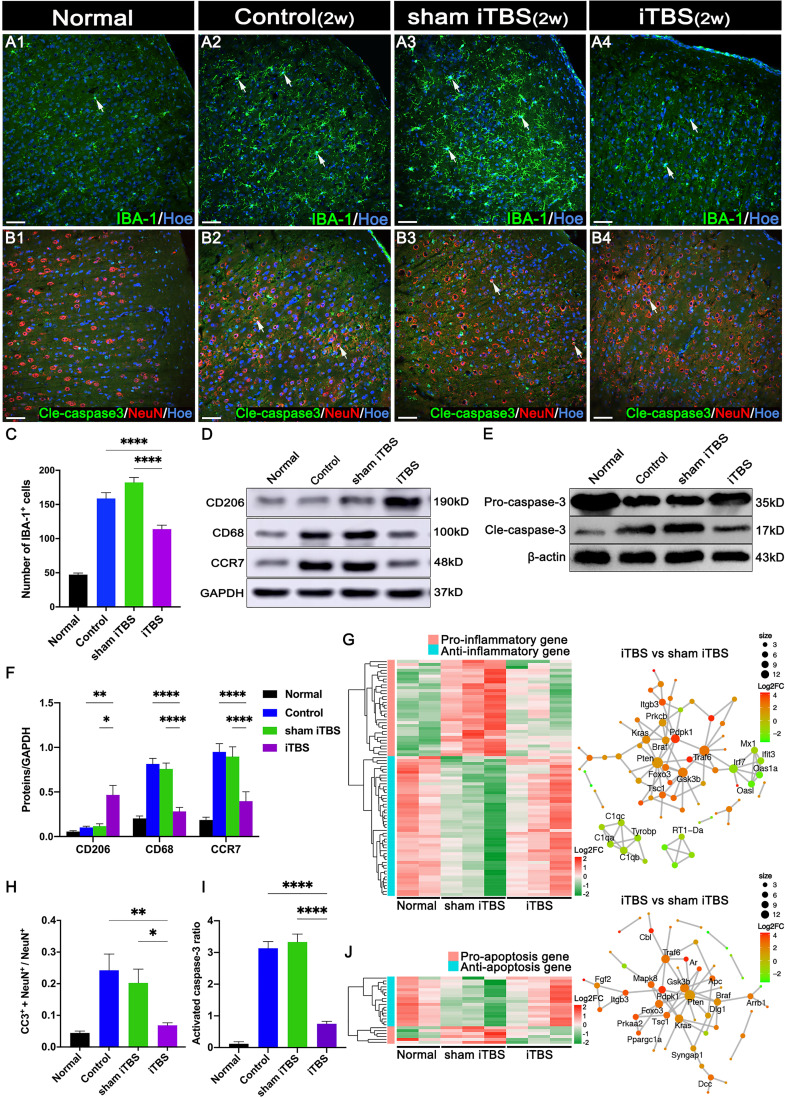
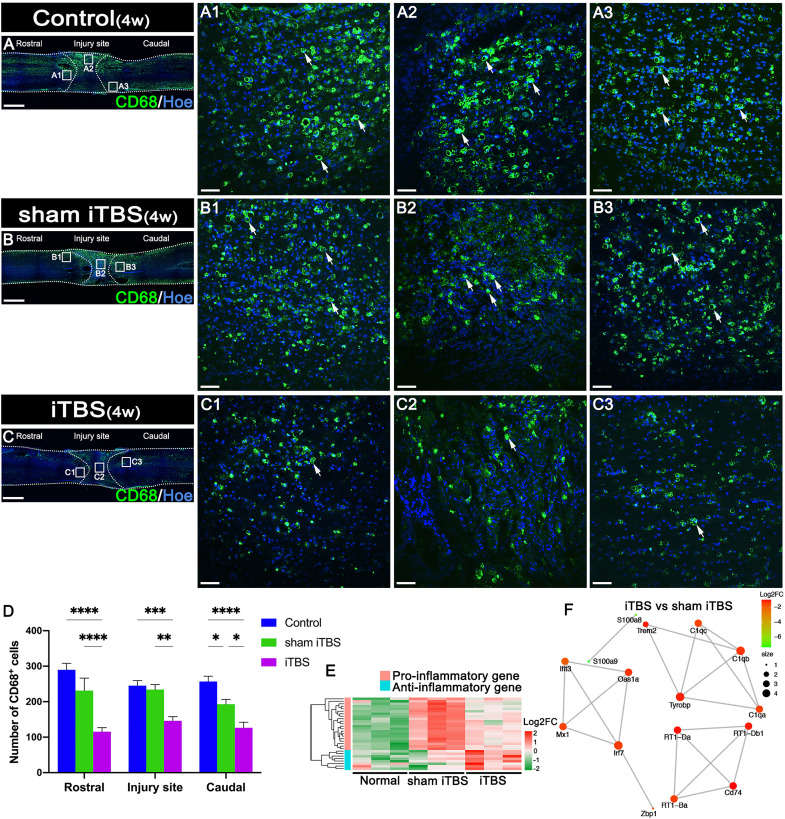
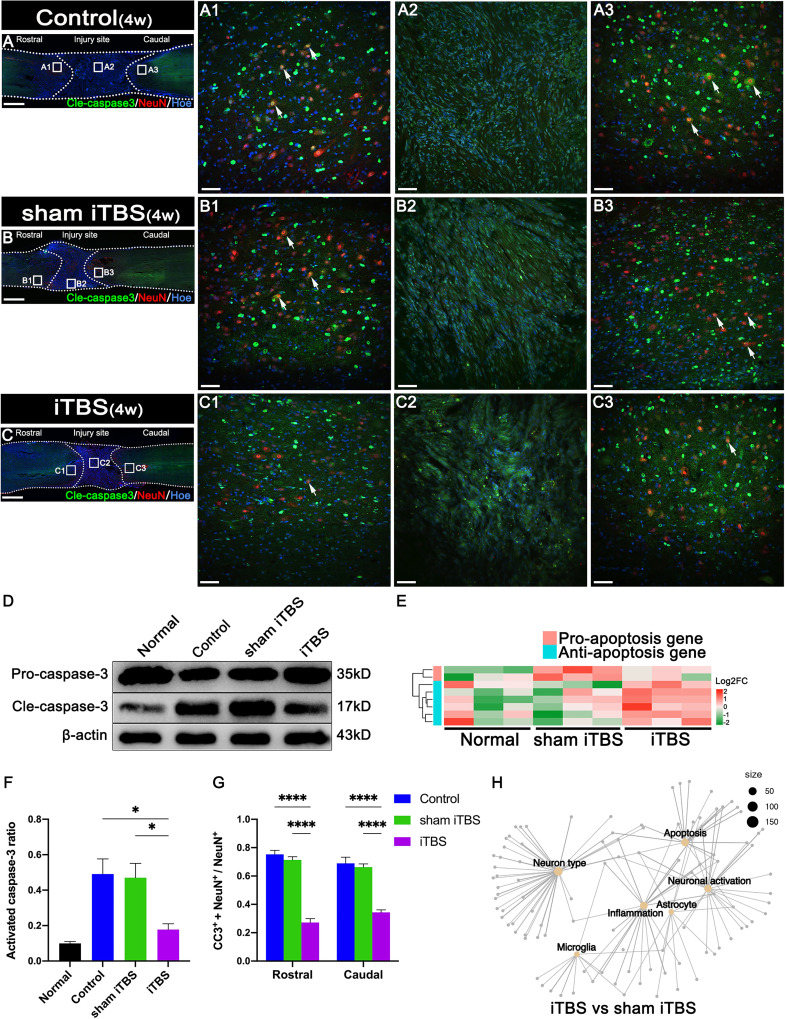
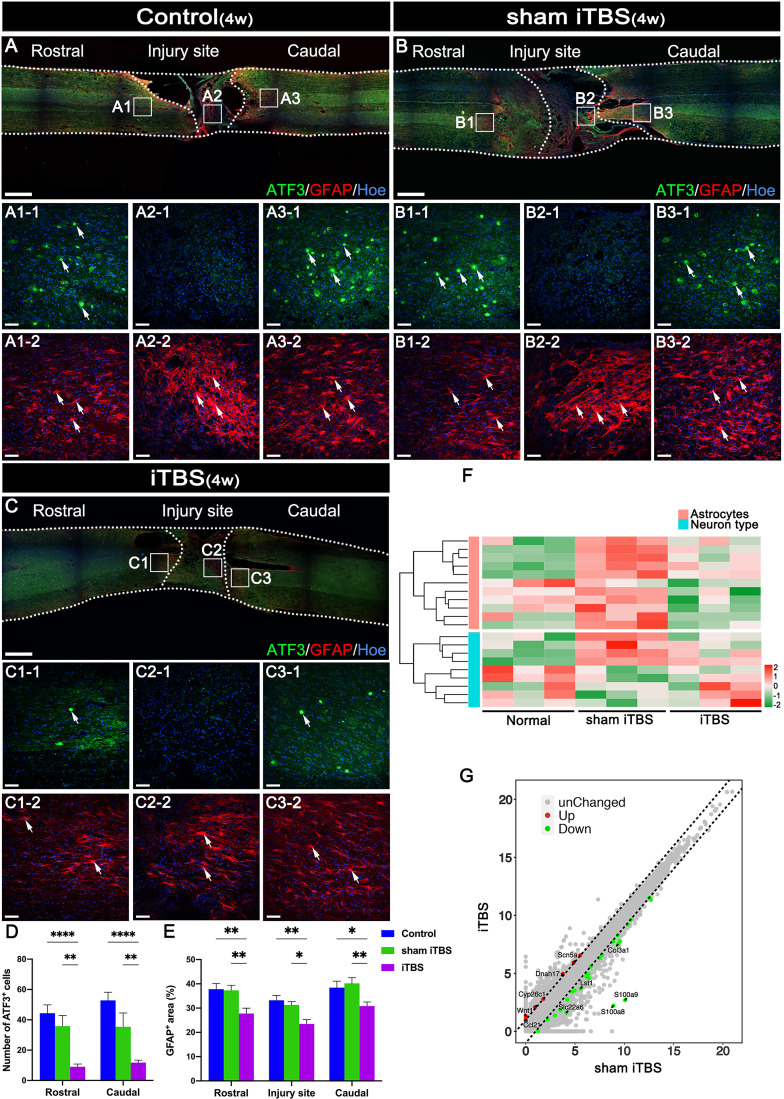
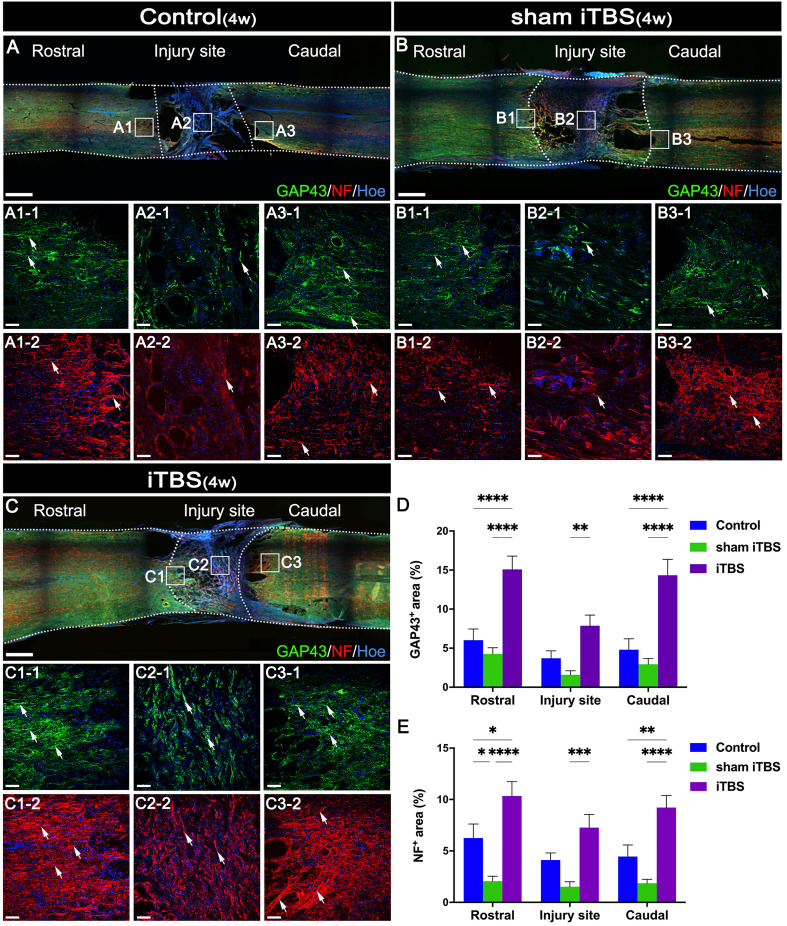
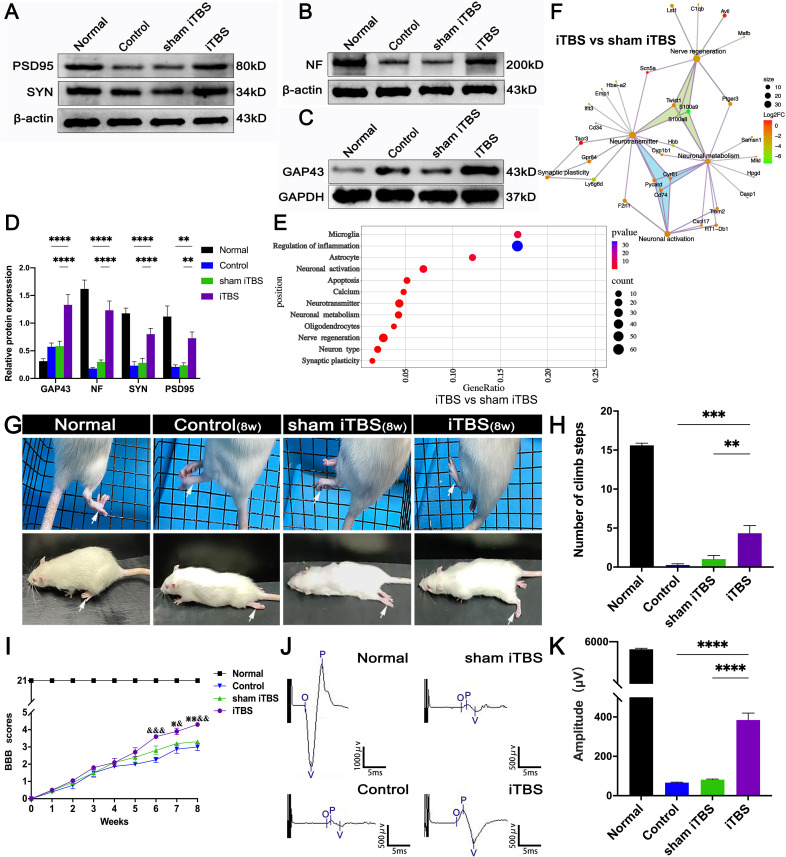
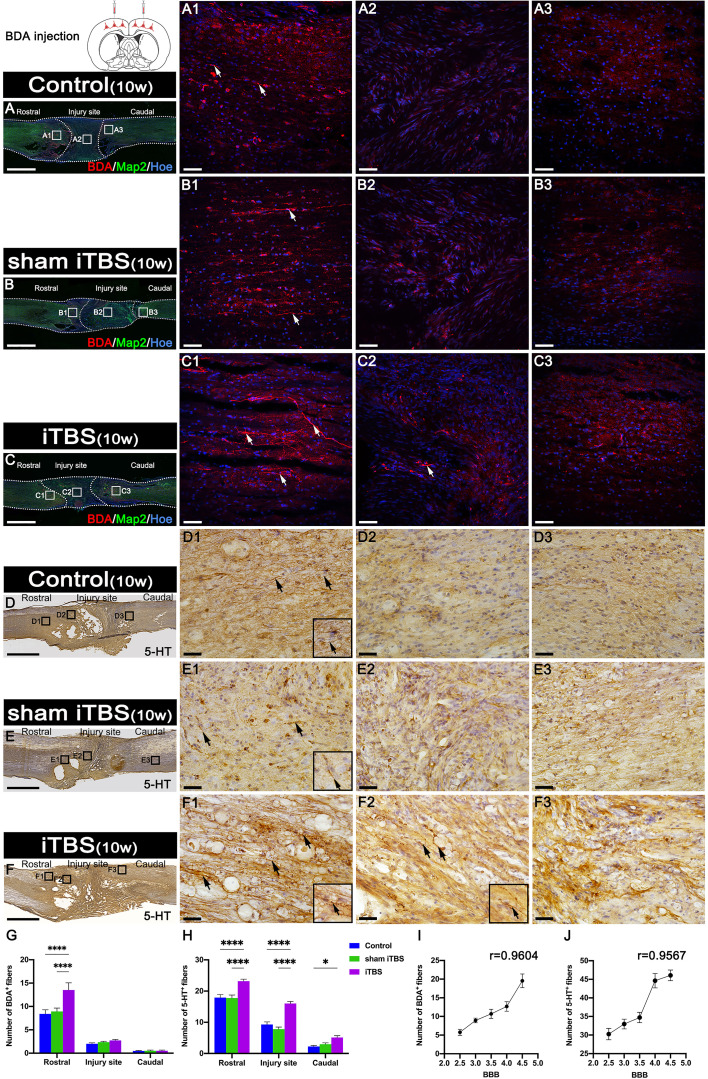
When compared to the Control group, the iTBS group showed a reduced inflammatory response and reduced levels of neuronal apoptosis in the SMC when tested 2 weeks after treatment. Four weeks after SCI, the neuroimmune microenvironment at the injury site had improved in the iTBS group, and neuroprotective effects were evident, including the promotion of axonal regeneration and synaptic plasticity. After 8 weeks of iTBS treatment, there was a significant increase in CST regeneration in the region rostral to the site of injury. Furthermore, there was a significant increase in the number of 5-HT nerve fibers at the center of the injury site and the long descending propriospinal tract (LDPT) fibers in the region caudal to the site of injury. Moreover, CMEPs and hindlimb motor function were significantly improved.
Neuronal activation and neural tracing further verified that iTBS had the potential to provide neuroprotective effects during the early stages of SCI and induce regeneration effects related to the descending motor pathways (CST, 5-HT and LDPT). Furthermore, our results revealed key relationships between neural pathway activation, neuroimmune regulation, neuroprotection and axonal regeneration, as well as the interaction network of key genes.
脊髓损伤后,损伤部位形成的炎症微环境,以及继发性损伤产生的级联效应,导致损伤轴突的再生受限和感觉运动皮层(SMC)神经元的凋亡。逆转这些不利过程对于恢复自主运动至关重要。通过严重的脊髓横断损伤,探讨了经颅间歇 theta 爆发刺激(iTBS)作为一种新的非侵入性神经调节范式促进轴突再生和运动功能修复的机制。
大鼠行 T10 水平脊髓横断和 2mm 脊髓切除术。研究了 4 组:正常(无损伤)、对照(损伤无治疗)、假 iTBS(损伤无功能治疗)和实验组,在脊髓损伤后 72 小时暴露于经颅 iTBS。每组大鼠每周接受 5 天、每天 1 次的治疗;每周进行 1 次行为测试。通过免疫荧光染色、western blot 和 mRNA 测序,确定脊髓损伤(SCI)后的炎症、神经元凋亡、神经保护作用、再生和突触可塑性。对于每只大鼠,从 SMC 或长下行 propriospinal 神经元中获取顺行追踪,并测试皮质运动诱发电位(CMEPs)。SCI 后 10 周分析皮质脊髓束(CST)和 5-羟色胺(5-HT)神经纤维的再生情况。
与对照组相比,治疗后 2 周,iTBS 组 SMC 的炎症反应和神经元凋亡水平降低。SCI 后 4 周,iTBS 组损伤部位的神经免疫微环境得到改善,神经保护作用明显,包括促进轴突再生和突触可塑性。iTBS 治疗 8 周后,损伤部位近端 CST 再生明显增加。此外,损伤中心的 5-HT 神经纤维和损伤部位远端的长下行 propriospinal 纤维(LDPT)数量显著增加。此外,CMEPs 和后肢运动功能明显改善。
神经元激活和神经追踪进一步证实,iTBS 有潜力在 SCI 的早期阶段提供神经保护作用,并诱导与下行运动通路(CST、5-HT 和 LDPT)相关的再生作用。此外,我们的结果揭示了神经通路激活、神经免疫调节、神经保护和轴突再生之间的关键关系,以及关键基因的相互作用网络。