Stekic Andjela, Zeljkovic Milica, Zaric Kontic Marina, Mihajlovic Katarina, Adzic Marija, Stevanovic Ivana, Ninkovic Milica, Grkovic Ivana, Ilic Tihomir V, Nedeljkovic Nadezda, Dragic Milorad
Laboratory for Neurobiology, Department of General Physiology and Biophysics, Faculty of Biology, University of Belgrade, Belgrade, Serbia.
Department of Molecular Biology and Endocrinology, Vinča Institute of Nuclear Sciences, National Institute of the Republic of Serbia, University of Belgrade, Belgrade, Serbia.
Front Aging Neurosci. 2022 May 17;14:889983. doi: 10.3389/fnagi.2022.889983. eCollection 2022.
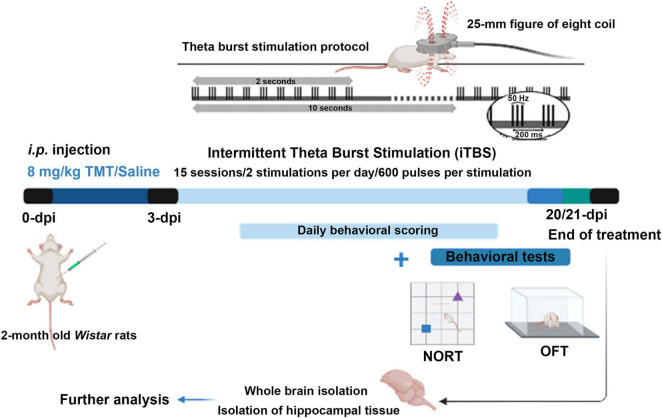
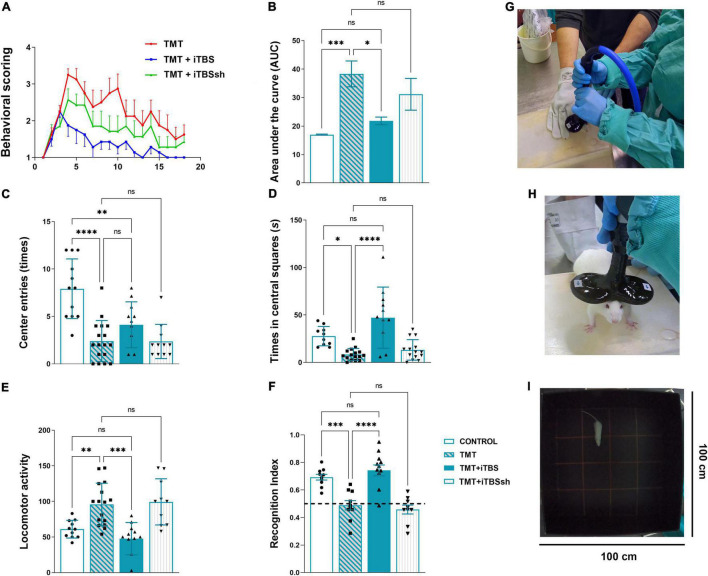
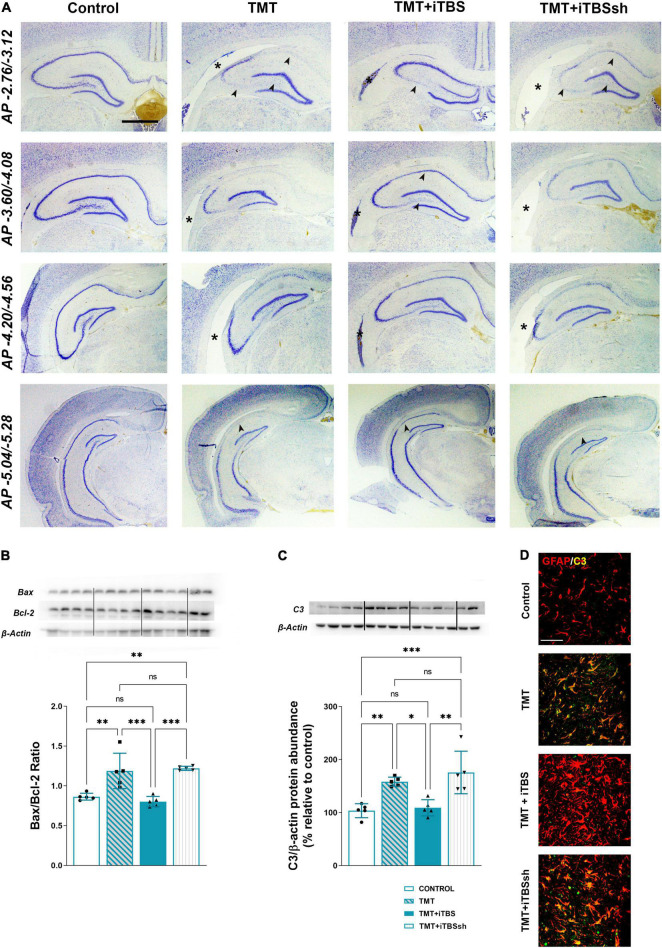
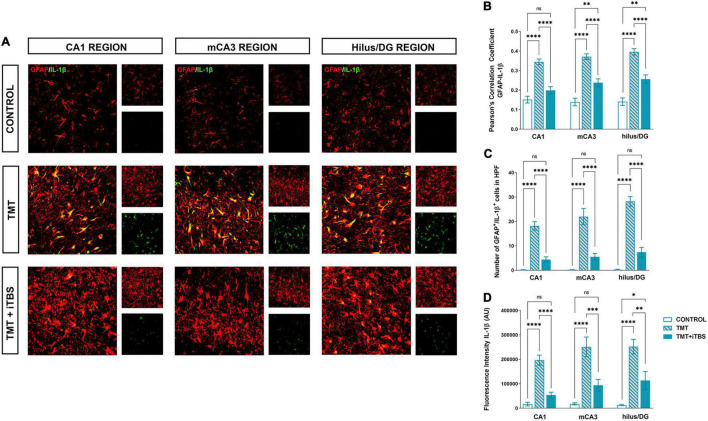
Neurodegeneration implies progressive neuronal loss and neuroinflammation further contributing to pathology progression. It is a feature of many neurological disorders, most common being Alzheimer's disease (AD). Repetitive transcranial magnetic stimulation (rTMS) is a non-invasive stimulation which modulates excitability of stimulated brain areas through magnetic pulses. Numerous studies indicated beneficial effect of rTMS in several neurological diseases, including AD, however, exact mechanism are yet to be elucidated. We aimed to evaluate the effect of intermittent theta burst stimulation (iTBS), an rTMS paradigm, on behavioral, neurochemical and molecular level in trimethyltin (TMT)-induced Alzheimer's-like disease model. TMT acts as a neurotoxic agent targeting hippocampus causing cognitive impairment and neuroinflammation, replicating behavioral and molecular aspects of AD. Male Wistar rats were divided into four experimental groups-controls, rats subjected to a single dose of TMT (8 mg/kg), TMT rats subjected to iTBS two times per day for 15 days and TMT sham group. After 3 weeks, we examined exploratory behavior and memory, histopathological and changes on molecular level. TMT-treated rats exhibited severe and cognitive deficit. iTBS-treated animals showed improved cognition. iTBS reduced TMT-induced inflammation and increased anti-inflammatory molecules. We examined PI3K/Akt/mTOR signaling pathway which is involved in regulation of apoptosis, cell growth and learning and memory. We found significant downregulation of phosphorylated forms of Akt and mTOR in TMT-intoxicated animals, which were reverted following iTBS stimulation. Application of iTBS produces beneficial effects on cognition in of rats with TMT-induced hippocampal neurodegeneration and that effect could be mediated PI3K/Akt/mTOR signaling pathway, which could candidate this protocol as a potential therapeutic approach in neurodegenerative diseases such as AD.
神经退行性变意味着神经元逐渐丧失,神经炎症进一步促进病理进展。它是许多神经系统疾病的一个特征,最常见的是阿尔茨海默病(AD)。重复经颅磁刺激(rTMS)是一种非侵入性刺激,通过磁脉冲调节受刺激脑区的兴奋性。许多研究表明rTMS对包括AD在内的几种神经系统疾病有有益作用,然而,确切机制尚待阐明。我们旨在评估间歇性theta爆发刺激(iTBS),一种rTMS模式,对三甲基锡(TMT)诱导的阿尔茨海默病样疾病模型在行为、神经化学和分子水平上的影响。TMT作为一种靶向海马体的神经毒性剂,导致认知障碍和神经炎症,复制了AD的行为和分子特征。雄性Wistar大鼠被分为四个实验组——对照组、接受单剂量TMT(8mg/kg)的大鼠、每天接受两次iTBS共15天的TMT大鼠和TMT假手术组。3周后,我们检查了探索行为和记忆、组织病理学以及分子水平的变化。TMT处理的大鼠表现出严重的认知缺陷。iTBS处理的动物认知得到改善。iTBS减少了TMT诱导的炎症并增加了抗炎分子。我们研究了PI3K/Akt/mTOR信号通路,该通路参与细胞凋亡、细胞生长以及学习和记忆的调节。我们发现TMT中毒动物中Akt和mTOR的磷酸化形式显著下调,iTBS刺激后这种下调得到逆转。应用iTBS对TMT诱导的海马体神经退行性变大鼠的认知产生有益影响,并且这种影响可能由PI3K/Akt/mTOR信号通路介导,这可能使该方案成为AD等神经退行性疾病的一种潜在治疗方法。