Mozhui Khyobeni, O'Callaghan James P, Ashbrook David G, Prins Pjotr, Zhao Wenyuan, Lu Lu, Jones Byron C
Department of Preventive Medicine, College of Medicine, University of Tennessee Health Science Center, Memphis, TN, United States.
Department of Genetics, Genomics and Informatics, College of Medicine, University of Tennessee Health Science Center, Memphis, TN, United States.
Front Toxicol. 2023 Jun 14;5:1162749. doi: 10.3389/ftox.2023.1162749. eCollection 2023.
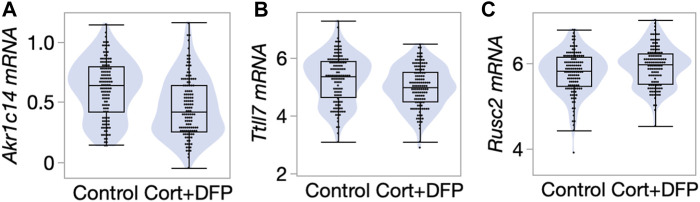
Of the nearly 1 million military personnel who participated in the 1990-1991 Gulf War, between 25% and 35% became ill with what now is referred to as Gulf War Illness (GWI) by the Department of Defense. Symptoms varied from gastrointestinal distress to lethargy, memory loss, inability to concentrate, depression, respiratory, and reproductive problems. The symptoms have persisted for 30 years in those afflicted but the basis of the illness remains largely unknown. Nerve agents and other chemical exposures in the war zone have been implicated but the long-term effects of these acute exposures have left few if any identifiable signatures. The major aim of this study is to elucidate the possible genomic basis for the persistence of symptoms, especially of the neurological and behavioral effects. To address this, we performed a whole genome epigenetic analysis of the proposed cause of GWI, viz., exposure to organophosphate neurotoxicants combined with high circulating glucocorticoids in two inbred mouse strains, C57BL/6J and DBA/2J. The animals received corticosterone in their drinking water for 7 days followed by injection of diisopropylfluorophosphate, a nerve agent surrogate. Six weeks after DFP injection, the animals were euthanized and medial prefrontal cortex harvested for genome-wide DNA methylation analysis using high-throughput sequencing. We observed 67 differentially methylated genes, notably among them, and all related to different symptoms of GWI. Our results support proof of principle of genetic differences in the chronic effects of GWI-related exposures and may reveal why the disease has persisted in many of the now aging Gulf War veterans.
在参与1990 - 1991年海湾战争的近100万军事人员中,25%至35%的人患上了现在被国防部称为海湾战争综合征(GWI)的疾病。症状从胃肠道不适到嗜睡、失忆、注意力不集中、抑郁、呼吸和生殖问题不等。这些症状在患者身上持续了30年,但该疾病的病因在很大程度上仍不明确。战区的神经毒剂和其他化学物质暴露被认为与此有关,但这些急性暴露的长期影响几乎没有留下可识别的特征。本研究的主要目的是阐明症状持续存在的可能基因组基础,特别是神经和行为影响方面的基础。为了解决这个问题,我们对GWI的假定病因进行了全基因组表观遗传分析,即在两种近交小鼠品系C57BL/6J和DBA/2J中,使它们暴露于有机磷酸酯神经毒剂并伴有高循环糖皮质激素。这些动物在饮用水中摄入皮质酮7天,随后注射二异丙基氟磷酸酯(一种神经毒剂替代物)。在注射二异丙基氟磷酸酯六周后,对动物实施安乐死并采集内侧前额叶皮质,用于使用高通量测序进行全基因组DNA甲基化分析。我们观察到67个差异甲基化基因,其中特别值得注意的是, 以及 所有这些都与GWI的不同症状相关。我们的结果支持了GWI相关暴露慢性影响中存在遗传差异的原理证明,并可能揭示为什么这种疾病在许多现已年迈的海湾战争退伍军人中持续存在。