Department of Nephrology, The First Hospital of Jilin University, Changchun, China.
Department of Renal Pathology, The First Hospital of Jilin University, Changchun, China.
Arthritis Res Ther. 2023 Jul 1;25(1):112. doi: 10.1186/s13075-023-03094-8.
Lupus nephritis (LN) is one of the most severe complications of systemic lupus erythematosus (SLE). However, the current management of LN remains unsatisfactory due to sneaky symptoms during early stages and lack of reliable predictors of disease progression.
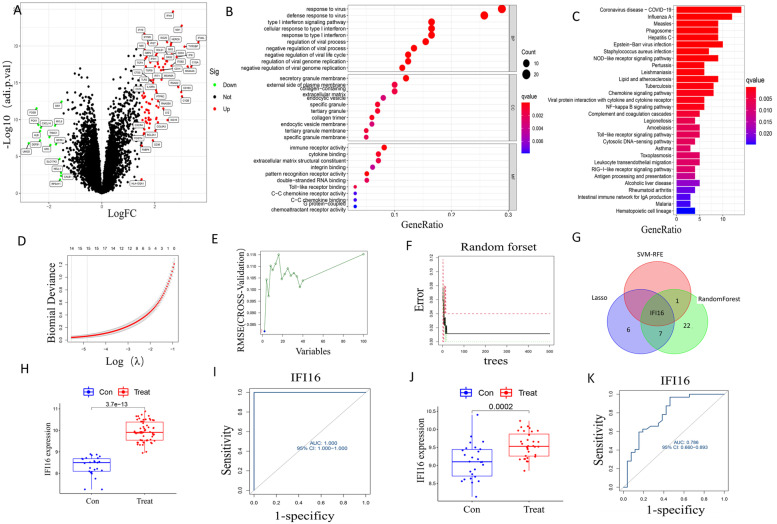
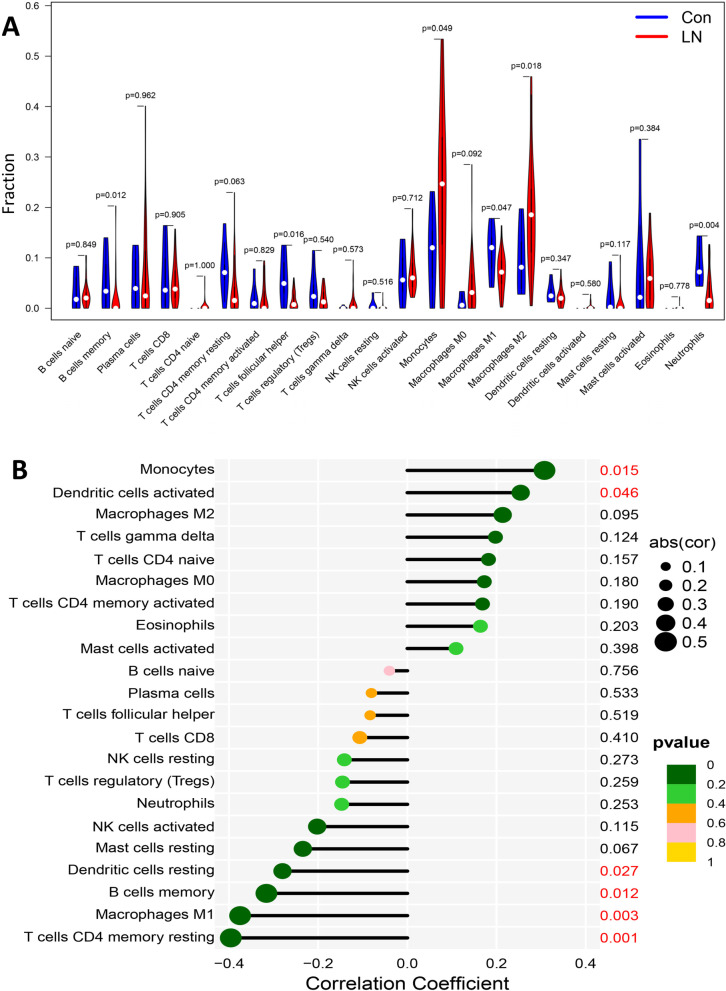
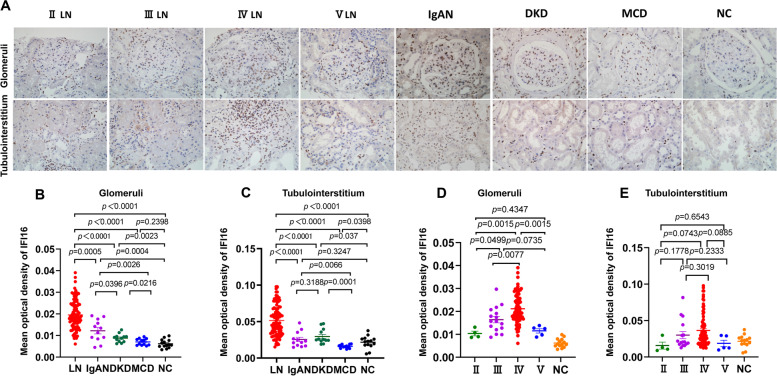
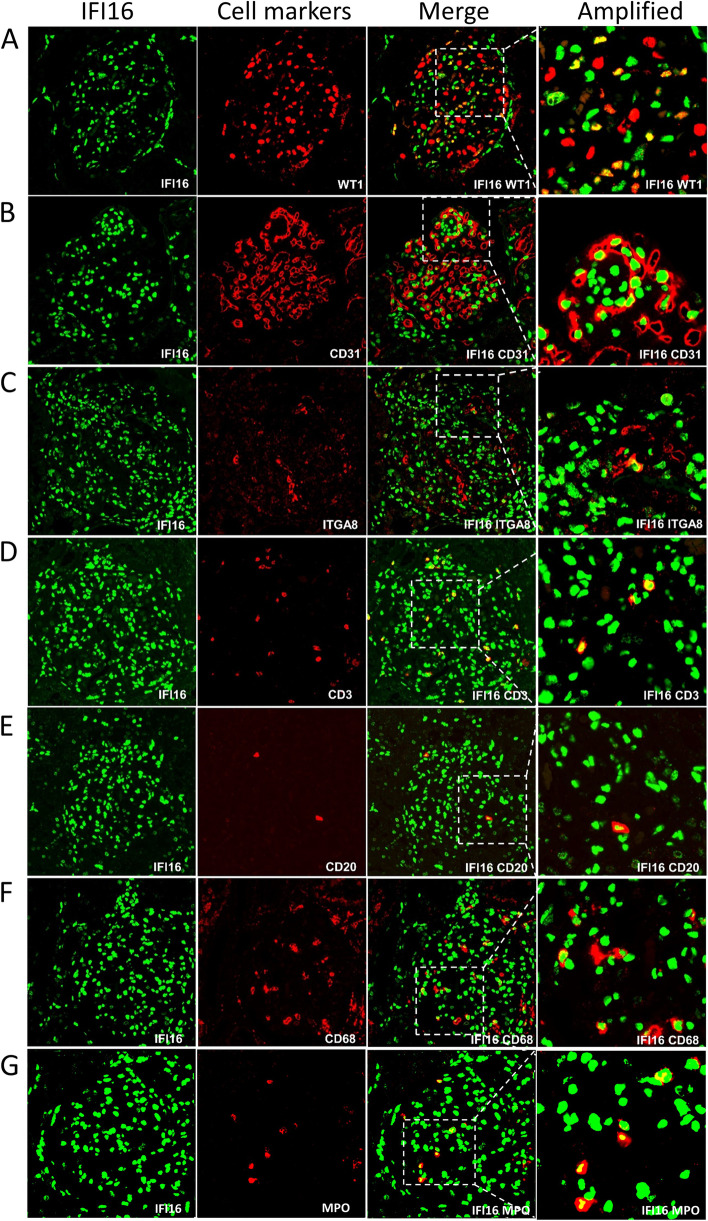
Bioinformatics and machine learning algorithms were initially used to explore the potential biomarkers for LN development. Identified biomarker expression was evaluated by immunohistochemistry (IHC) and multiplex immunofluorescence (IF) in 104 LN patients, 12 diabetic kidney disease (DKD) patients, 12 minimal change disease (MCD) patients, 12 IgA nephropathy (IgAN) patients and 14 normal controls (NC). The association of biomarker expression with clinicopathologic indices and prognosis was analyzed. Gene Set Enrichment Analysis (GSEA) and Gene Set Variation Analysis (GSVA) were utilized to explore potential mechanisms.
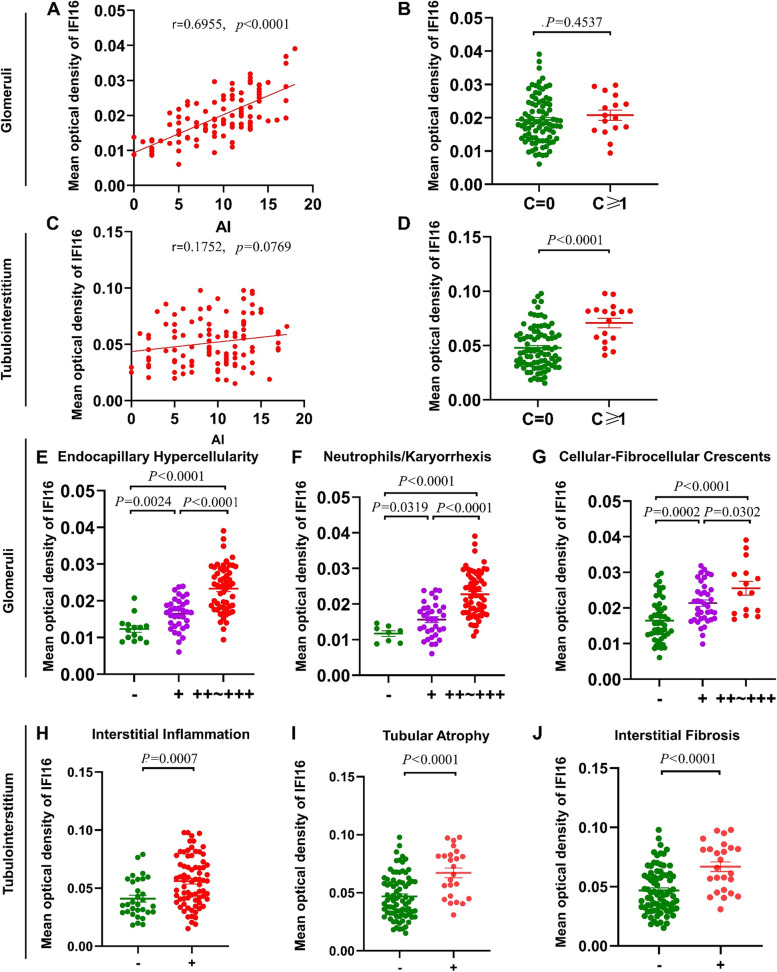
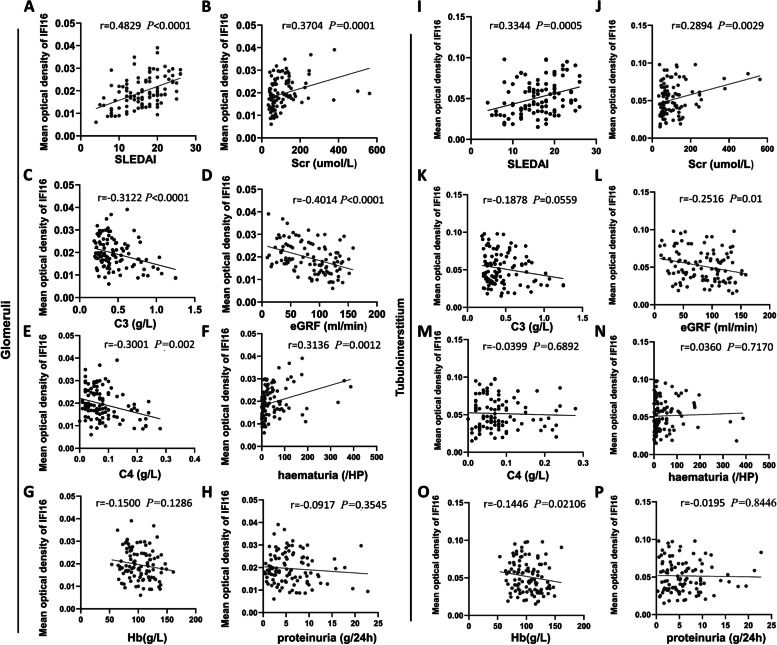
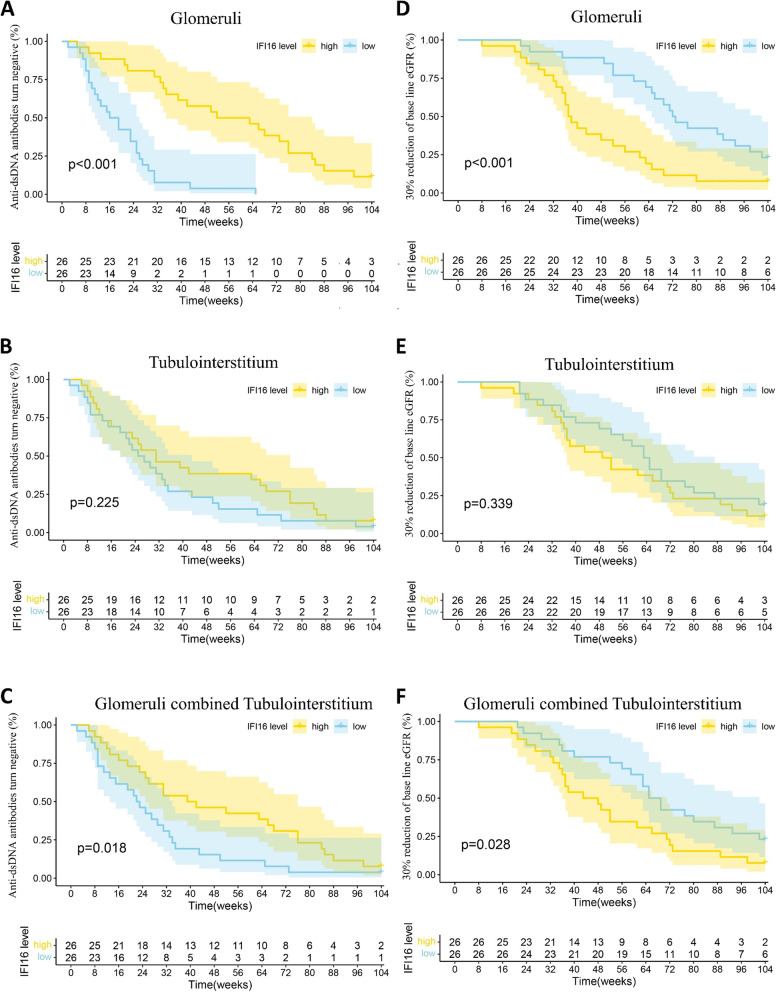
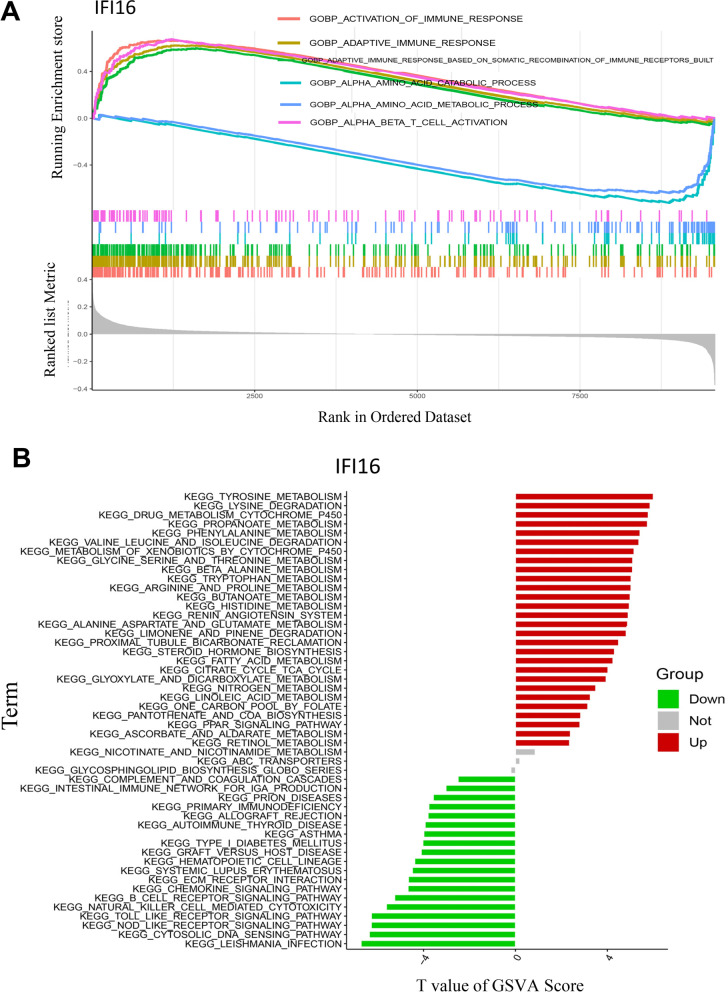
Interferon-inducible protein 16 (IFI16) was identified as a potential biomarker for LN. IFI16 was highly expressed in the kidneys of LN patients compared to those with MCD, DKD, IgAN or NC. IFI16 co-localized with certain renal and inflammatory cells. Glomerular IFI16 expression was correlated with pathological activity indices of LN, while tubulointerstitial IFI16 expression was correlated with pathological chronicity indices. Renal IFI16 expression was positively associated with systemic lupus erythematosus disease activity index (SLEDAI) and serum creatinine while negatively related to baseline eGFR and serum complement C3. Additionally, higher IFI16 expression was closely related to poorer prognosis of LN patients. GSEA and GSVA suggested that IFI16 expression was involved in adaptive immune-related processes of LN.
Renal IFI16 expression is a potential biomarker for disease activity and clinical prognosis in LN patients. Renal IFI16 levels may be used to shed light on predicting the renal response and develop precise therapy for LN.
狼疮肾炎 (LN) 是系统性红斑狼疮 (SLE) 最严重的并发症之一。然而,由于早期症状隐匿以及缺乏可靠的疾病进展预测指标,LN 的当前治疗效果仍不理想。
我们最初使用生物信息学和机器学习算法来探索 LN 发展的潜在生物标志物。在 104 例 LN 患者、12 例糖尿病肾病 (DKD) 患者、12 例微小病变性肾病 (MCD) 患者、12 例 IgA 肾病 (IgAN) 患者和 14 名正常对照 (NC) 中,通过免疫组化 (IHC) 和多重免疫荧光 (IF) 评估了鉴定出的生物标志物的表达。分析了生物标志物表达与临床病理指标和预后的关系。利用基因集富集分析 (GSEA) 和基因集变异分析 (GSVA) 来探讨潜在的机制。
干扰素诱导蛋白 16 (IFI16) 被鉴定为 LN 的潜在生物标志物。与 MCD、DKD、IgAN 或 NC 患者相比,LN 患者肾脏中 IFI16 表达水平较高。IFI16 与某些肾脏和炎症细胞共定位。肾小球 IFI16 表达与 LN 的病理活动指数相关,而肾小管间质 IFI16 表达与病理慢性指数相关。肾 IFI16 表达与系统性红斑狼疮疾病活动指数 (SLEDAI) 和血清肌酐呈正相关,与基线 eGFR 和血清补体 C3 呈负相关。此外,较高的 IFI16 表达与 LN 患者预后较差密切相关。GSEA 和 GSVA 表明,IFI16 表达与 LN 的适应性免疫相关过程有关。
肾 IFI16 表达是 LN 患者疾病活动和临床预后的潜在生物标志物。肾 IFI16 水平可用于预测肾脏反应并为 LN 开发精准治疗方法。