Kojima Ryuta, Nakamoto Shingo, Kogure Tadayoshi, Ma Yaojia, Ogawa Keita, Iwanaga Terunao, Qiang Na, Ao Junjie, Nakagawa Ryo, Muroyama Ryosuke, Nakamura Masato, Chiba Tetsuhiro, Kato Jun, Kato Naoya
Department of Gastroenterology, Graduate School of Medicine, Chiba University, Chiba 260-8670, Japan.
World J Virol. 2023 Jun 25;12(3):209-220. doi: 10.5501/wjv.v12.i3.209.
Hepatitis B virus (HBV) is a major cause of hepatocellular carcinoma (HCC). HBV DNA can get integrated into the hepatocyte genome to promote carcinogenesis. However, the precise mechanism by which the integrated HBV genome promotes HCC has not been elucidated.
To analyze the features of HBV integration in HCC using a new reference database and integration detection method.
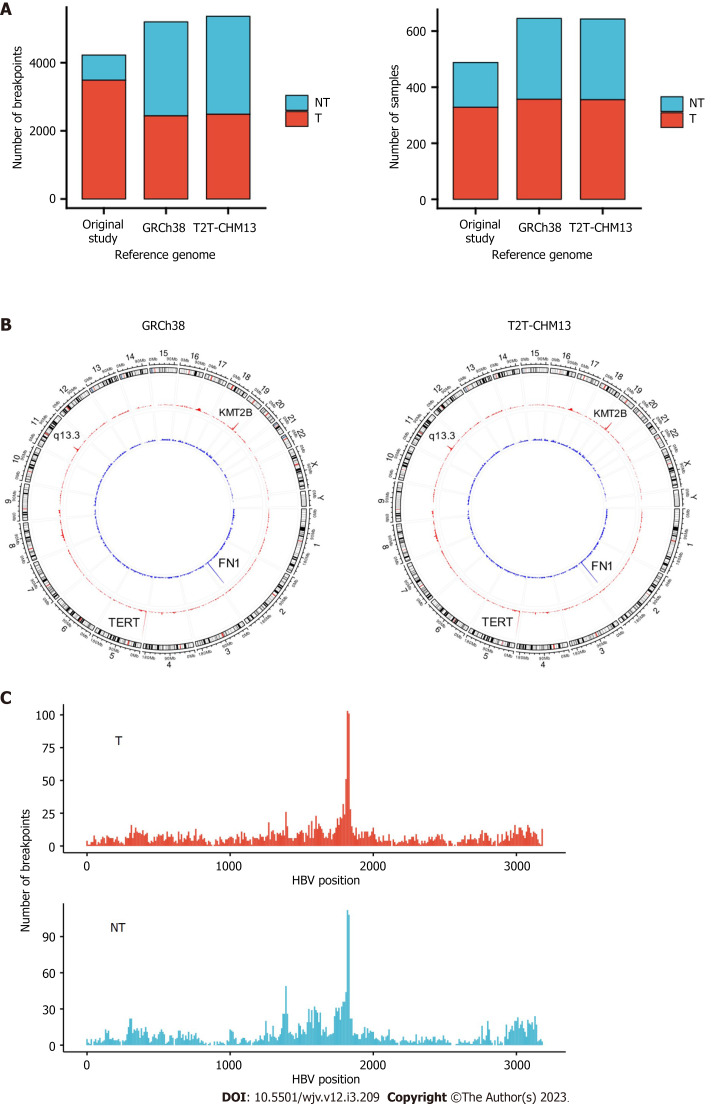
Published data, consisting of 426 Liver tumor samples and 426 paired adjacent non-tumor samples, were re-analyzed to identify the integration sites. Genome Reference Consortium Human Build 38 (GRCh38) and Telomere-to-Telomere Consortium CHM13 (T2T-CHM13 (v2.0)) were used as the human reference genomes. In contrast, human genome 19 (hg19) was used in the original study. In addition, GRIDSS VIRUSBreakend was used to detect HBV integration sites, whereas high-throughput viral integration detection (HIVID) was applied in the original study (HIVID-hg19).
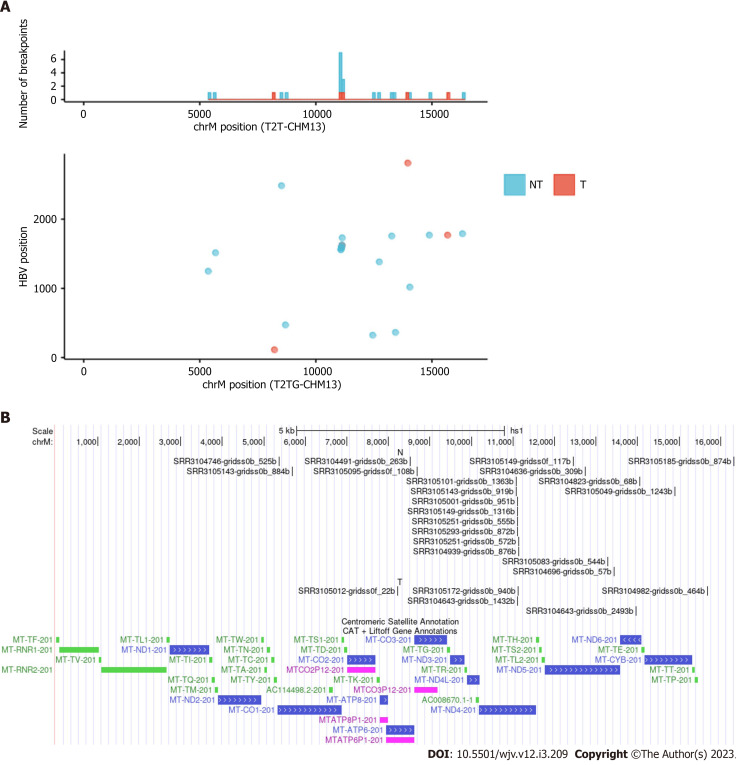
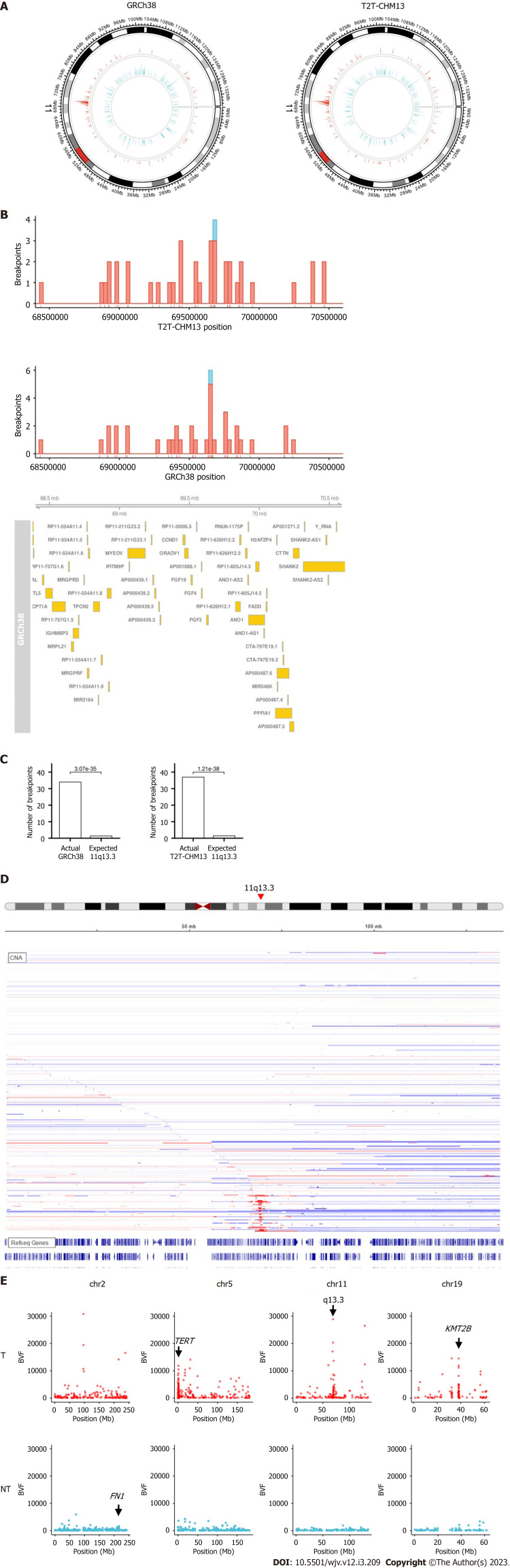
A total of 5361 integration sites were detected using T2T-CHM13. In the tumor samples, integration hotspots in the cancer driver genes, such as and , were consistent with those in the original study. GRIDSS VIRUSBreakend detected integrations in more samples than by HIVID-hg19. Enrichment of integration was observed at chromosome 11q13.3, including the pro-moter, in tumor samples. Recurrent integration sites were observed in mitochondrial genes.
GRIDSS VIRUSBreakend using T2T-CHM13 is accurate and sensitive in detecting HBV integration. Re-analysis provides new insights into the regions of HBV integration and their potential roles in HCC development.
乙型肝炎病毒(HBV)是肝细胞癌(HCC)的主要病因。HBV DNA可整合到肝细胞基因组中促进癌变。然而,整合的HBV基因组促进HCC的确切机制尚未阐明。
使用新的参考数据库和整合检测方法分析HCC中HBV整合的特征。
重新分析已发表的数据,包括426个肝肿瘤样本和426个配对的相邻非肿瘤样本,以确定整合位点。基因组参考联盟人类构建38(GRCh38)和端粒到端粒联盟CHM13(T2T-CHM13(v2.0))用作人类参考基因组。相比之下,原始研究中使用的是人类基因组19(hg19)。此外,GRIDSS VIRUSBreakend用于检测HBV整合位点,而原始研究中应用的是高通量病毒整合检测(HIVID)(HIVID-hg19)。
使用T2T-CHM13共检测到5361个整合位点。在肿瘤样本中,癌症驱动基因中的整合热点,如 和 ,与原始研究中的一致。GRIDSS VIRUSBreakend检测到的整合样本比HIVID-hg19更多。在肿瘤样本的11q13.3染色体上观察到整合富集,包括 启动子。在线粒体基因中观察到反复出现的整合位点。
使用T2T-CHM13的GRIDSS VIRUSBreakend在检测HBV整合方面准确且灵敏。重新分析为HBV整合区域及其在HCC发展中的潜在作用提供了新的见解。