Wang Kaili, Zhao Xu, Gantumur Munkh-Amgalan, Li Jinzhe, Huang Yuxuan, Sukhbaatar Narantuya, Bo Tian, Jiang Zhanmei
Key Laboratory of Dairy Science (Northeast Agricultural University), Ministry of Education, College of Food Science, Northeast Agricultural University, Harbin 150030, PR China.
School of Industrial Technology, Mongolian University of Science and Technology, 14191, Baga toiruu 34, Sukhbaatar District, Ulaanbaatar, Mongolia.
Food Chem X. 2023 May 22;18:100719. doi: 10.1016/j.fochx.2023.100719. eCollection 2023 Jun 30.
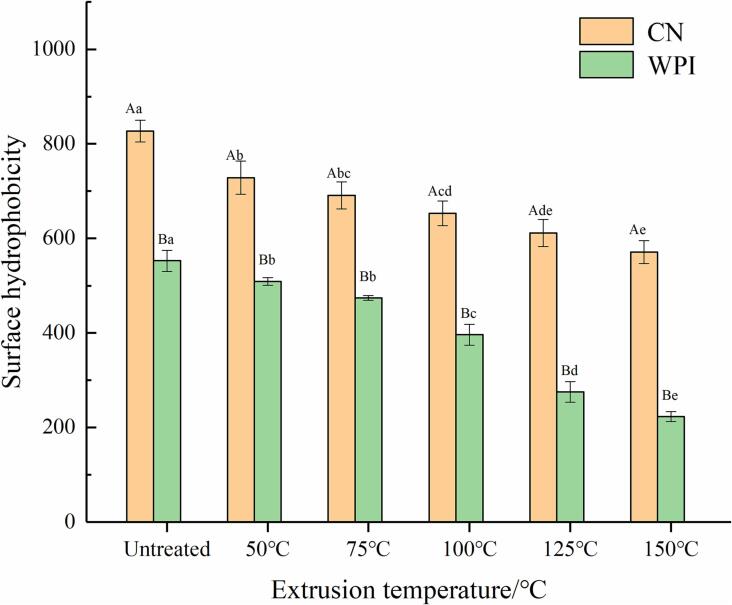
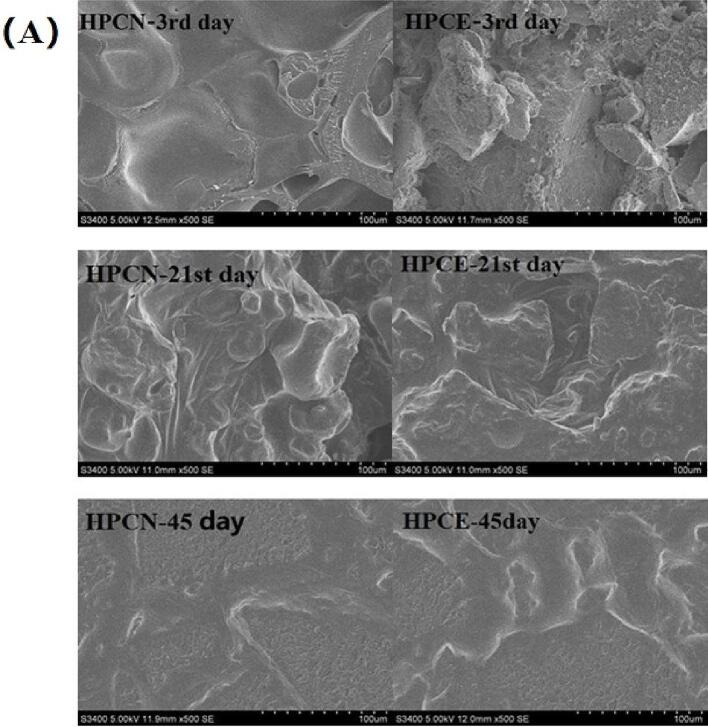
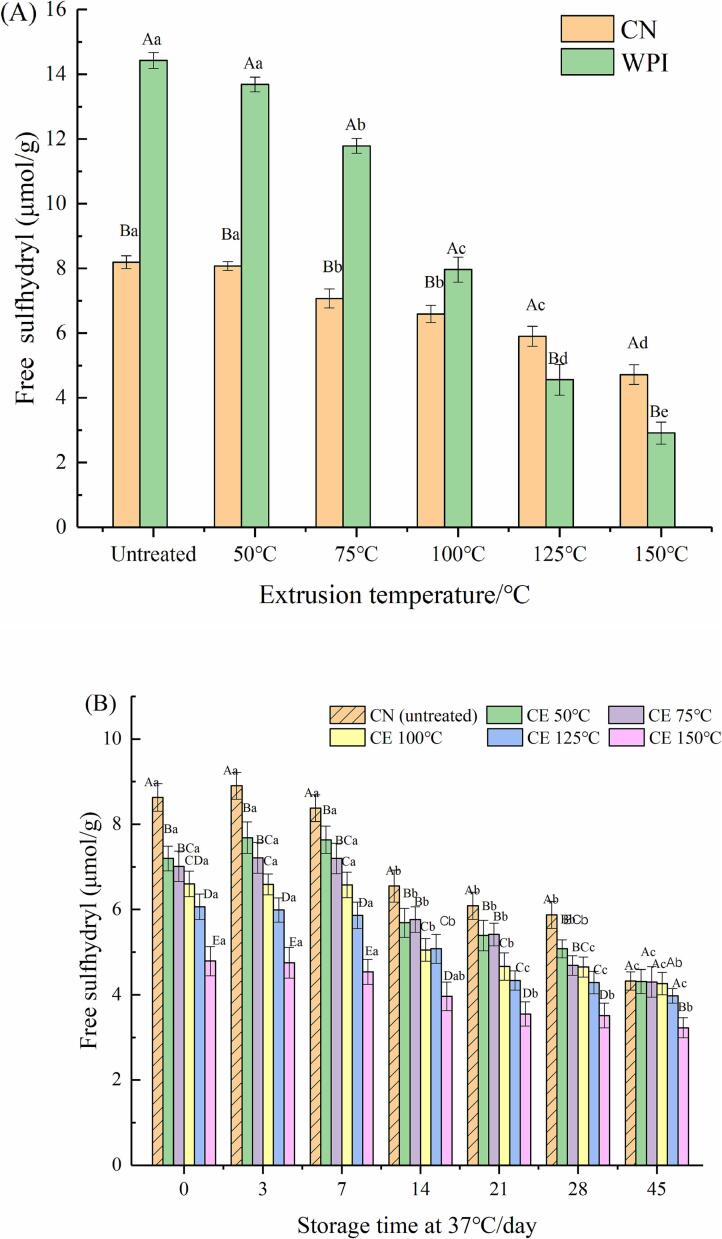
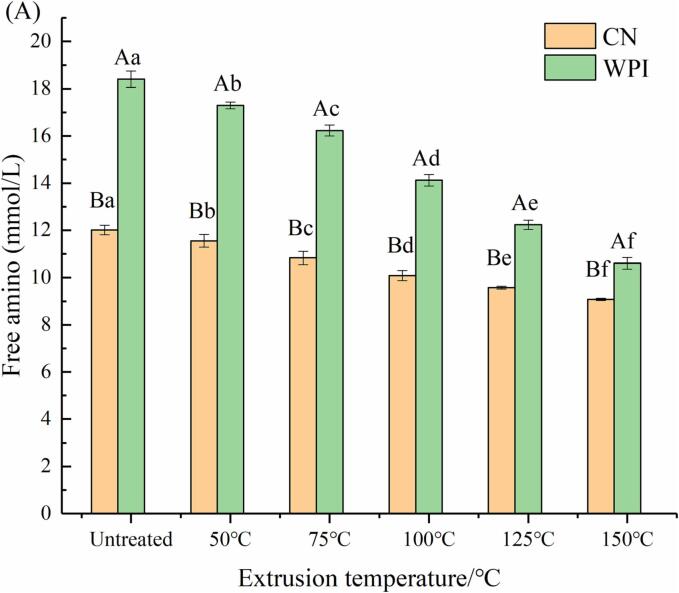
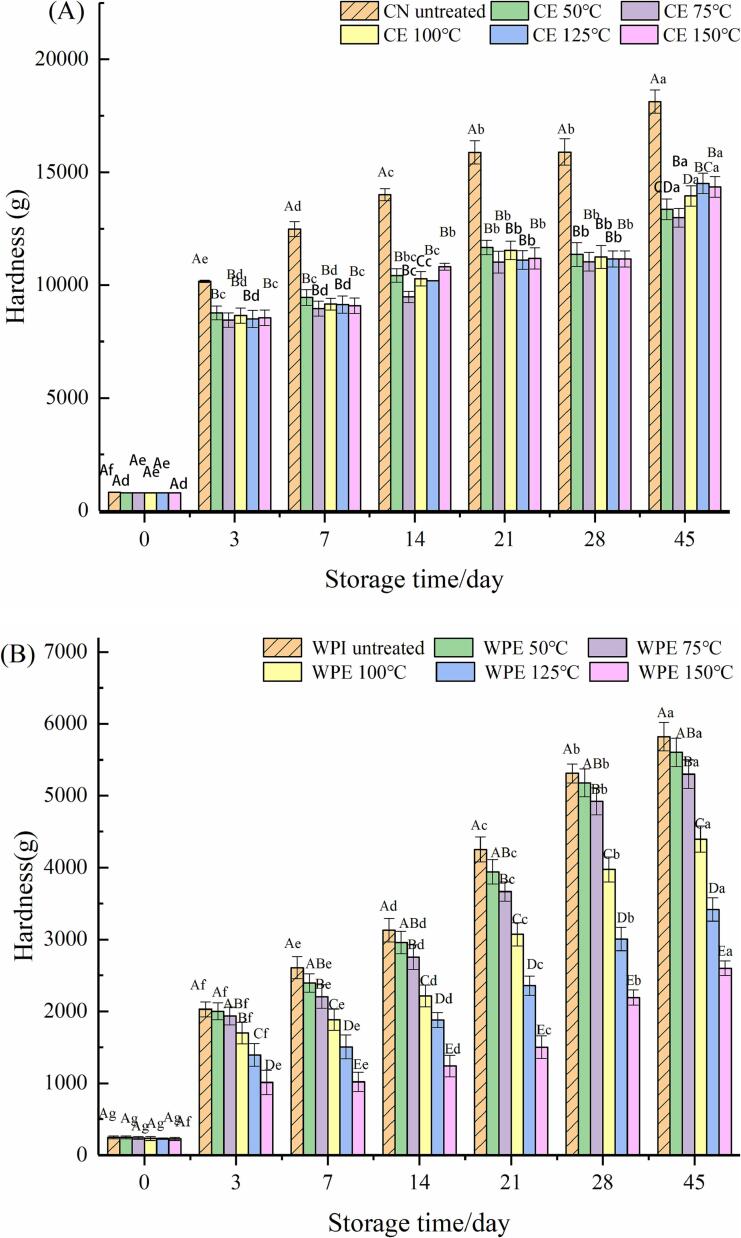
Model high-protein nutrition bars (HPNBs) were formulated by incorporating whey protein isolate (WPI) and casein (CN) at various extrusion temperatures (50, 75, 100, 125, and 150 °C) with a protein content of 45 g per 100 g. The free sulfhydryl groups, amino groups, hardness, and microstructures of HPNBs were analyzed periodically at 37 °C over a storage period of 45 days. Specifically, sulfhydryl group, amino group and surface hydrophobicity of extruded whey protein isolate (WPE) and extruded casein (CE) were significantly reduced (P < 0.05) compared to those of unextruded protein. HPNBs formulated with WPE (HWPE) and CE (HWCE) exhibited a slower hardening rate compared to those formulated with unmodified protein. Moreover, the color difference, hardness and sensory score of HPNBs after 45 days of storage were used as indicators, and the results of the TOPSIS multiple index analysis indicated that HPNB formulated with WPI extruded at 150 °C possessed the best quality characteristics.
通过在不同挤压温度(50、75、100、125和150°C)下加入乳清分离蛋白(WPI)和酪蛋白(CN)来配制高蛋白营养棒(HPNB),使其蛋白质含量为每100克45克。在37°C下,在45天的储存期内定期分析HPNB的游离巯基、氨基、硬度和微观结构。具体而言,与未挤压的蛋白质相比,挤压乳清分离蛋白(WPE)和挤压酪蛋白(CE)的巯基、氨基和表面疏水性显著降低(P<0.05)。与用未改性蛋白质配制的HPNB相比,用WPE(HWPE)和CE(HWCE)配制的HPNB硬化速率较慢。此外,以储存45天后HPNB的色差、硬度和感官评分为指标,TOPSIS多指标分析结果表明,在150°C下挤压的WPI配制的HPNB具有最佳的品质特性。