Shen Zeyang, Robert Lukian, Stolpman Milan, Che You, Walsh Audrey, Saffery Richard, Allen Katrina J, Eckert Jana, Young Angela, Deming Clay, Chen Qiong, Conlan Sean, Laky Karen, Li Jenny Min, Chatman Lindsay, Saheb Kashaf Sara, Kong Heidi H, Frischmeyer-Guerrerio Pamela A, Perrett Kirsten P, Segre Julia A
Microbial Genomics Section, Translational and Functional Genomics Branch, National Human Genome Research Institute, NIH, Bethesda, Maryland, USA.
Dermatology Branch, National Institute of Arthritis and Musculoskeletal and Skin Diseases, NIH, Bethesda, Maryland, USA.
bioRxiv. 2023 May 24:2023.05.22.541509. doi: 10.1101/2023.05.22.541509.
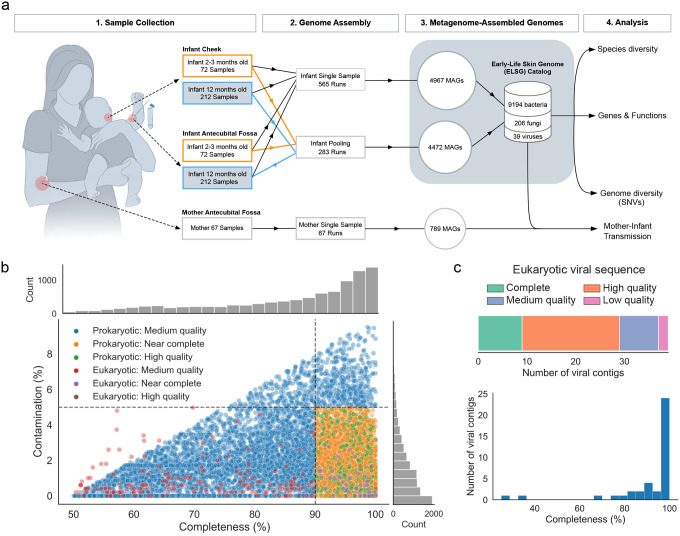
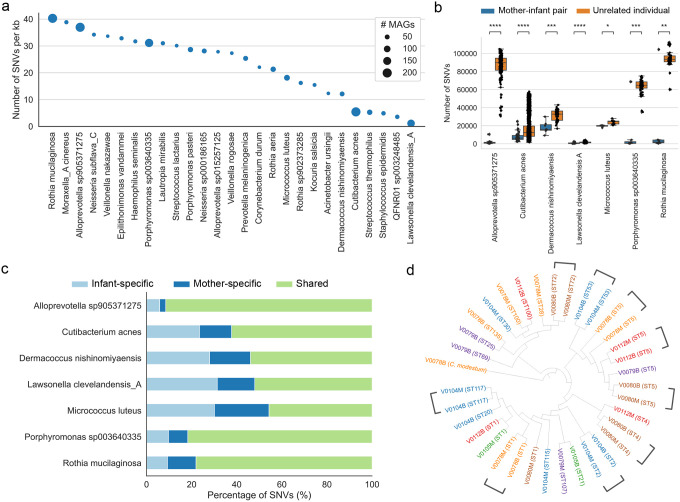
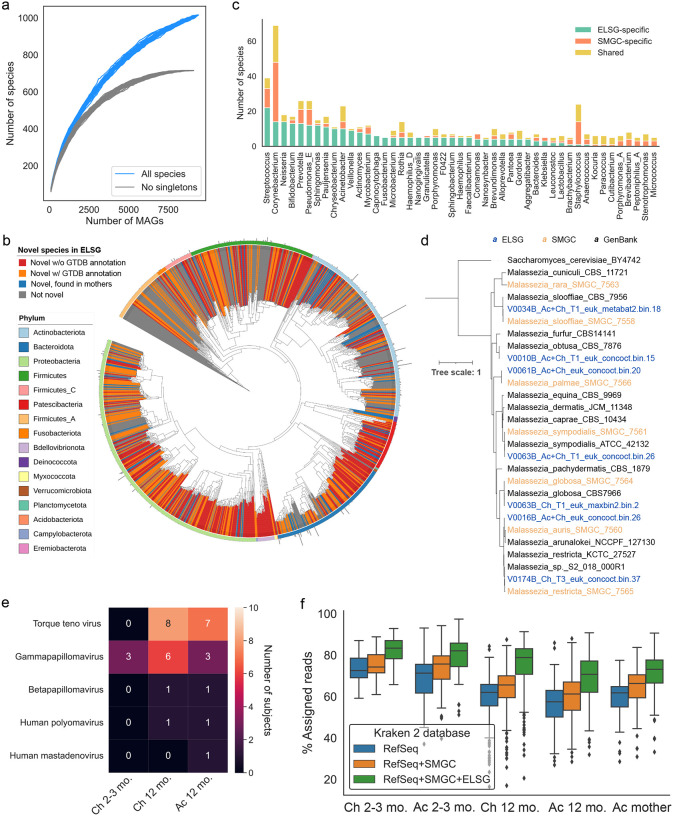
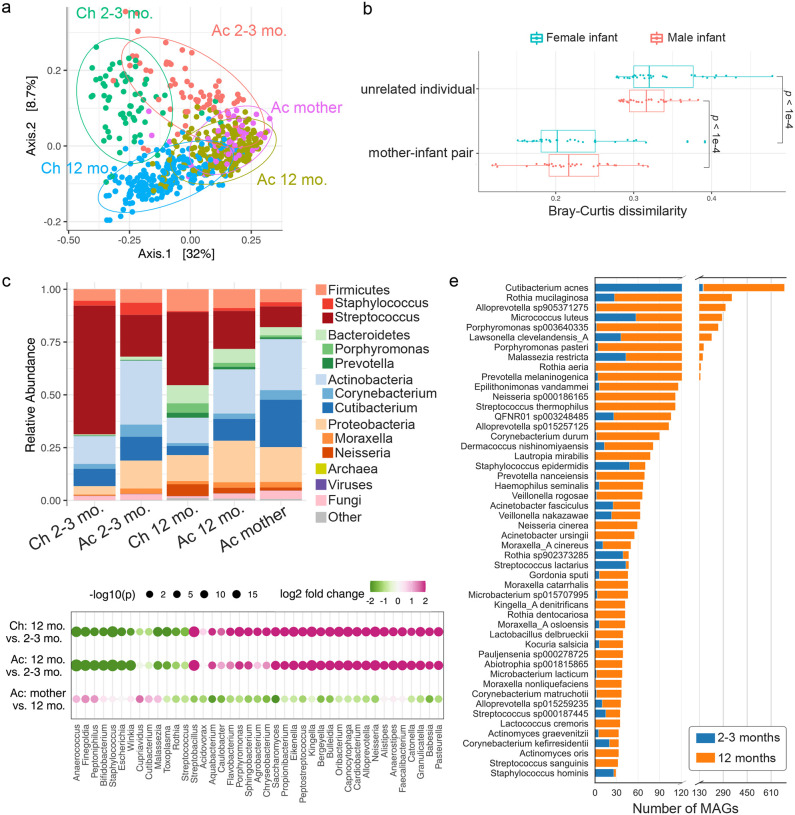
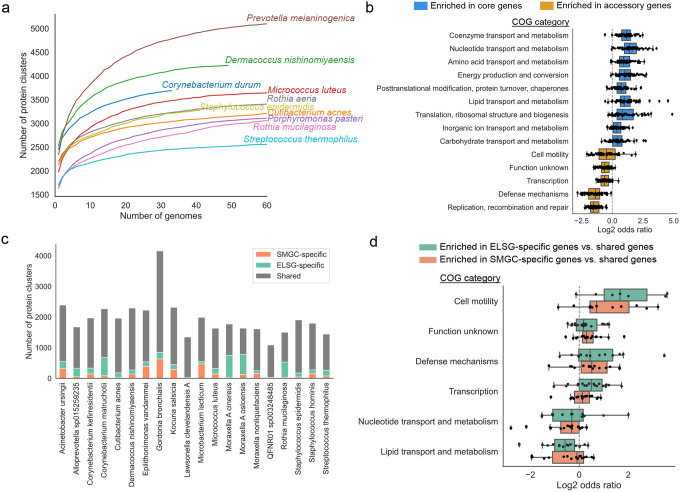
Metagenome-assembled genomes have greatly expanded the reference genomes for skin microbiome. However, the current reference genomes are largely based on samples from adults in North America and lack representation from infants and individuals from other continents. Here we used ultra-deep shotgun metagenomic sequencing to profile the skin microbiota of 215 infants at age 2-3 months and 12 months who were part of the VITALITY trial in Australia as well as 67 maternally-matched samples. Based on the infant samples, we present the Early-Life Skin Genomes (ELSG) catalog, comprising 9,194 bacterial genomes from 1,029 species, 206 fungal genomes from 13 species, and 39 eukaryotic viral sequences. This genome catalog substantially expands the diversity of species previously known to comprise human skin microbiome and improves the classification rate of sequenced data by 25%. The protein catalog derived from these genomes provides insights into the functional elements such as defense mechanisms that distinguish early-life skin microbiome. We also found evidence for vertical transmission at the microbial community, individual skin bacterial species and strain levels between mothers and infants. Overall, the ELSG catalog uncovers the skin microbiome of a previously underrepresented age group and population and provides a comprehensive view of human skin microbiome diversity, function, and transmission in early life.
宏基因组组装基因组极大地扩展了皮肤微生物组的参考基因组。然而,目前的参考基因组在很大程度上基于来自北美的成年人样本,缺乏婴儿和其他大陆人群的代表性样本。在这里,我们使用超深度鸟枪法宏基因组测序对215名2至3个月大及12个月大的婴儿的皮肤微生物群进行了分析,这些婴儿是澳大利亚VITALITY试验的一部分,同时还分析了67份与母亲匹配的样本。基于这些婴儿样本,我们展示了早期生命皮肤基因组(ELSG)目录,其中包括来自1029个物种的9194个细菌基因组、来自13个物种的206个真菌基因组和39个真核病毒序列。这个基因组目录大幅扩展了先前已知的构成人类皮肤微生物组的物种多样性,并将测序数据的分类率提高了25%。从这些基因组衍生的蛋白质目录为区分早期生命皮肤微生物组的功能元件(如防御机制)提供了见解。我们还发现了在母亲和婴儿之间微生物群落、个体皮肤细菌物种和菌株水平上垂直传播的证据。总体而言,ELSG目录揭示了一个以前代表性不足的年龄组和人群的皮肤微生物组,并提供了早期生命中人类皮肤微生物组多样性、功能和传播的全面视图。