Hashimoto Kenji
Division of Clinical Neuroscience, Chiba University Center for Forensic Mental Health, Chiba, 260-8670, Japan.
Mol Psychiatry. 2023 Dec;28(12):4968-4976. doi: 10.1038/s41380-023-02161-5. Epub 2023 Jul 4.
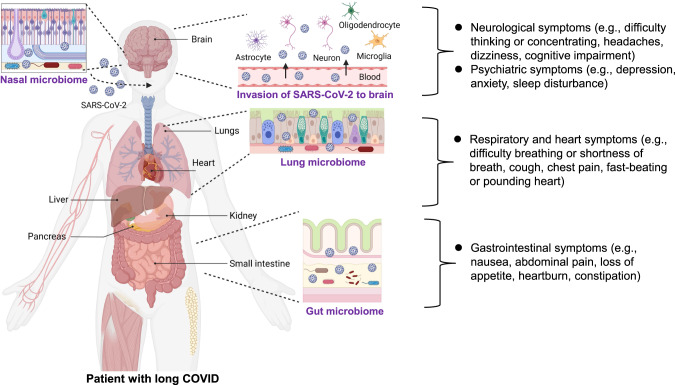
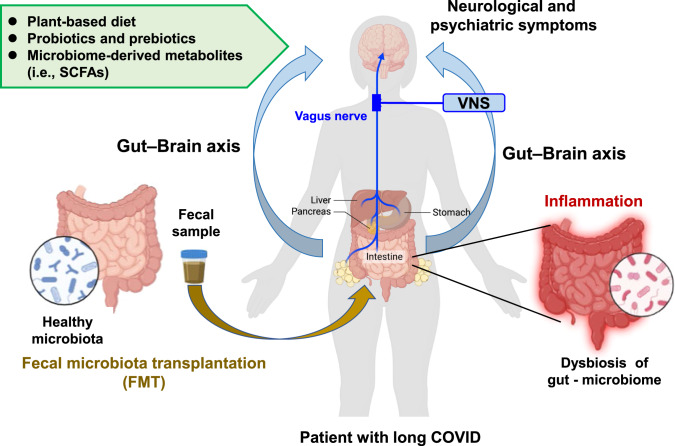
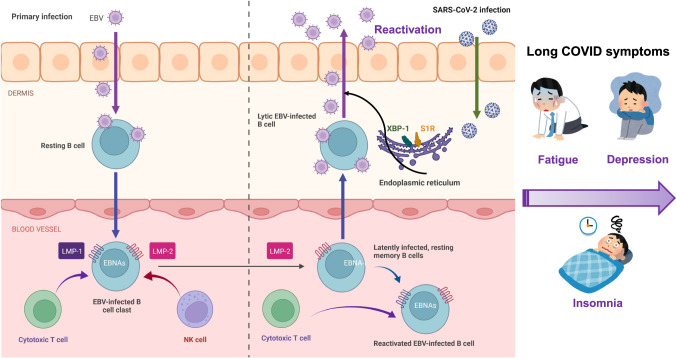
The coronavirus disease 2019 (COVID-19) pandemic caused by severe acute respiratory syndrome coronavirus 2 (SARS-CoV-2) infection has resulted in a serious public health burden worldwide. In addition to respiratory, heart, and gastrointestinal symptoms, patients infected with SARS-CoV-2 experience a number of persistent neurological and psychiatric symptoms, known as long COVID or "brain fog". Studies of autopsy samples from patients who died from COVID-19 detected SARS-CoV-2 in the brain. Furthermore, increasing evidence shows that Epstein-Barr virus (EBV) reactivation after SARS-CoV-2 infection might play a role in long COVID symptoms. Moreover, alterations in the microbiome after SARS-CoV-2 infection might contribute to acute and long COVID symptoms. In this article, the author reviews the detrimental effects of COVID-19 on the brain, and the biological mechanisms (e.g., EBV reactivation, and changes in the gut, nasal, oral, or lung microbiomes) underlying long COVID. In addition, the author discusses potential therapeutic approaches based on the gut-brain axis, including plant-based diet, probiotics and prebiotics, fecal microbiota transplantation, and vagus nerve stimulation, and sigma-1 receptor agonist fluvoxamine.
由严重急性呼吸综合征冠状病毒2(SARS-CoV-2)感染引起的2019冠状病毒病(COVID-19)大流行已在全球范围内造成严重的公共卫生负担。除了呼吸道、心脏和胃肠道症状外,感染SARS-CoV-2的患者还会出现许多持续的神经和精神症状,即所谓的长期新冠症状或“脑雾”。对死于COVID-19患者的尸检样本研究在大脑中检测到了SARS-CoV-2。此外,越来越多的证据表明,SARS-CoV-2感染后爱泼斯坦-巴尔病毒(EBV)再激活可能在长期新冠症状中起作用。此外,SARS-CoV-2感染后微生物群的改变可能导致急性和长期新冠症状。在本文中,作者回顾了COVID-19对大脑的有害影响,以及长期新冠症状背后的生物学机制(如EBV再激活以及肠道、鼻腔、口腔或肺部微生物群的变化)。此外,作者还讨论了基于肠脑轴的潜在治疗方法,包括植物性饮食、益生菌和益生元、粪便微生物群移植、迷走神经刺激以及σ-1受体激动剂氟伏沙明。