Cambridge Institute of Therapeutic Immunology and Infectious Disease, University of Cambridge School of Clinical Medicine, Cambridge, United Kingdom.
Department of Medicine, University of Cambridge School of Clinical Medicine, Cambridge, United Kingdom.
J Infect Dis. 2024 Mar 14;229(3):833-844. doi: 10.1093/infdis/jiad242.
Enteric fever, caused by Salmonella enterica serovars Typhi and Paratyphi A, is a major public health problem in low- and middle-income countries. Moderate sensitivity and scalability of current methods likely underestimate enteric fever burden. Determining the serological responses to organism-specific antigens may improve incidence measures.
Plasma samples were collected from blood culture-confirmed enteric fever patients, blood culture-negative febrile patients over the course of 3 months, and afebrile community controls. A panel of 17 Salmonella Typhi and Paratyphi A antigens was purified and used to determine antigen-specific antibody responses by indirect ELISAs.
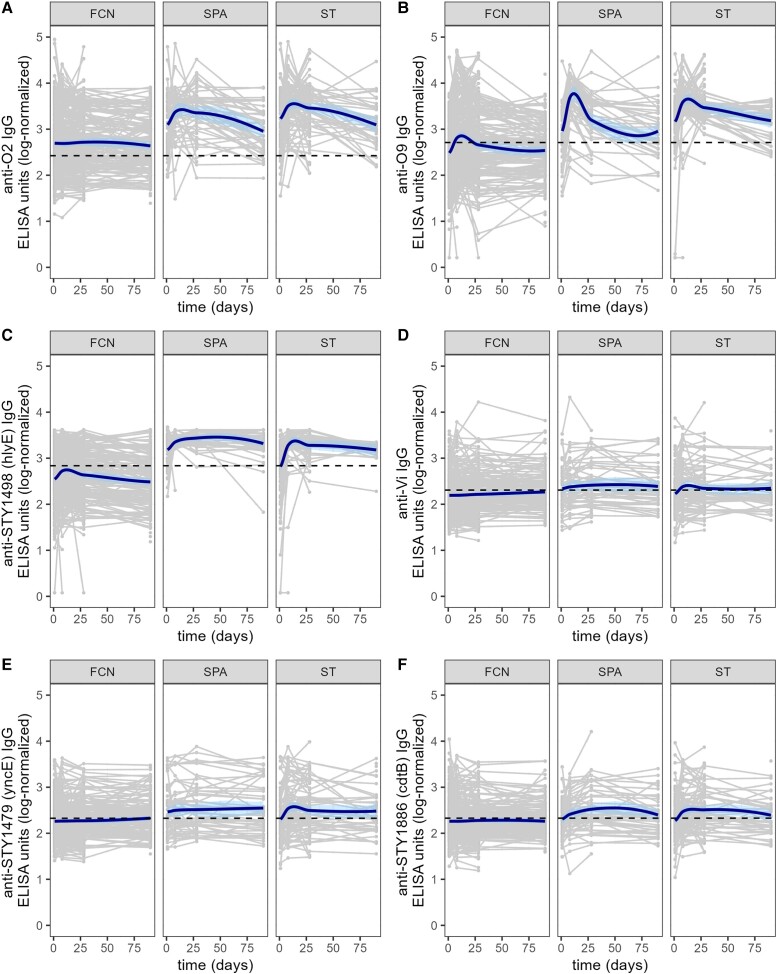
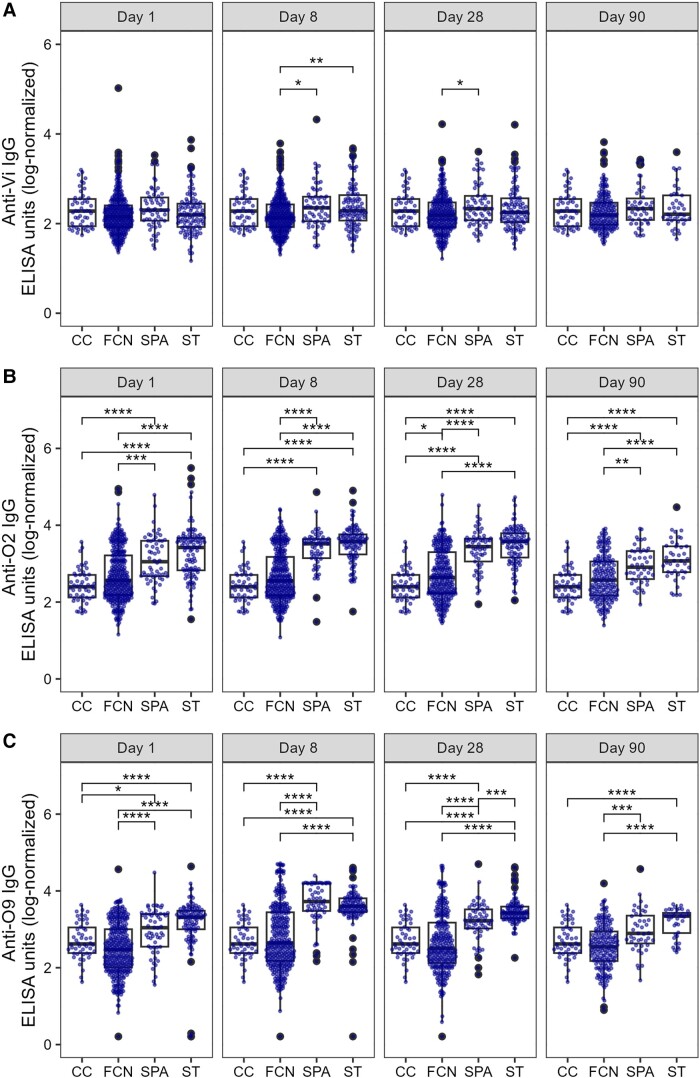
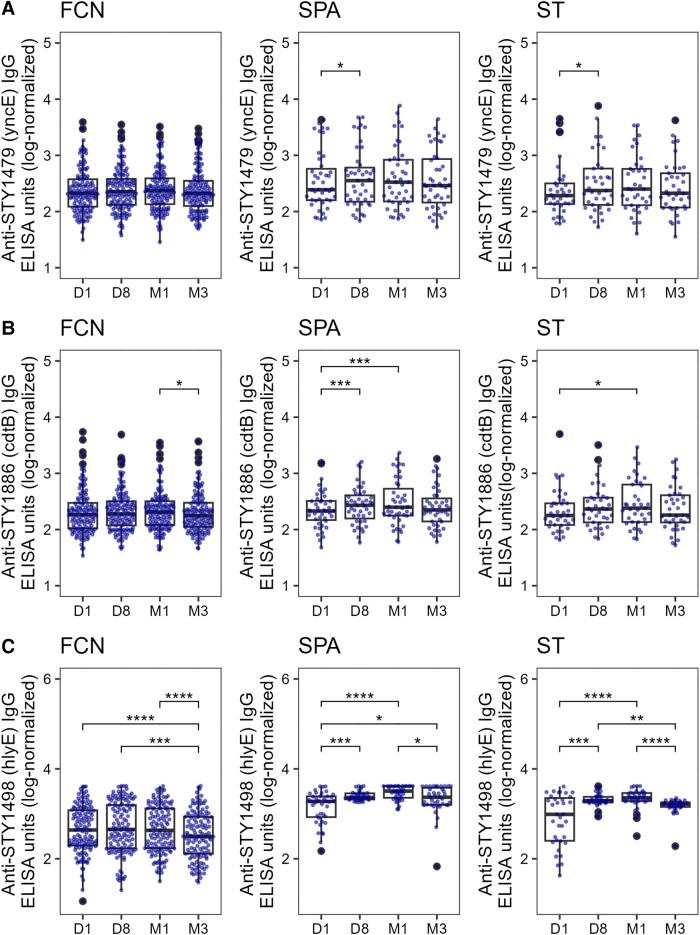
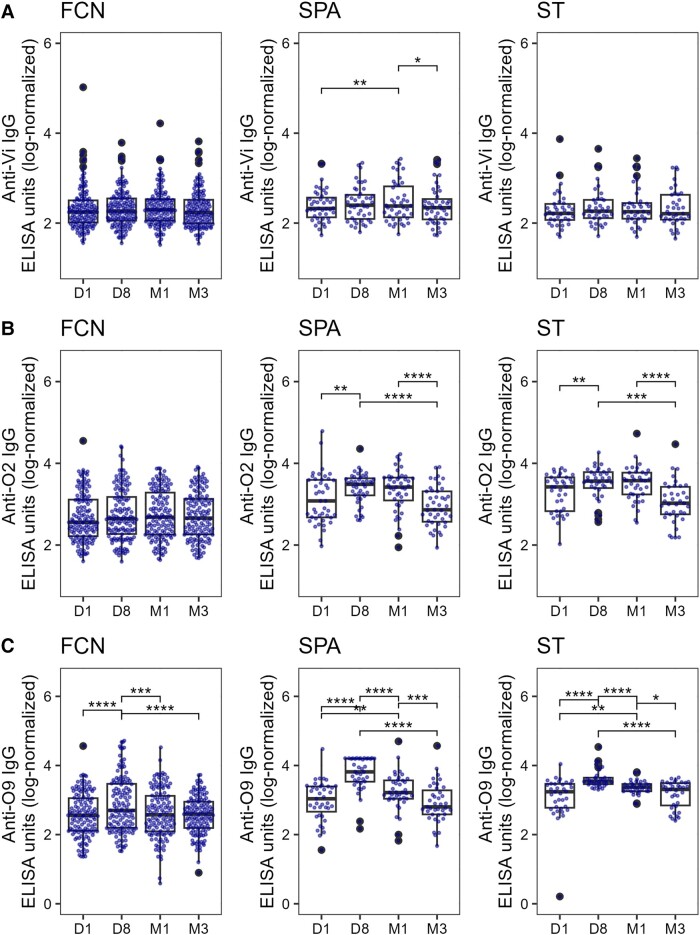
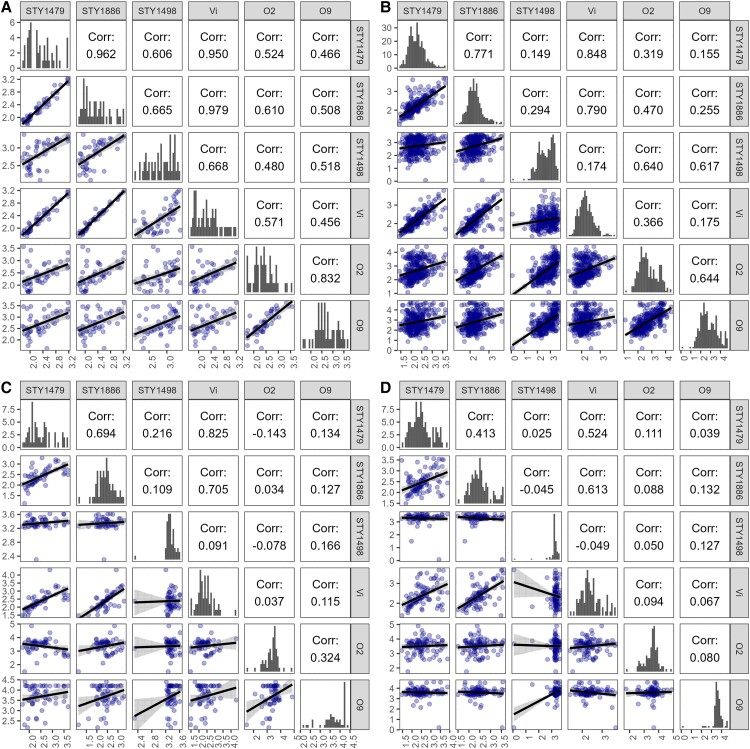
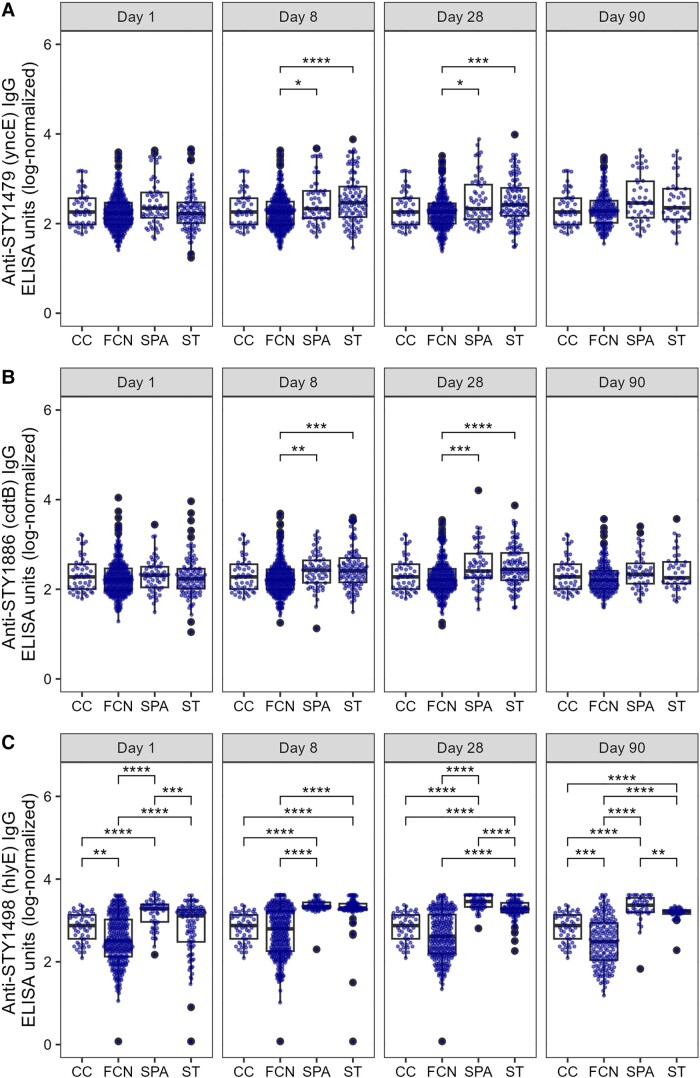
The antigen-specific longitudinal antibody responses were comparable between enteric fever patients, patients with blood culture-negative febrile controls, and afebrile community controls for most antigens. However, we found that IgG responses against STY1479 (YncE), STY1886 (CdtB), STY1498 (HlyE), and the serovar-specific O2 and O9 antigens were greatly elevated over a 3-month follow up period in S. Typhi/S. Paratyphi A patients compared to controls, suggesting seroconversion.
We identified a set of antigens as good candidates to demonstrate enteric fever exposure. These targets can be used in combination to develop more sensitive and scalable approaches to enteric fever surveillance and generate invaluable epidemiological data for informing vaccine policies.
ISRCTN63006567.
由沙门氏菌血清型 Typhi 和 Paratyphi A 引起的肠热病是中低收入国家的一个主要公共卫生问题。当前方法的中度敏感性和可扩展性可能低估了肠热病的负担。确定针对特定病原体的血清学反应可能会改进发病率测量。
从血培养确认的肠热病患者、3 个月内血培养阴性发热患者和无症状社区对照者采集血浆样本。纯化了 17 种伤寒沙门氏菌和副伤寒 A 血清型抗原的面板,并通过间接 ELISA 确定抗原特异性抗体反应。
在肠热病患者、血培养阴性发热对照组患者和无症状社区对照组患者之间,大多数抗原的抗原特异性纵向抗体反应相当。然而,我们发现与对照组相比,在 3 个月的随访期间,STY1479(YncE)、STY1886(CdtB)、STY1498(HlyE)和血清型特异性 O2 和 O9 抗原的 IgG 反应在伤寒沙门氏菌/副伤寒 A 患者中大大升高,表明血清转换。
我们确定了一组作为肠热病暴露良好候选物的抗原。这些靶标可以组合使用,以开发更敏感和可扩展的肠热病监测方法,并为疫苗政策提供宝贵的流行病学数据。
ISRCTN63006567。