Department of Genetics, Stanford University, Stanford, California, USA.
Department of Medicine (Hematology, Blood and Marrow Transplantation), Stanford University, Stanford, California, USA.
Appl Environ Microbiol. 2023 Jul 26;89(7):e0058323. doi: 10.1128/aem.00583-23. Epub 2023 Jul 5.
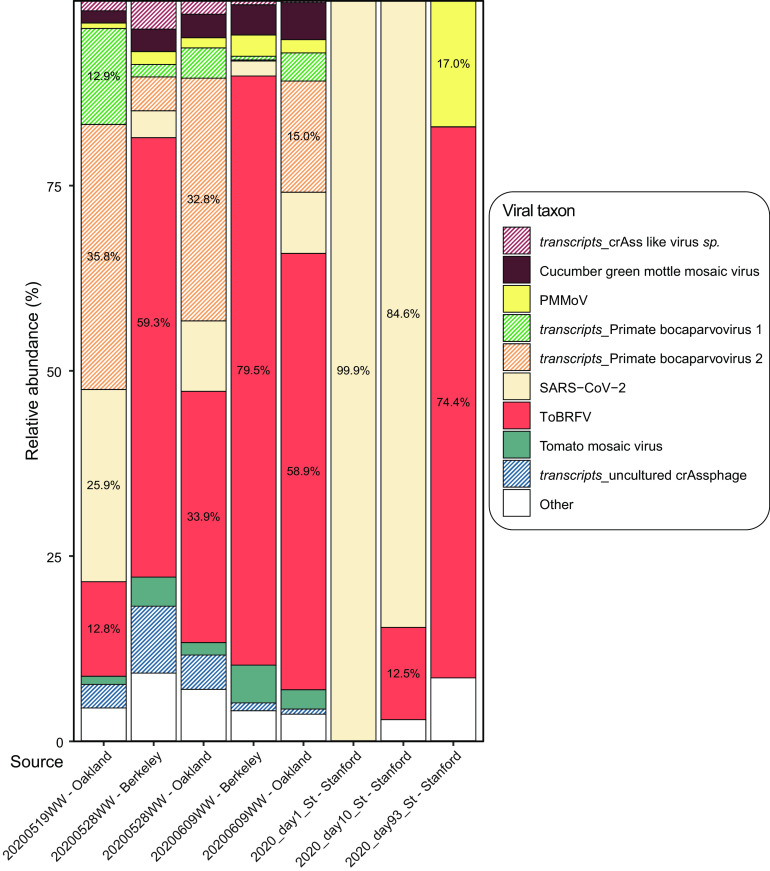
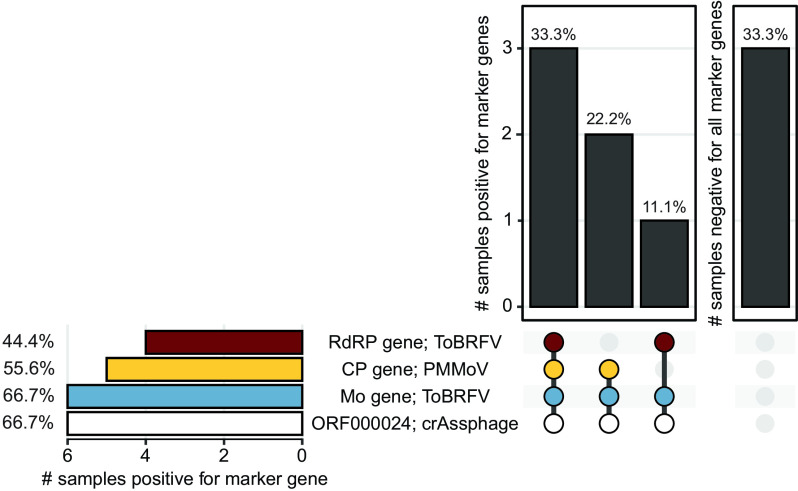
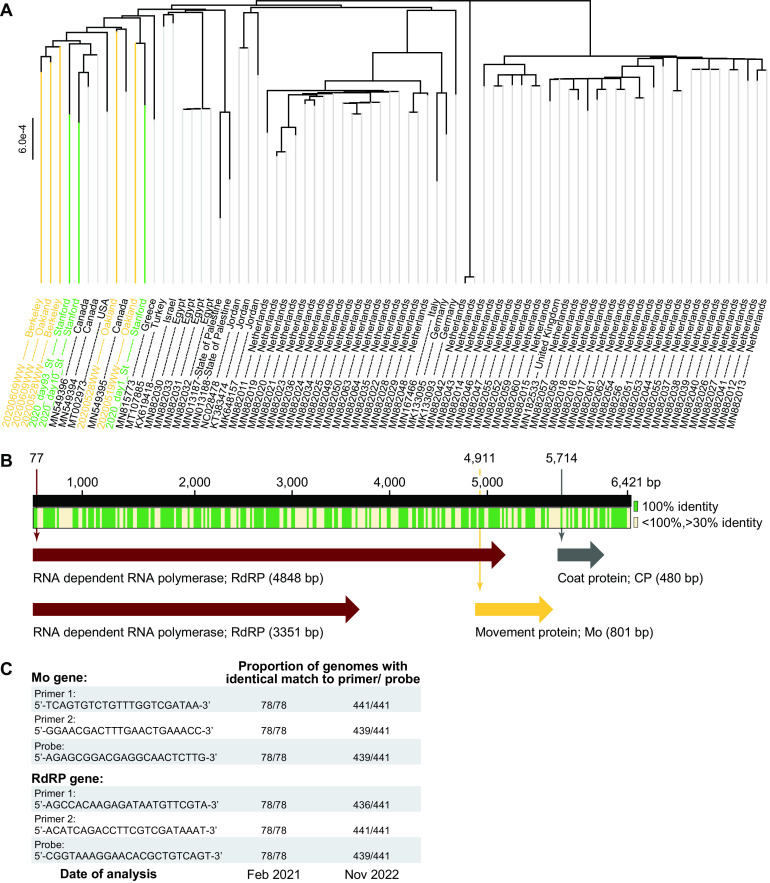
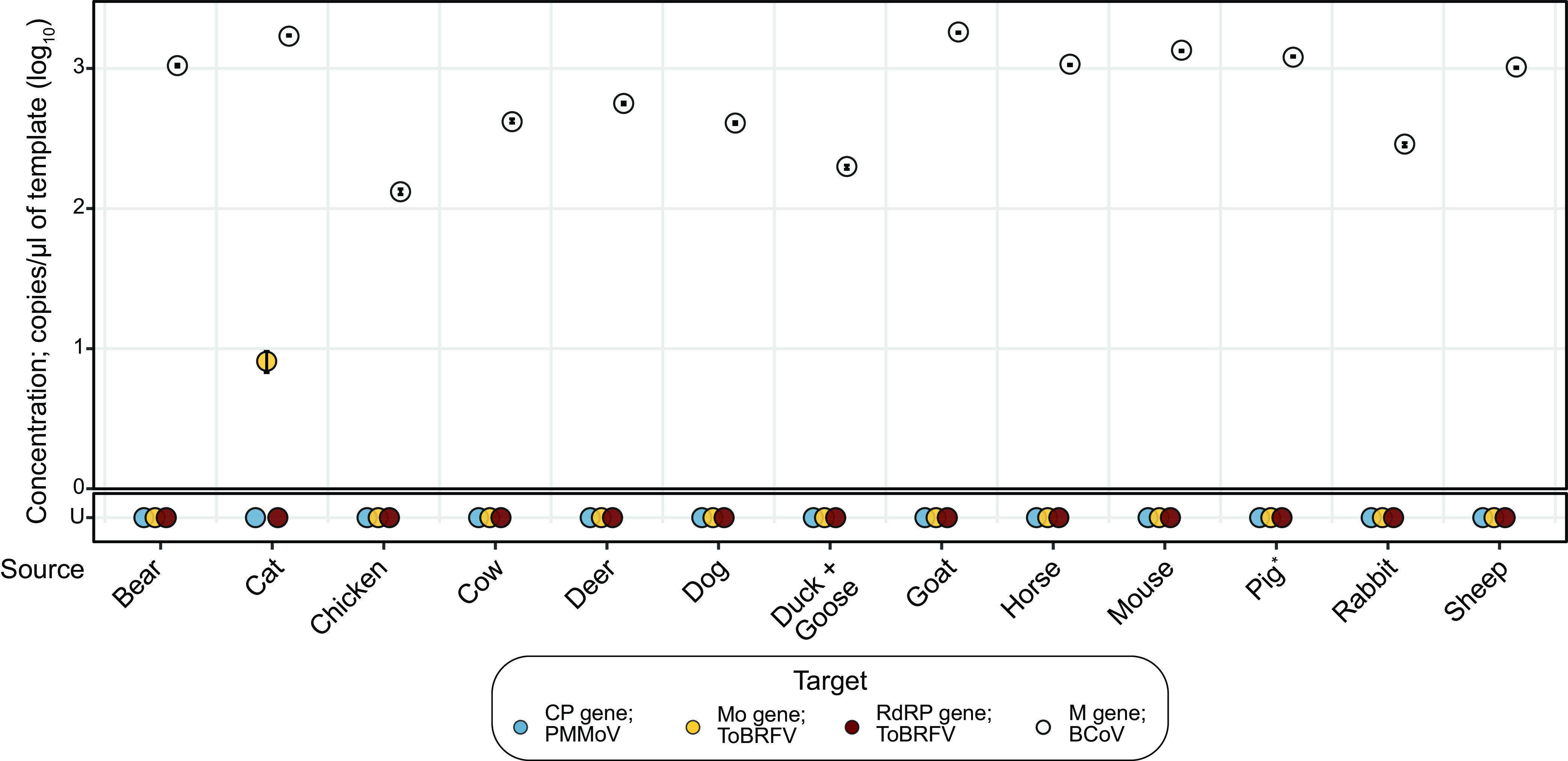
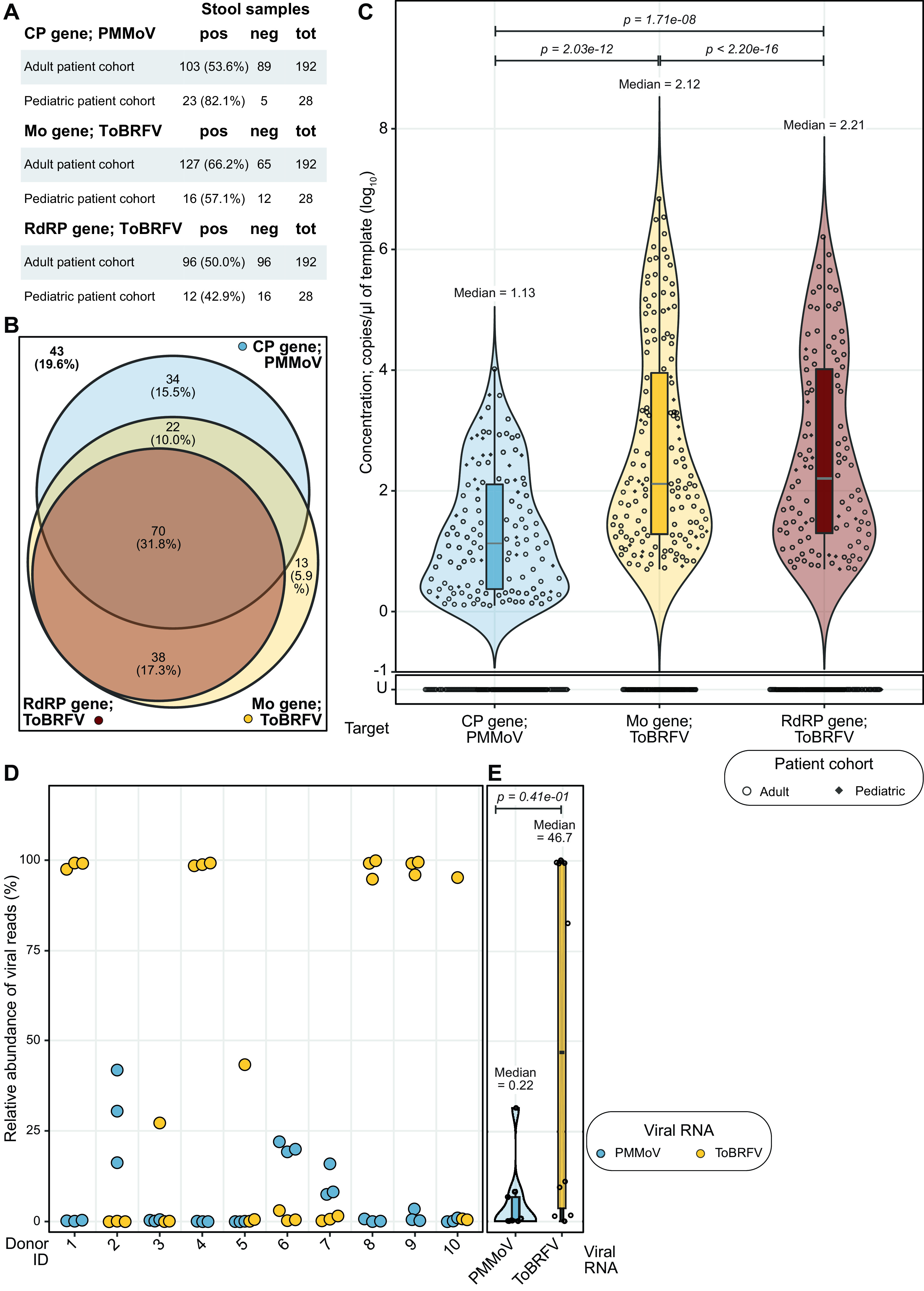
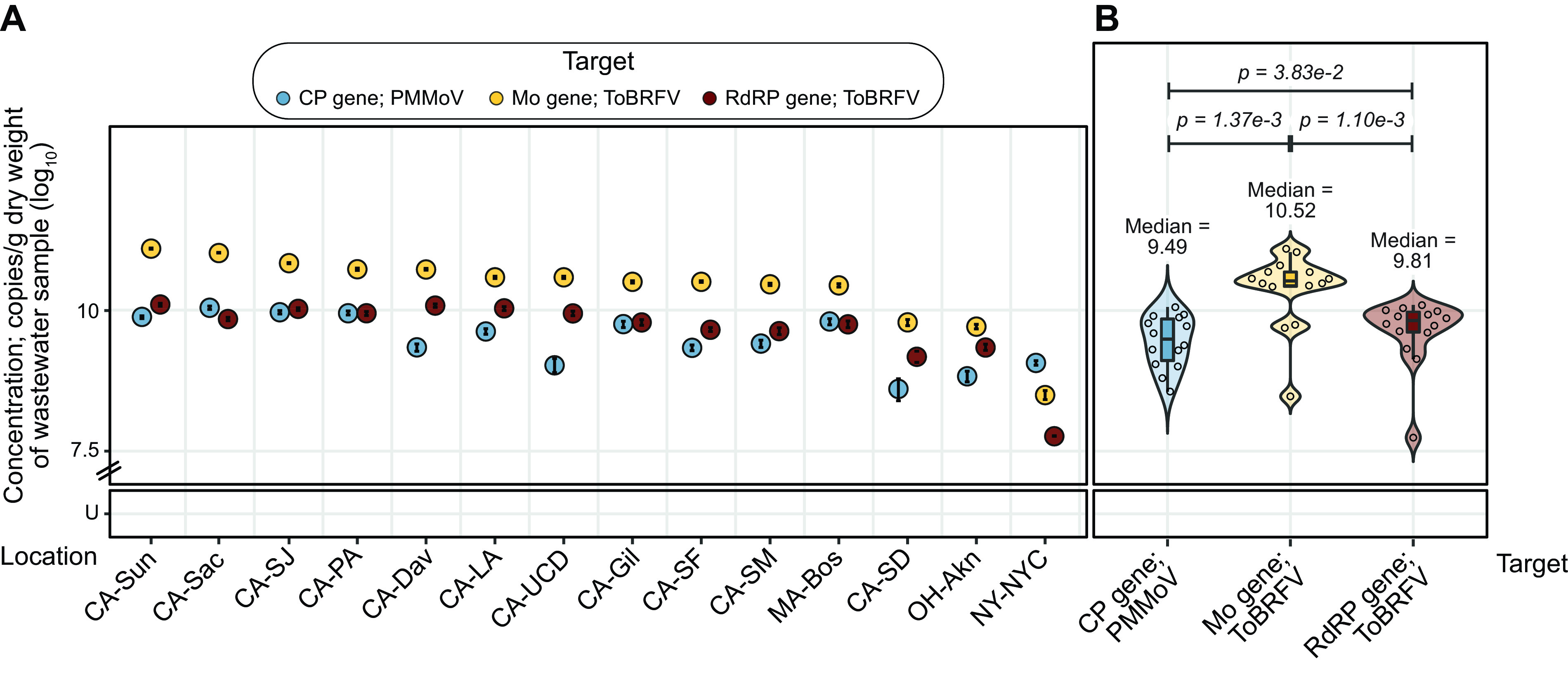
Microbial source tracking (MST) identifies sources of fecal contamination in the environment using host-associated fecal markers. While there are numerous bacterial MST markers that can be used herein, there are few such viral markers. Here, we designed and tested novel viral MST markers based on tomato brown rugose fruit virus (ToBRFV) genomes. We assembled eight nearly complete genomes of ToBRFV from wastewater and stool samples from the San Francisco Bay Area in the United States. Next, we developed two novel probe-based reverse transcription-PCR (RT-PCR) assays based on conserved regions of the ToBRFV genome and tested the markers' sensitivities and specificities using human and non-human animal stool as well as wastewater. The ToBRFV markers are sensitive and specific; in human stool and wastewater, they are more prevalent and abundant than a commonly used viral marker, the pepper mild mottle virus (PMMoV) coat protein (CP) gene. We used the assays to detect fecal contamination in urban stormwater samples and found that the ToBRFV markers matched cross-assembly phage (crAssphage), an established viral MST marker, in prevalence across samples. Taken together, these results indicate that ToBRFV is a promising viral human-associated MST marker. Human exposure to fecal contamination in the environment can cause transmission of infectious diseases. Microbial source tracking (MST) can identify sources of fecal contamination so that contamination can be remediated and human exposures can be reduced. MST requires the use of host-associated MST markers. Here, we designed and tested novel MST markers from genomes of tomato brown rugose fruit virus (ToBRFV). The markers are sensitive and specific to human stool and highly abundant in human stool and wastewater samples.
微生物源追踪 (MST) 使用宿主相关的粪便标记物来识别环境中的粪便污染来源。虽然有许多可以用于 MST 的细菌标记物,但很少有此类病毒标记物。在这里,我们基于番茄褐色皱果病毒 (ToBRFV) 基因组设计并测试了新型病毒 MST 标记物。我们从美国旧金山湾区的废水和粪便样本中组装了八个近乎完整的 ToBRFV 基因组。接下来,我们基于 ToBRFV 基因组的保守区域开发了两种新型基于探针的逆转录 PCR (RT-PCR) 检测方法,并使用人类和非人类动物粪便以及废水测试了标记物的敏感性和特异性。ToBRFV 标记物具有敏感性和特异性;在人类粪便和废水中,它们比常用的病毒标记物辣椒轻斑驳病毒 (PMMoV) 外壳蛋白 (CP) 基因更为普遍和丰富。我们使用这些检测方法检测城市雨水样本中的粪便污染,发现 ToBRFV 标记物与交叉组装噬菌体 (crAssphage) 相符,crAssphage 是一种已建立的病毒 MST 标记物,在样本中具有相似的流行度。总之,这些结果表明 ToBRFV 是一种有前途的病毒人类相关 MST 标记物。人类暴露于环境中的粪便污染会导致传染病的传播。微生物源追踪 (MST) 可以识别粪便污染的来源,从而可以进行污染修复和减少人类暴露。MST 需要使用宿主相关的 MST 标记物。在这里,我们基于番茄褐色皱果病毒 (ToBRFV) 基因组设计并测试了新型 MST 标记物。这些标记物对人类粪便具有敏感性和特异性,并且在人类粪便和废水样本中高度丰富。