Department of Microbiology, Ajou University School of Medicine, Suwon, Republic of Korea.
Department of Biomedical Science, Graduate School of Ajou University, Suwon, Republic of Korea.
Front Cell Infect Microbiol. 2023 Jun 19;13:1195063. doi: 10.3389/fcimb.2023.1195063. eCollection 2023.
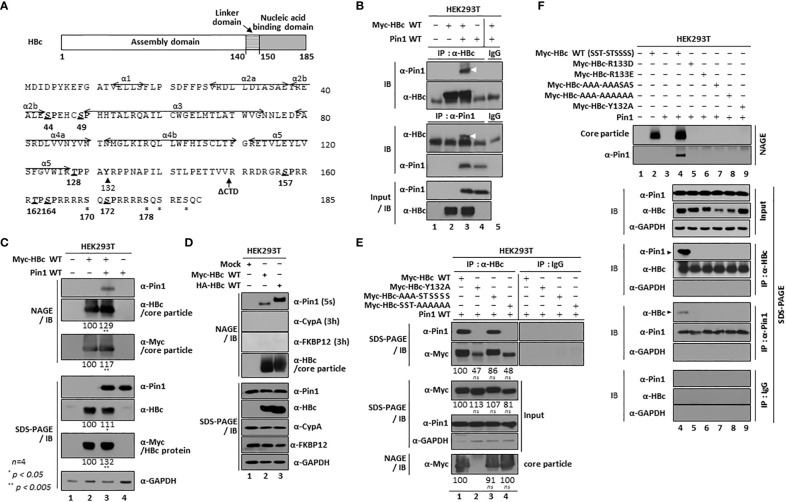
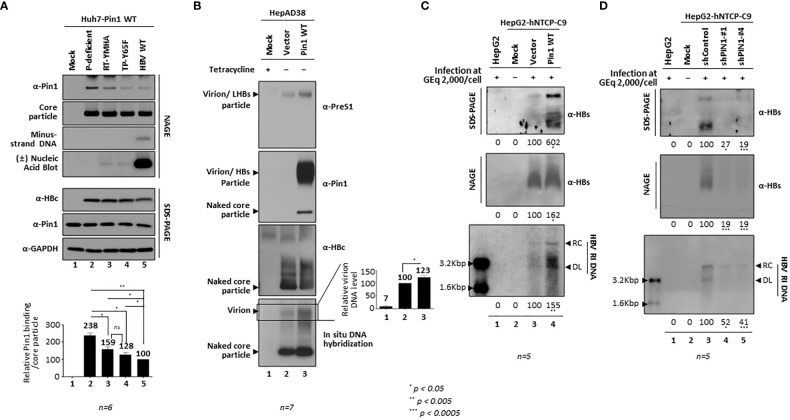
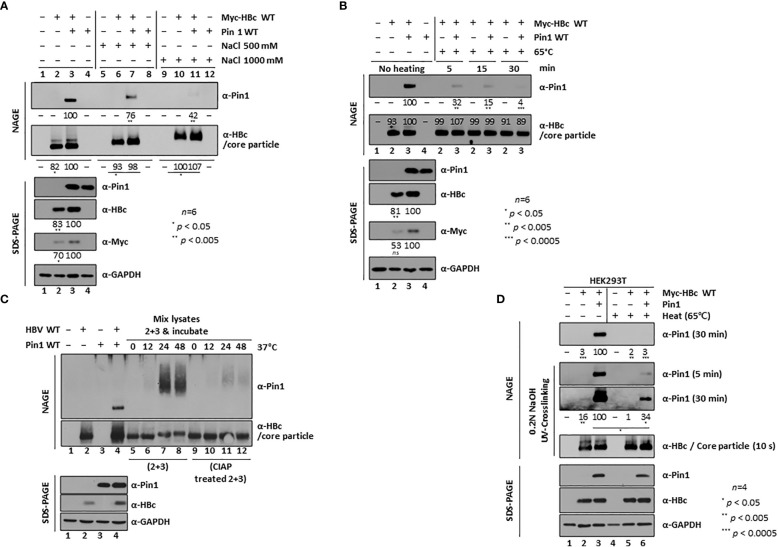
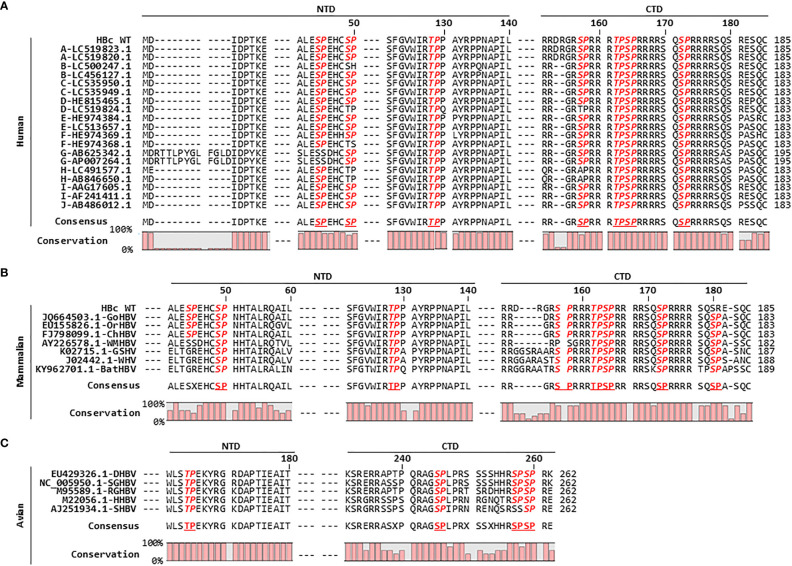
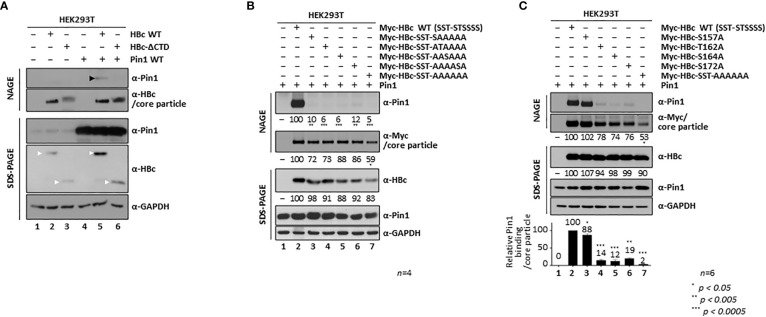
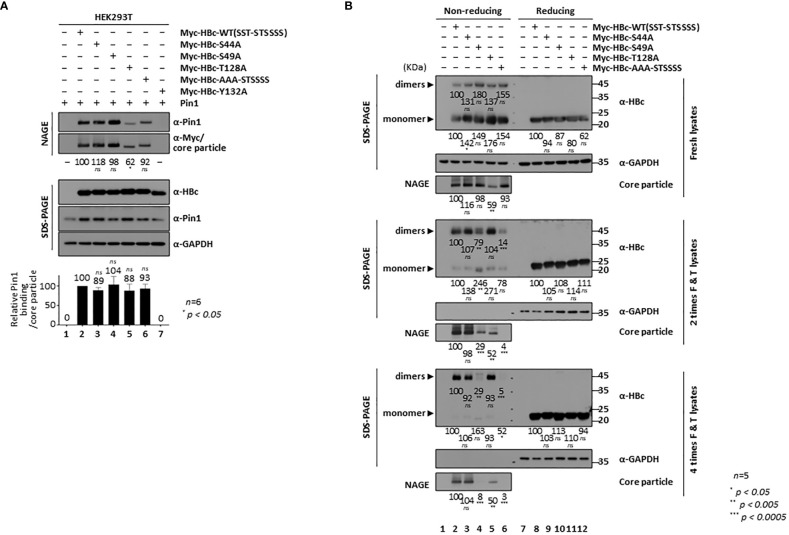
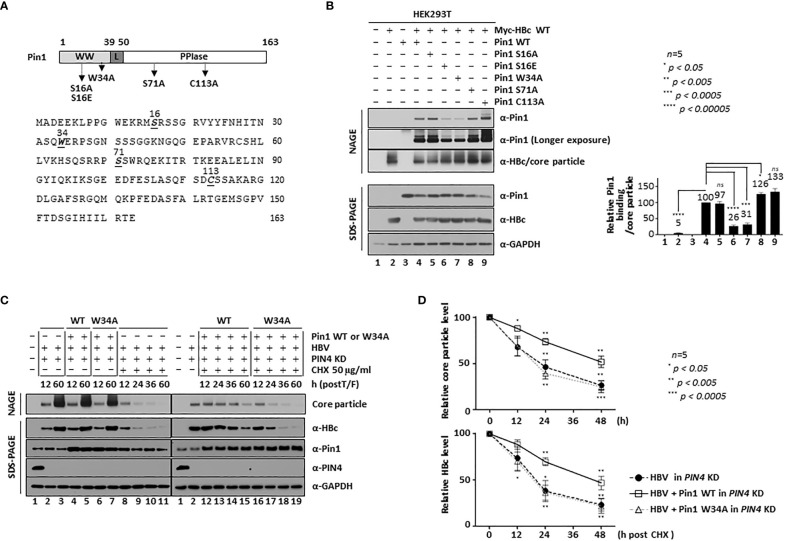
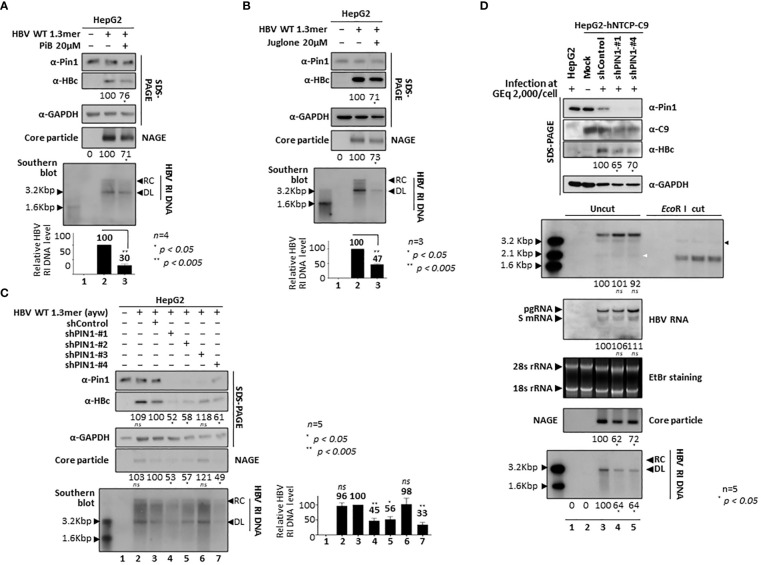
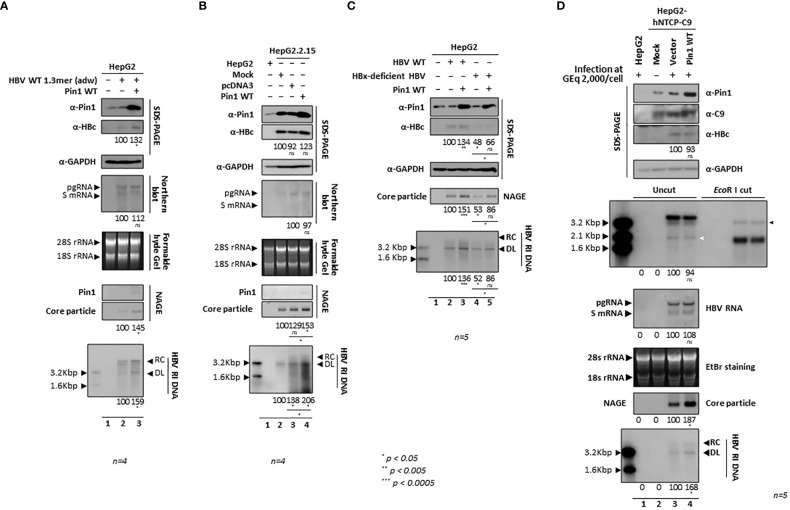
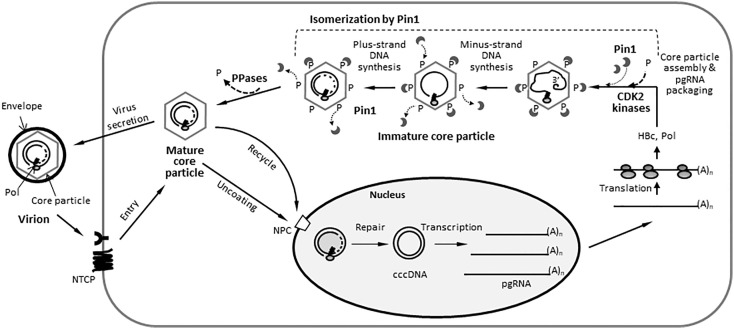
Here, we demonstrate that the peptidyl-prolyl cis/trans isomerase Pin1 interacts noncovalently with the hepatitis B virus (HBV) core particle through phosphorylated serine/threonine-proline (pS/TP) motifs in the carboxyl-terminal domain (CTD) but not with particle-defective, dimer-positive mutants of HBc. This suggests that neither dimers nor monomers of HBc are Pin1-binding partners. The TP, SP, and SP motifs within the HBc CTD are important for the Pin1/core particle interaction. Although Pin1 dissociated from core particle upon heat treatment, it was detected as an opened-up core particle, demonstrating that Pin1 binds both to the outside and the inside of the core particle. Although the amino-terminal domain S/TP motifs of HBc are not involved in the interaction, SP contributes to core particle stability, and TP might be involved in core particle assembly, as shown by the decreased core particle level of S49A mutant through repeated freeze and thaw and low-level assembly of the T128A mutant, respectively. Overexpression of Pin1 increased core particle stability through their interactions, HBV DNA synthesis, and virion secretion without concomitant increases in HBV RNA levels, indicating that Pin1 may be involved in core particle assembly and maturation, thereby promoting the later stages of the HBV life cycle. By contrast, parvulin inhibitors and knockdown reduced HBV replication. Since more Pin1 proteins bound to immature core particles than to mature core particles, the interaction appears to depend on the stage of virus replication. Taken together, the data suggest that physical association between Pin1 and phosphorylated core particles may induce structural alterations through isomerization by Pin1, induce dephosphorylation by unidentified host phosphatases, and promote completion of virus life cycle.
在这里,我们证明了肽基脯氨酰顺/反异构酶 Pin1 通过乙型肝炎病毒 (HBV) 核心颗粒羧基末端结构域 (CTD) 中的磷酸化丝氨酸/苏氨酸-脯氨酸 (pS/TP) 基序而非与颗粒缺陷、二聚体阳性的 HBc 突变体非共价相互作用。这表明 HBc 的二聚体和单体都不是 Pin1 的结合伴侣。HBc CTD 中的 TP、SP 和 SP 基序对于 Pin1/核心颗粒相互作用很重要。尽管 Pin1 在热处理时从核心颗粒上解离,但它被检测为一种打开的核心颗粒,表明 Pin1 结合核心颗粒的内外表面。虽然 HBc 的氨基末端结构域 S/TP 基序不参与相互作用,但 SP 有助于核心颗粒的稳定性,而 TP 可能参与核心颗粒的组装,这分别表现为 S49A 突变体通过反复冻融导致核心颗粒水平降低和 T128A 突变体低水平组装。Pin1 的过表达通过它们的相互作用、HBV DNA 合成和病毒粒子分泌增加了核心颗粒的稳定性,而没有伴随 HBV RNA 水平的增加,表明 Pin1 可能参与核心颗粒的组装和成熟,从而促进 HBV 生命周期的后期阶段。相比之下, parvulin 抑制剂和 knockdown 降低了 HBV 的复制。由于更多的 Pin1 蛋白与不成熟的核心颗粒结合而不是与成熟的核心颗粒结合,因此这种相互作用似乎取决于病毒复制的阶段。总之,数据表明 Pin1 与磷酸化核心颗粒之间的物理相互作用可能通过 Pin1 的异构化诱导结构改变,通过未鉴定的宿主磷酸酶诱导去磷酸化,并促进病毒生命周期的完成。