Fundación Ciencia & Vida, Avenida Del Valle Norte 725, 8580702, Huechuraba, Santiago, Chile.
Facultad de Ingeniería, Arquitectura y Diseño, Universidad San Sebastián, Santiago, Chile.
Sci Rep. 2023 Jul 5;13(1):10876. doi: 10.1038/s41598-023-37341-4.
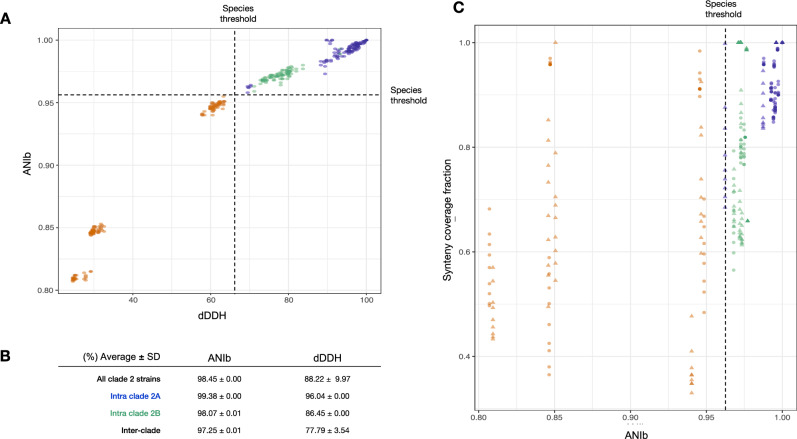
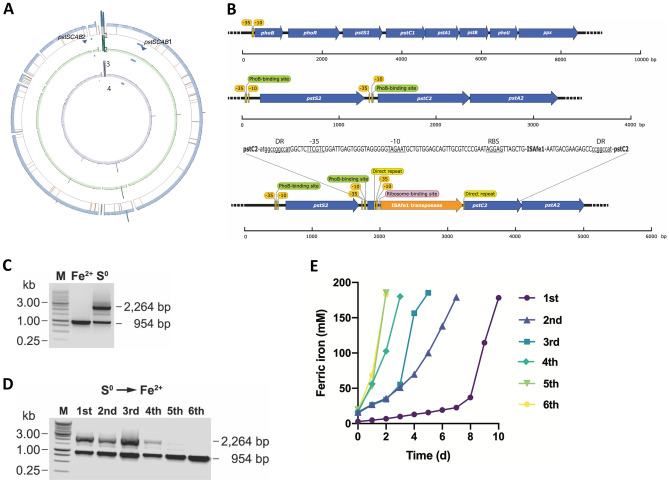
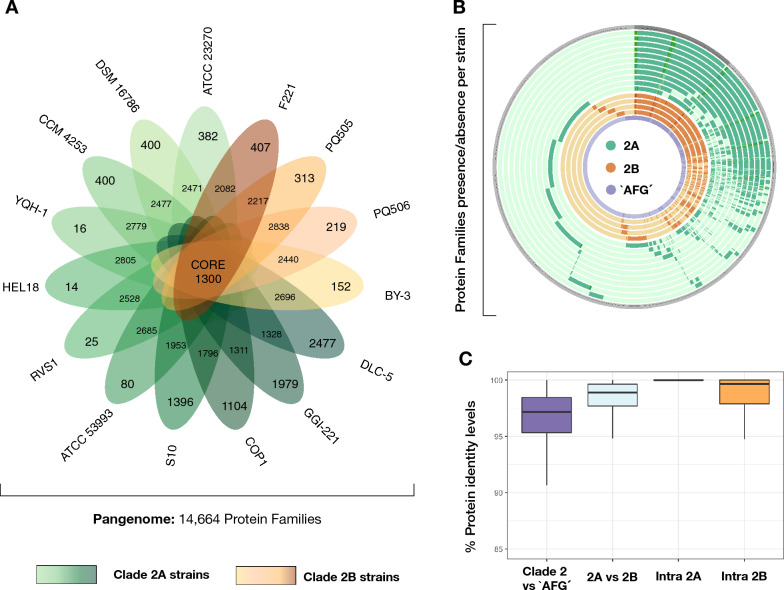
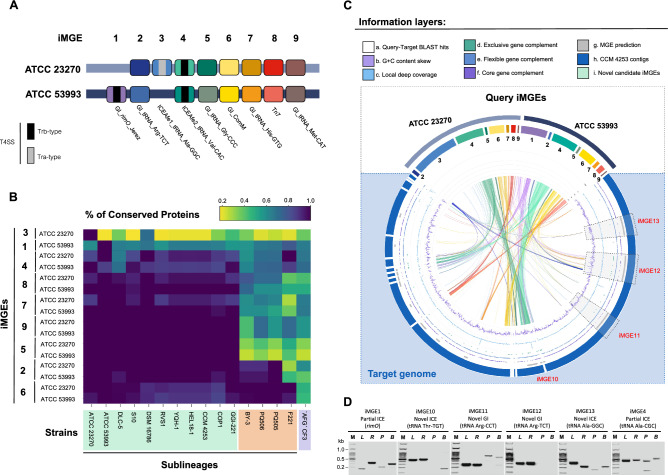
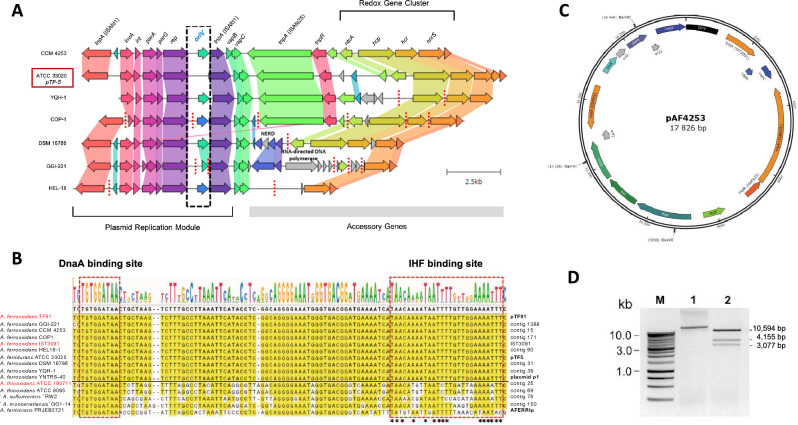
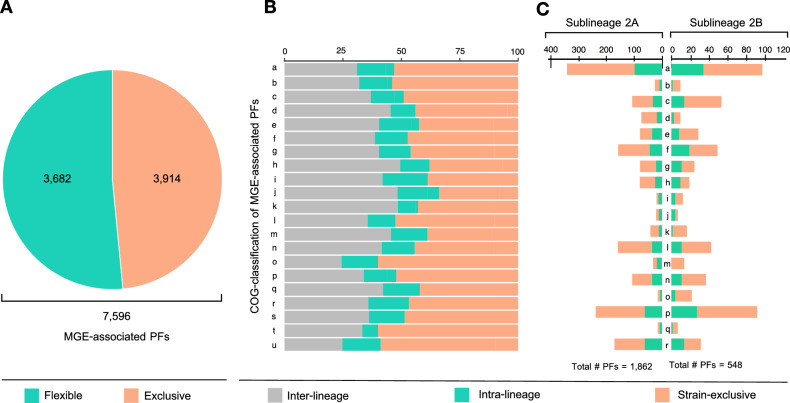
The recent revision of the Acidithiobacillia class using genomic taxonomy methods has shown that, in addition to the existence of previously unrecognized genera and species, some species of the class harbor levels of divergence that are congruent with ongoing differentiation processes. In this study, we have performed a subspecies-level analysis of sequenced strains of Acidithiobacillus ferrooxidans to prove the existence of distinct sublineages and identify the discriminant genomic/genetic characteristics linked to these sublineages, and to shed light on the processes driving such differentiation. Differences in the genomic relatedness metrics, levels of synteny, gene content, and both integrated and episomal mobile genetic elements (MGE) repertoires support the existence of two subspecies-level taxa within A. ferrooxidans. While sublineage 2A harbors a small plasmid related to pTF5, this episomal MGE is absent in sublineage 2B strains. Likewise, clear differences in the occurrence, coverage and conservation of integrated MGEs are apparent between sublineages. Differential MGE-associated gene cargo pertained to the functional categories of energy metabolism, ion transport, cell surface modification, and defense mechanisms. Inferred functional differences have the potential to impact long-term adaptive processes and may underpin the basis of the subspecies-level differentiation uncovered within A. ferrooxidans. Genome resequencing of iron- and sulfur-adapted cultures of a selected 2A sublineage strain (CCM 4253) showed that both episomal and large integrated MGEs are conserved over twenty generations in either growth condition. In turn, active insertion sequences profoundly impact short-term adaptive processes. The ISAfe1 element was found to be highly active in sublineage 2A strain CCM 4253. Phenotypic mutations caused by the transposition of ISAfe1 into the pstC2 encoding phosphate-transport system permease protein were detected in sulfur-adapted cultures and shown to impair growth on ferrous iron upon the switch of electron donor. The phenotypic manifestation of the △pstC2 mutation, such as a loss of the ability to oxidize ferrous iron, is likely related to the inability of the mutant to secure the phosphorous availability for electron transport-linked phosphorylation coupled to iron oxidation. Depletion of the transpositional △pstC2 mutation occurred concomitantly with a shortening of the iron-oxidation lag phase at later transfers on a ferrous iron-containing medium. Therefore, the pstII operon appears to play an essential role in A. ferrooxidans when cells oxidize ferrous iron. Results highlight the influence of insertion sequences and both integrated and episomal mobile genetic elements in the short- and long-term adaptive processes of A. ferrooxidans strains under changing growth conditions.
使用基因组分类学方法对 Acidithiobacillia 类的最近修订表明,除了以前未被识别的属和种的存在外,该类中的一些种具有与正在进行的分化过程一致的分歧水平。在这项研究中,我们对已测序的嗜酸氧化亚铁硫杆菌菌株进行了亚种水平分析,以证明存在明显的亚系,并确定与这些亚系相关的鉴别基因组/遗传特征,并阐明驱动这种分化的过程。基因组相关性度量、同线性水平、基因含量以及整合和附加型移动遗传元件 (MGE) 库的差异支持嗜酸氧化亚铁硫杆菌中存在两个亚种水平的分类群。虽然亚系 2A 含有与 pTF5 相关的小质粒,但这种附加型 MGE 在亚系 2B 菌株中不存在。同样,亚系之间整合 MGE 的发生、覆盖和保守性存在明显差异。差异 MGE 相关的基因货物与能量代谢、离子运输、细胞表面修饰和防御机制的功能类别有关。推断的功能差异有可能影响长期的适应过程,并可能构成嗜酸氧化亚铁硫杆菌中发现的亚种水平分化的基础。对选定的 2A 亚系菌株 (CCM 4253) 的铁和硫适应培养物进行基因组重测序表明,无论是在生长条件下,附加型和大型整合 MGE 都能在二十代中保持不变。反过来,活性插入序列深刻地影响短期适应过程。发现 ISAfe1 元件在亚系 2A 菌株 CCM 4253 中非常活跃。在硫适应培养物中检测到转座 ISAfe1 到编码磷酸盐转运系统透酶蛋白的 pstC2 中引起的表型突变,并表明在电子供体切换时会损害对亚铁铁的生长。△pstC2 突变的表型表现,例如丧失氧化亚铁的能力,可能与突变体无法为电子传递相关磷酸化提供磷可用性有关,该磷酸化与铁氧化偶联。在含有亚铁铁的培养基上进一步转移时,转座△pstC2 突变的耗竭同时伴随着铁氧化滞后期的缩短。因此,当细胞氧化亚铁铁时,pstII 操纵子似乎在嗜酸氧化亚铁硫杆菌中发挥着重要作用。结果强调了插入序列以及整合型和附加型移动遗传元件在变化的生长条件下嗜酸氧化亚铁硫杆菌菌株的短期和长期适应过程中的影响。