Faculty of Medicine, University of Medicine and Pharmacy, 217 Hong Bang Street, 11th Ward, 5th District, Ho Chi Minh City, 700000, Vietnam.
Department of Neurosurgery, University Medical Center, UMC, 215 Hong Bang Street, 11th Ward, 5th District, Ho Chi Minh City, 700000, Vietnam.
Sci Rep. 2023 Jul 5;13(1):10859. doi: 10.1038/s41598-023-38049-1.
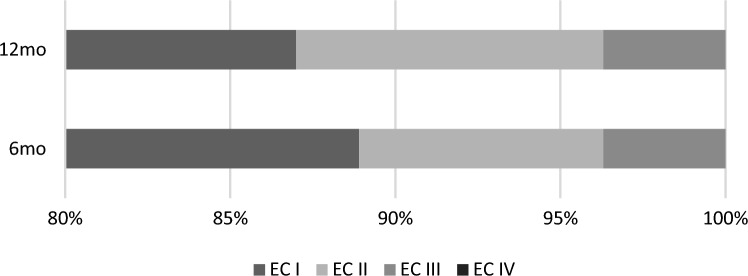
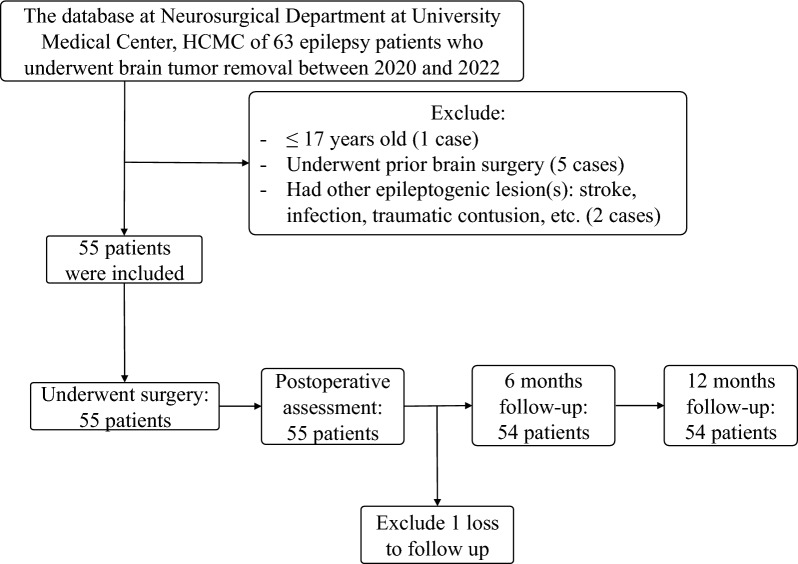
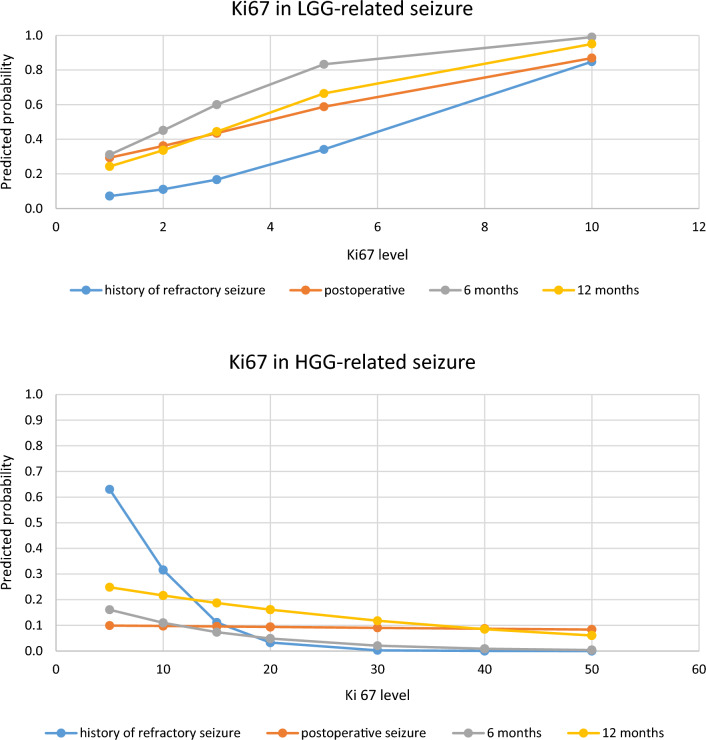
Seizures have a significant impact on the quality of life of those who suffer. This study aimed to evaluate the variables that influence the incidence of seizures during the perioperative period and effective measures to enhance epilepsy outcomes among individuals undergoing surgical resection of brain tumors. The authors carried out a prospective observational analysis of all patients who experienced seizures before their brain tumor surgery at UMC, HCMC between 2020 and 2022. 54 cases presented with seizures were enrolled for the study, generalized seizure was the most prevalent seizure type (61.1%), followed by focal seizure (29.6%). The majority of patients presented with seizures are those who were diagnosed with glioma. Low-grade gliomas and frontotemporal lobe tumors increase the postoperative risk of seizure. Other predictive factors are a prolonged history of seizure, especially resistant epilepsy and major peritumoral edema. In contrast, gross total resection reduces postoperative seizure incidence. There was correlation between Ki67 proliferation index and seizure incidence in both low-grade and high-grade gliomas. ECoG made insubstantial difference in enhancing the epilepsy surgery outcome. Overall, 88.9% of patients were seizure-free at 6 months of follow-up (Engel Class I), 7.4% were almost seizure-free (Class II), and 3.7% had significant improvement (Class III), figures for 12-month follow-up were 87.0%, 9.3%, and 3.7% respectively. A shorter history of seizure and gross-total resection appear to be associated with a favorable prognosis for seizure control.
癫痫发作会显著影响患者的生活质量。本研究旨在评估影响脑肿瘤手术围手术期癫痫发作发生率的变量,以及提高癫痫手术结局的有效措施。作者对 2020 年至 2022 年期间在 UMC、胡志明市发生术前癫痫发作的所有脑肿瘤患者进行了前瞻性观察分析。54 例癫痫发作患者被纳入研究,全身性癫痫发作是最常见的癫痫发作类型(61.1%),其次是局灶性癫痫发作(29.6%)。大多数出现癫痫发作的患者被诊断为胶质瘤。低级别胶质瘤和额颞叶肿瘤增加了术后癫痫发作的风险。其他预测因素是癫痫发作的病史较长,特别是耐药性癫痫和大面积瘤周水肿。相比之下,大体全切除可降低术后癫痫发作的发生率。Ki67 增殖指数与低级别和高级别胶质瘤的癫痫发作发生率存在相关性。脑电地形图(ECoG)在提高癫痫手术效果方面没有显著差异。总体而言,6 个月随访时 88.9%的患者无癫痫发作(Engel Ⅰ级),7.4%的患者几乎无癫痫发作(Ⅱ级),3.7%的患者有明显改善(Ⅲ级),12 个月随访时的比例分别为 87.0%、9.3%和 3.7%。癫痫发作病史较短和大体全切除与癫痫控制的良好预后相关。