Department of Microbiology, Faculty of Medicine, Chiang Mai University, Chiang Mai, Thailand.
Medical Biotechnology Research Unit, BIOTEC, NSTDA, Bangkok, Thailand.
Microbiol Spectr. 2023 Aug 17;11(4):e0091823. doi: 10.1128/spectrum.00918-23. Epub 2023 Jul 6.
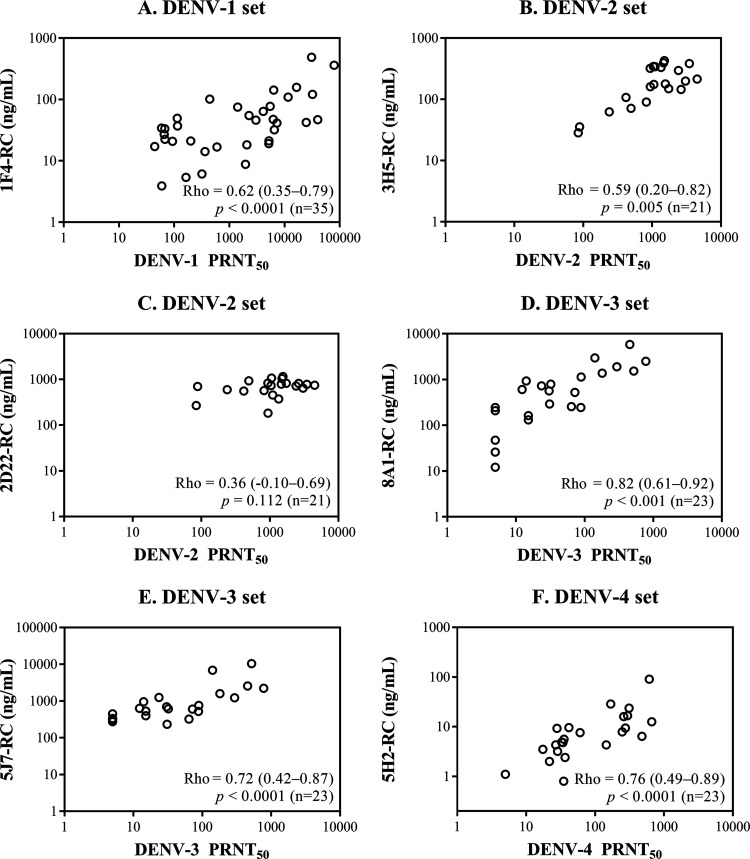
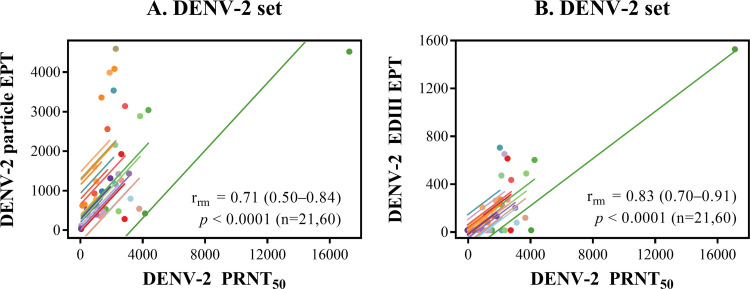
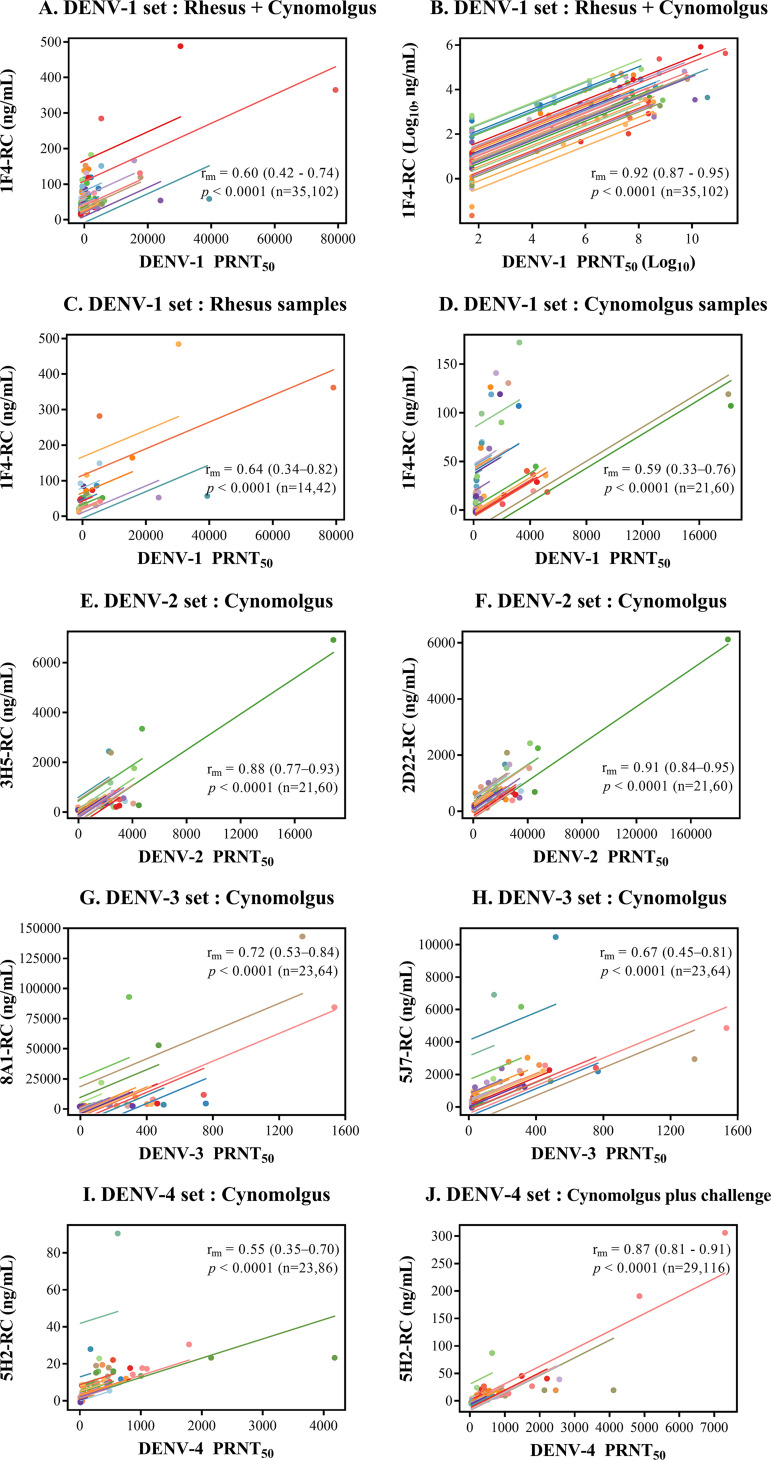
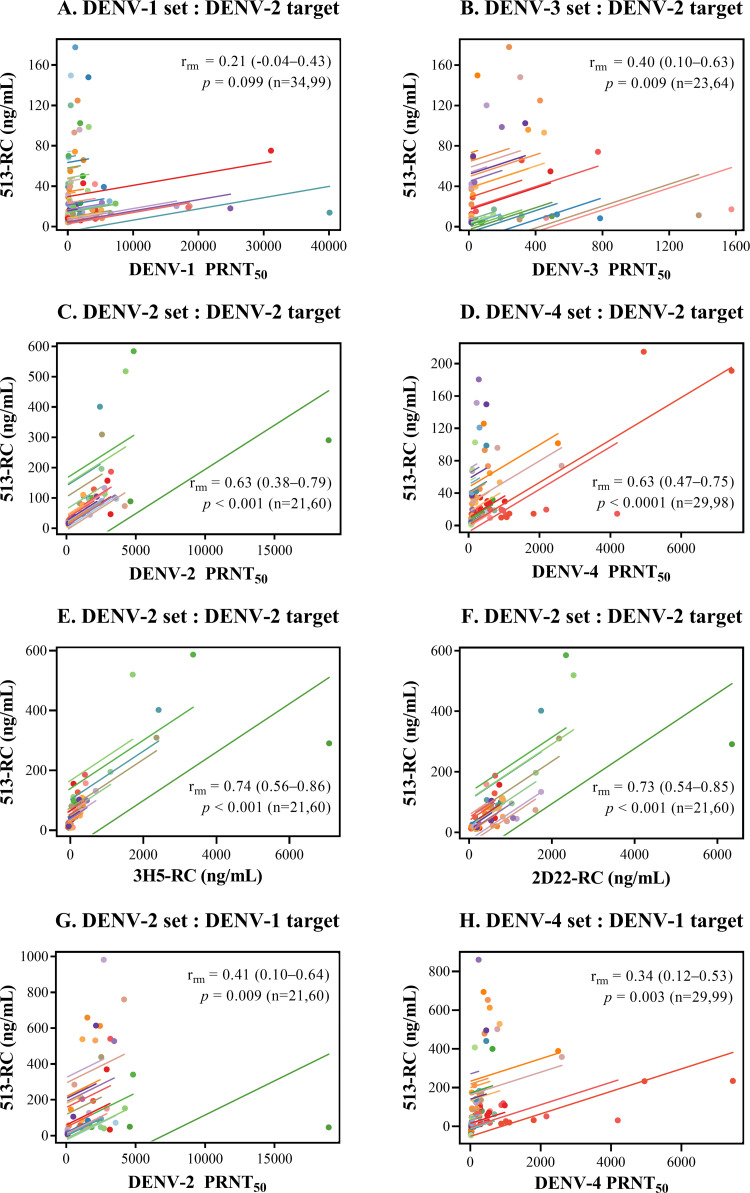
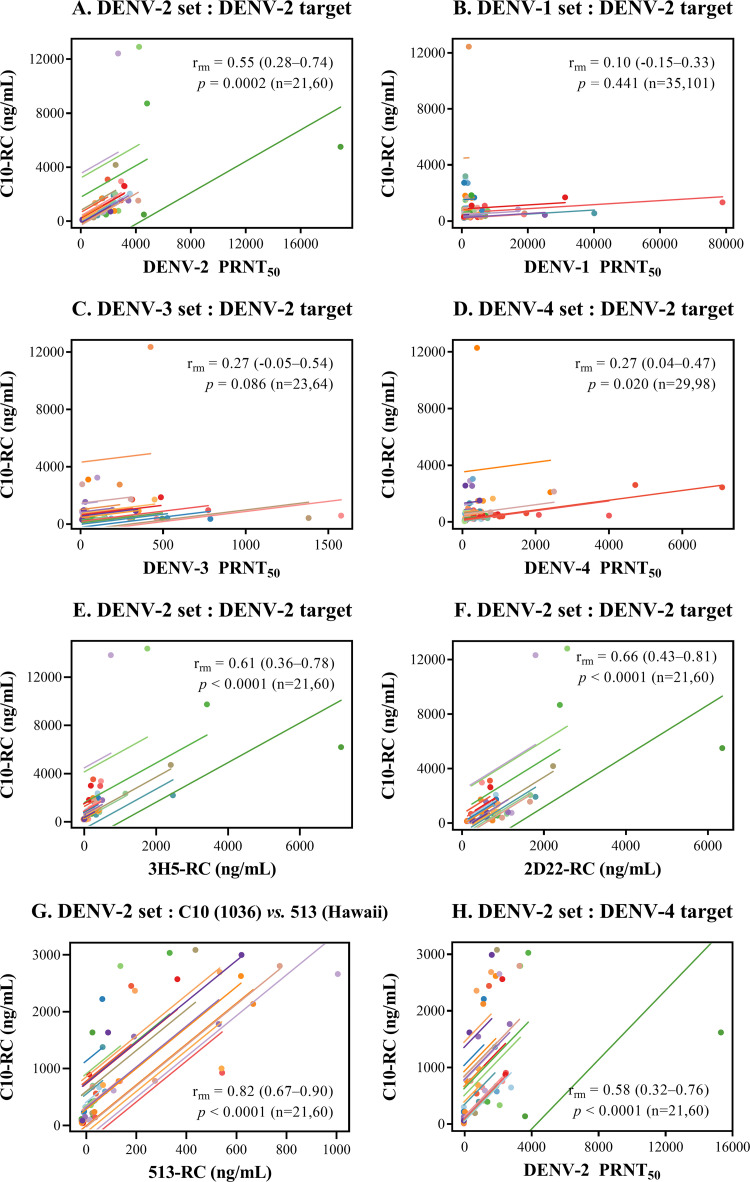
Humans infected with dengue virus (DENV) acquire long-term protection against the infecting serotype, whereas cross-protection against other serotypes is short-lived. Long-term protection induced by low levels of type-specific neutralizing antibodies can be assessed using the virus-neutralizing antibody test. However, this test is laborious and time-consuming. In this study, a blockade-of-binding enzyme-linked immunoassay was developed to assess antibody activity by using a set of neutralizing anti-E monoclonal antibodies and blood samples from dengue virus-infected or -immunized macaques. Diluted blood samples were incubated with plate-bound dengue virus particles before the addition of an enzyme-conjugated antibody specific to the epitope of interest. Based on blocking reference curves constructed using autologous purified antibodies, sample blocking activity was determined as the relative concentration of unconjugated antibody that resulted in the same percent signal reduction. In separate DENV-1-, -2-, -3-, and -4-related sets of samples, moderate to strong correlations of the blocking activity with neutralizing antibody titers were found with the four type-specific antibodies 1F4, 3H5, 8A1, and 5H2, respectively. Significant correlations were observed for single samples taken 1 month after infection as well as samples drawn before and at various time points after infection/immunization. Similar testing using a cross-reactive EDE-1 antibody revealed a moderate correlation between the blocking activity and the neutralizing antibody titer only for the DENV-2-related set. The potential usefulness of the blockade-of-binding activity as a correlative marker of neutralizing antibodies against dengue viruses needs to be validated in humans. This study describes a blockade-of-binding assay for the determination of antibodies that recognize a selected set of serotype-specific or group-reactive epitopes in the envelope of dengue virus. By employing blood samples collected from dengue virus-infected or -immunized macaques, moderate to strong correlations of the epitope-blocking activities with the virus-neutralizing antibody titers were observed with serotype-specific blocking activities for each of the four dengue serotypes. This simple, rapid, and less laborious method should be useful for the evaluation of antibody responses to dengue virus infection and may serve as, or be a component of, an correlate of protection against dengue in the future.
人类感染登革病毒(DENV)后会对感染的血清型产生长期保护,而对其他血清型的交叉保护则是短暂的。可以使用病毒中和抗体试验来评估由低水平的特异性中和抗体诱导的长期保护。然而,这种测试既费力又耗时。在这项研究中,开发了一种结合抑制酶联免疫吸附试验,使用一组中和抗-E 单克隆抗体和感染或免疫登革病毒的猕猴的血液样本来评估抗体活性。在加入针对感兴趣表位的酶结合抗体之前,将稀释的血液样本与平板结合的登革病毒颗粒孵育。根据使用自体纯化抗体构建的阻断参考曲线,通过未结合抗体的相对浓度来确定样品的阻断活性,该浓度可使信号降低相同的百分比。在单独的 DENV-1、-2、-3 和 -4 相关样本组中,与四种型特异性抗体 1F4、3H5、8A1 和 5H2 分别发现结合抑制活性与中和抗体滴度之间存在中度至强相关性。在感染后 1 个月以及感染/免疫前后的各个时间点采集的单个样本中也观察到了显著相关性。使用交叉反应性 EDE-1 抗体进行类似的测试,仅发现结合抑制活性与 DENV-2 相关样本组的中和抗体滴度之间存在中度相关性。需要在人类中验证结合抑制活性作为针对登革病毒的中和抗体的相关标志物的潜在有用性。本研究描述了一种用于确定针对登革病毒包膜中选定的一组血清型特异性或组反应性表位的抗体的结合抑制测定法。通过使用从感染或免疫登革病毒的猕猴中收集的血液样本,观察到与四种登革热血清型的每种血清型的特异性阻断活性相关的中等至强的表位阻断活性与病毒中和抗体滴度之间的相关性。这种简单、快速且不那么费力的方法应该对评估针对登革病毒感染的抗体反应有用,并可能成为或成为未来针对登革热的保护相关性的一部分。