Grupo de Inmunobiología y Biología Celular, Facultad de Ciencias, Pontificia Universidad Javeriana, Bogotá, Colombia.
Departamento de Microbiología, Pontificia Universidad Javeriana, Carrera 7 # 43-82. Edificio 50 Laboratorio 101, Bogotá, Colombia.
Arch Immunol Ther Exp (Warsz). 2023 Jul 6;71(1):17. doi: 10.1007/s00005-023-00681-0.
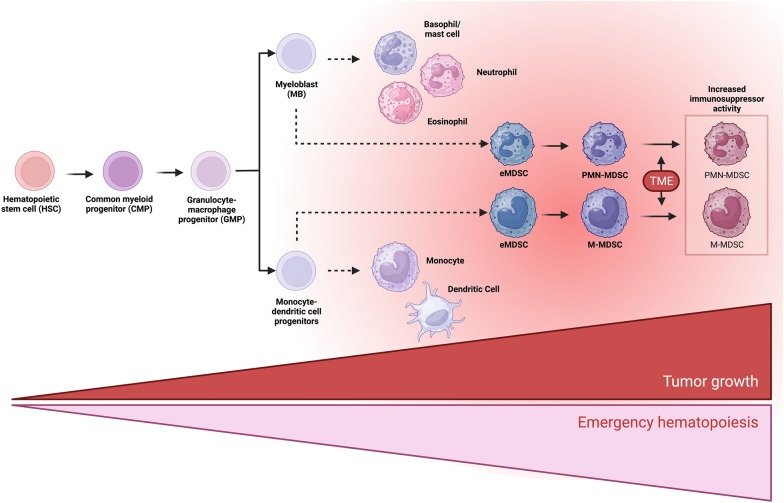
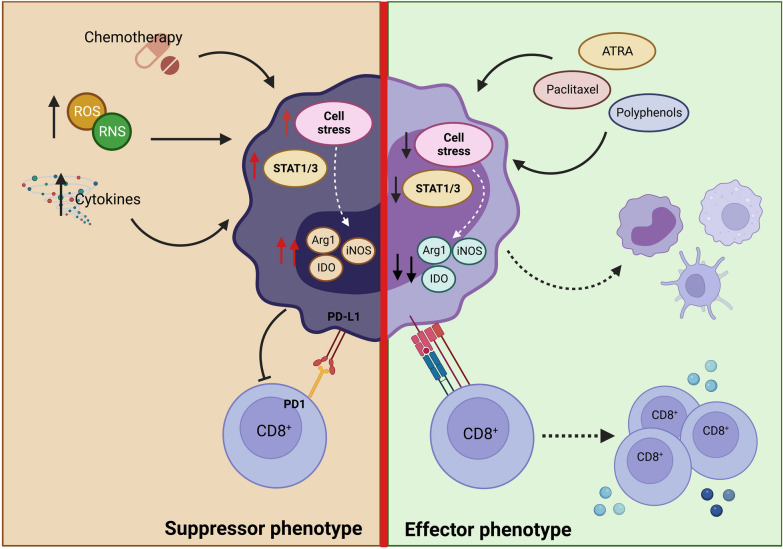
During carcinogenesis, the microenvironment plays a fundamental role in tumor progression and resistance. This tumor microenvironment (TME) is characterized by being highly immunosuppressive in most cases, which makes it an important target for the development of new therapies. One of the most important groups of cells that orchestrate immunosuppression in TME is myeloid-derived suppressor cells (MDSCs), which have multiple mechanisms to suppress the immune response mediated by T lymphocytes and thus protect the tumor. In this review, we will discuss the importance of modulating MDSCs as a therapeutic target and how the use of natural products, due to their multiple mechanisms of action, can be a key alternative for modulating these cells and thus improve response to therapy in cancer patients.
在癌症发生过程中,微环境在肿瘤进展和耐药中起着根本性的作用。这种肿瘤微环境(TME)在大多数情况下具有高度免疫抑制性,这使其成为开发新疗法的重要靶点。在 TME 中协调免疫抑制作用的最重要的细胞群之一是髓系来源的抑制细胞(MDSCs),它们具有多种机制来抑制 T 淋巴细胞介导的免疫反应,从而保护肿瘤。在这篇综述中,我们将讨论将 MDSCs 作为治疗靶点的重要性,以及天然产物由于其多种作用机制,如何成为调节这些细胞的关键替代方法,从而改善癌症患者的治疗反应。