Cao Tingting, Wang Song, Qian Long, Wu Chengwei, Huang Tao, Wang Ye, Li Qian, Wang Jiawei, Xia Yabin, Xu Li, Wang Luman, Huang Xiaoxu
Department of Gastrointestinal Surgery, The First Affiliated Yijishan Hospital of Wannan Medical College, Wuhu, No.2, Zheshan West Road, Wuhu, Anhui 241001, China.
Department of Gastrointestinal Surgery, The First Affiliated Yijishan Hospital of Wannan Medical College, Wuhu, No.2, Zheshan West Road, Wuhu, Anhui 241001, China; General Surgery Department, Wuhu Hospital of Traditional Chinese Medicine, Wuhu, Anhui, China.
Transl Oncol. 2023 Sep;35:101734. doi: 10.1016/j.tranon.2023.101734. Epub 2023 Jul 5.
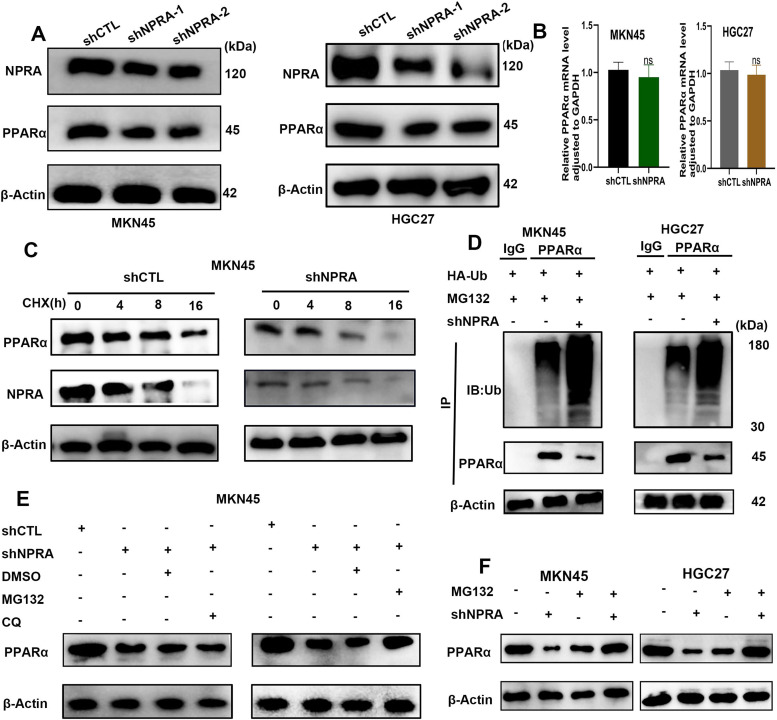
Among cancers, gastric cancer (GC) ranks third globally in morbidity and mortality, particularly in East Asia. Natriuretic peptide receptor A (NPRA), a receptor for guanylate cyclase, plays important roles in regulating water and sodium balance. Recent studies have suggested that NPRA is involved in tumorigenesis, but its role in GC development remains unclear. Herein, we showed that the expression level of NPRA was positively correlated with gastric tumor size and clinical stage. Patients with high NPRA expression had a lower five-year survival rate than those with low expression, and NPRA was identified as an independent predictor of GC prognosis. NPRA knockdown suppressed GC cell proliferation, migration and invasion. NPRA overexpression enhanced cell malignant behavior. Immunohistochemistry of collected tumor samples showed that tumors with high NPRA expression had higher peroxisome proliferator-activated receptor α (PPARα) levels. In vivo and in vitro studies showed that NPRA promotes fatty acid oxidation and tumor cell metastasis. Co-IP showed that NPRA binds to PPARα and prevents PPARα degradation. PPARα upregulation under NPRA protection activates arnitine palmitoyl transferase 1B (CPT1B) to promote fatty acid oxidation. In this study, new mechanisms by which NPRA promotes the development of GC and new regulatory mechanisms of PPARα were identified.
在各类癌症中,胃癌(GC)的发病率和死亡率在全球排名第三,在东亚地区尤为突出。利钠肽受体A(NPRA)作为鸟苷酸环化酶的一种受体,在调节水和钠平衡方面发挥着重要作用。最近的研究表明,NPRA参与肿瘤发生,但它在胃癌发展中的作用仍不清楚。在此,我们发现NPRA的表达水平与胃肿瘤大小和临床分期呈正相关。NPRA高表达的患者五年生存率低于低表达患者,并且NPRA被确定为胃癌预后的独立预测因子。NPRA敲低抑制了胃癌细胞的增殖、迁移和侵袭。NPRA过表达增强了细胞的恶性行为。对收集的肿瘤样本进行免疫组织化学分析显示,NPRA高表达的肿瘤具有更高的过氧化物酶体增殖物激活受体α(PPARα)水平。体内和体外研究表明,NPRA促进脂肪酸氧化和肿瘤细胞转移。免疫共沉淀显示NPRA与PPARα结合并防止PPARα降解。在NPRA的保护下PPARα上调激活肉碱棕榈酰转移酶1B(CPT1B)以促进脂肪酸氧化。在本研究中,确定了NPRA促进胃癌发展的新机制以及PPARα的新调控机制。