Allevi Massimiliano, Sarnari Silvia, Giulietti Federico, Spannella Francesco, Di Pentima Chiara, Sarzani Riccardo
Internal Medicine and Geriatrics, IRCCS INRCA, Ancona, Italy.
Department of Clinical and Molecular Sciences, University "Politecnica delle Marche", Ancona, Italy.
Front Cardiovasc Med. 2023 Jun 23;10:1181720. doi: 10.3389/fcvm.2023.1181720. eCollection 2023.
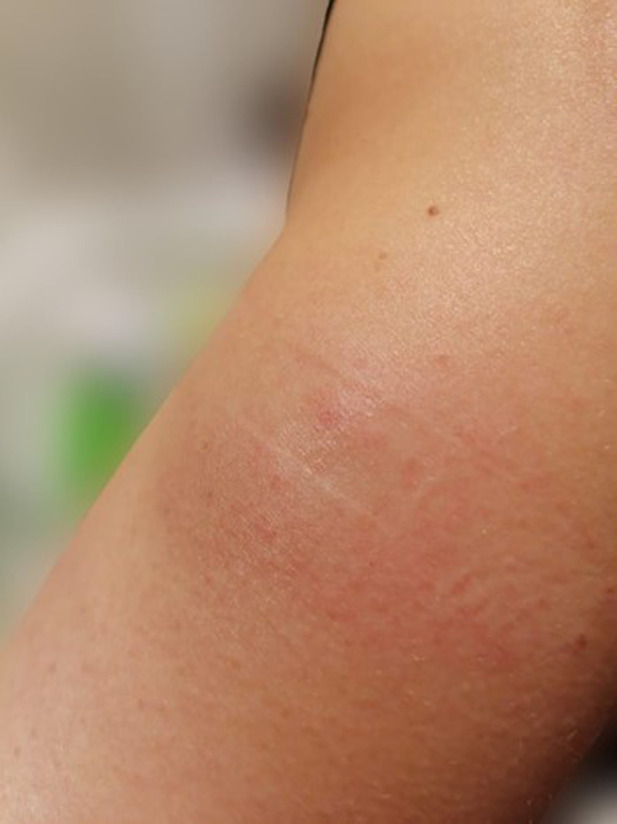
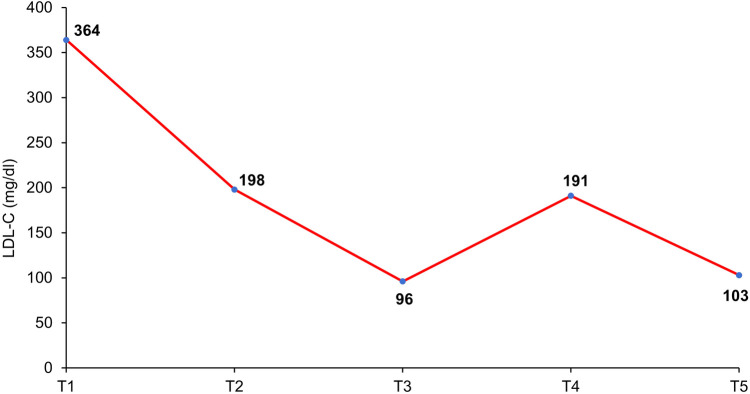
A 28-year-old woman with autosomal dominant familial hypercholesterolemia (FH) with a probable coexistent polygenic contribution causing very high low-density lipoprotein-cholesterol (LDL-C) levels, started therapy with the proprotein convertase subtilisin/kexin type 9-inhibitor (PCSK9i) alirocumab, in addition to high-intensity statin plus ezetimibe. Forty-eight hours after the second injection of alirocumab, the patient developed a painful palpable injection site reaction (ISR) that recurred after the third administration of the drug. Treatment was then switched to evolocumab, another PCSK9i, but the patient had an ISR with similar features. The most conceivable cause of the ISR was a cell-mediated hypersensitivity reaction to polysorbate, an excipient contained in both drugs. Although ISR after PCSK9i administration is usually transient and does not compromise the continuation of treatment, in this case the recurrence of such side effect in an exacerbated way led to treatment withdrawal, with a subsequent re-exposure to increased cardiovascular (CV) risk. As soon as it became available in clinical practice, the patient started treatment with inclisiran, a small interfering RNA targeting hepatic PCSK9 synthesis. No adverse events were reported after inclisiran administration and LDL-C levels decreased significantly, confirming the evidence that this innovative approach to hypercholesterolemia is a safe and effective resource in patients at high CV risk who cannot achieve LDL-C goal with conventional lipid-lowering therapies and antibody-based PCSK9i.
一名28岁的女性,患有常染色体显性遗传家族性高胆固醇血症(FH),可能同时存在多基因因素导致极低密度脂蛋白胆固醇(LDL-C)水平极高。她在接受高强度他汀类药物加依折麦布治疗的基础上,开始使用前蛋白转化酶枯草溶菌素/kexin 9型抑制剂(PCSK9i)阿利西尤单抗进行治疗。在第二次注射阿利西尤单抗48小时后,患者出现了疼痛性可触及的注射部位反应(ISR),在第三次用药后该反应再次出现。随后治疗改为另一种PCSK9i依洛尤单抗,但患者仍出现了具有相似特征的ISR。最可能导致ISR的原因是对两种药物中都含有的辅料聚山梨酯的细胞介导的超敏反应。虽然PCSK9i给药后的ISR通常是短暂的,并不影响治疗的继续,但在该病例中,这种副作用以加剧的方式复发导致治疗中断,随后心血管(CV)风险增加。临床实践中一旦有了inclisiran,患者就开始使用它进行治疗,inclisiran是一种靶向肝脏PCSK9合成的小干扰RNA。注射inclisiran后未报告不良事件,且LDL-C水平显著下降,这证实了在高CV风险患者中,这种治疗高胆固醇血症的创新方法是一种安全有效的手段,这些患者无法通过传统降脂疗法和基于抗体的PCSK9i实现LDL-C目标。