Department of Microbiology and Immunology, University of Texas Medical Branch, Galveston, TX, United States.
Institute for Human Infections and Immunity, University of Texas Medical Branch, Galveston, TX, United States.
Front Immunol. 2023 Jun 22;14:1194881. doi: 10.3389/fimmu.2023.1194881. eCollection 2023.
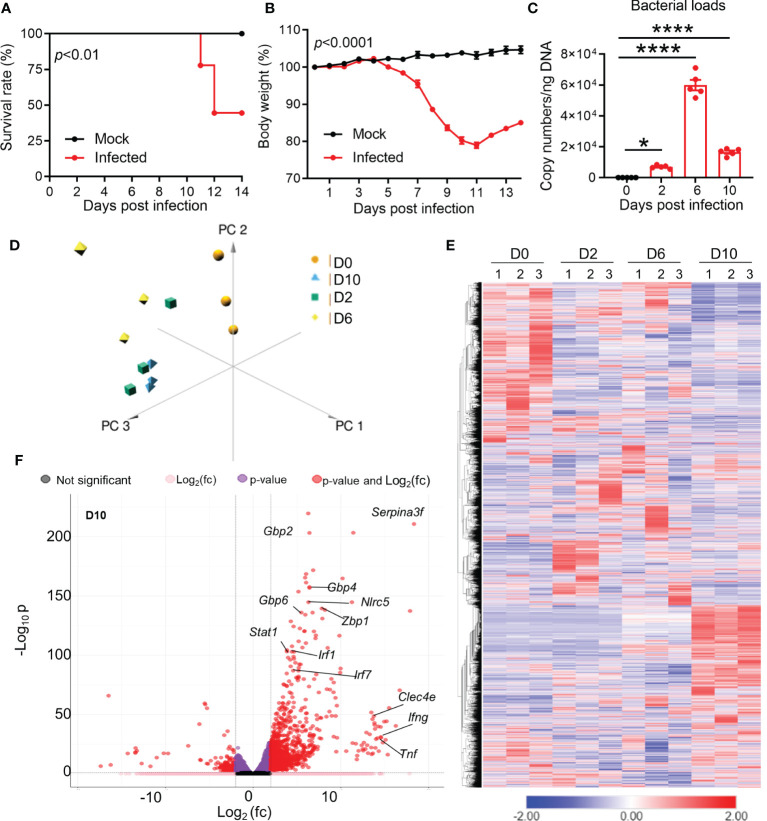
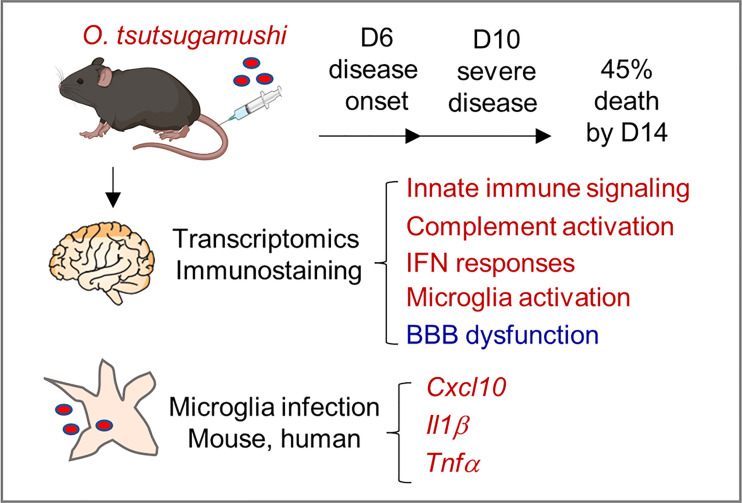
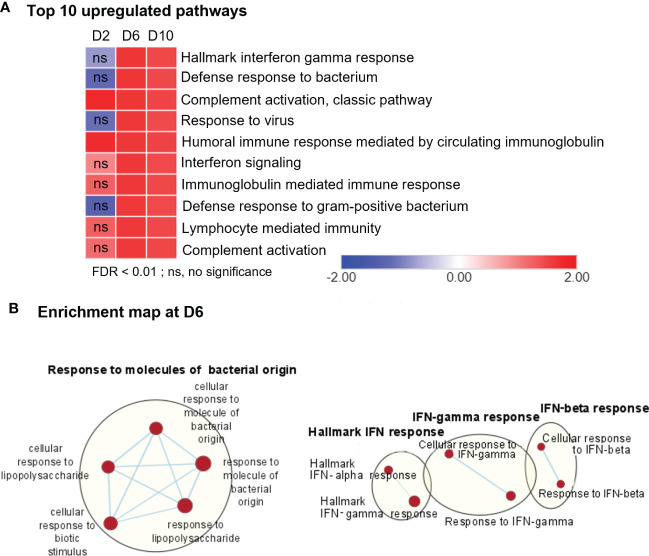
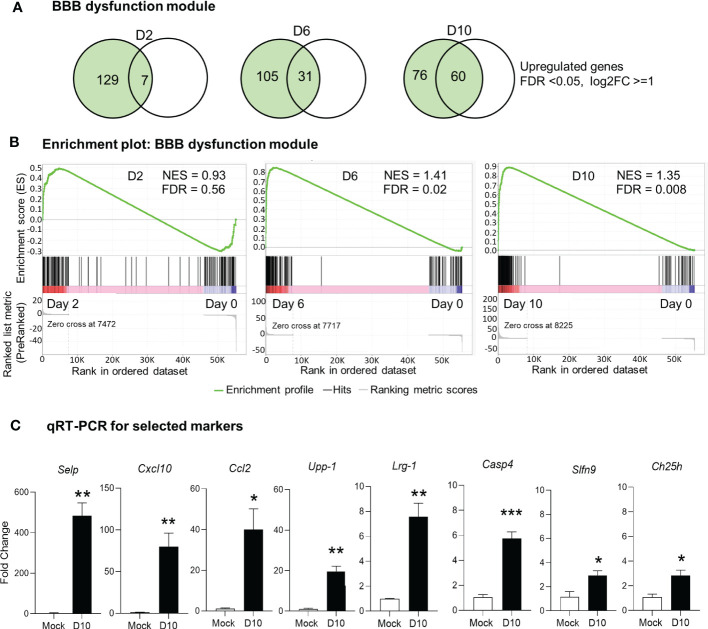
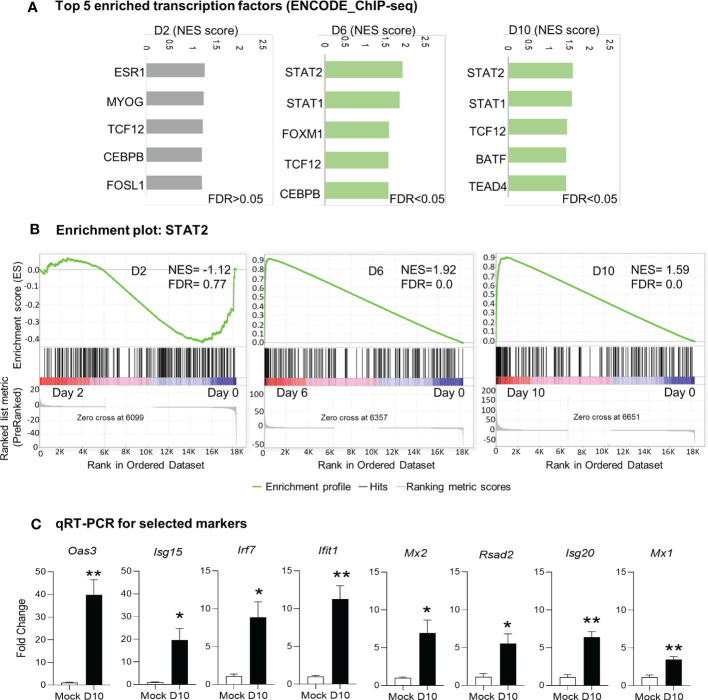
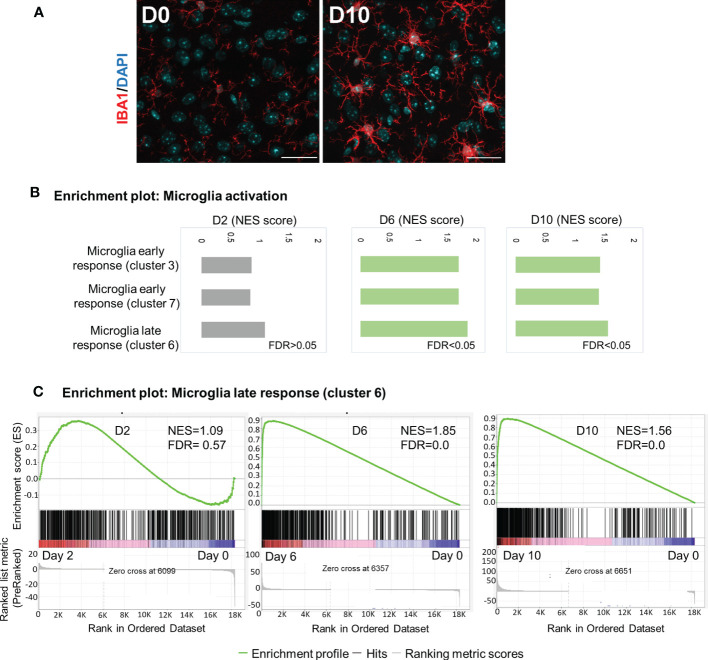
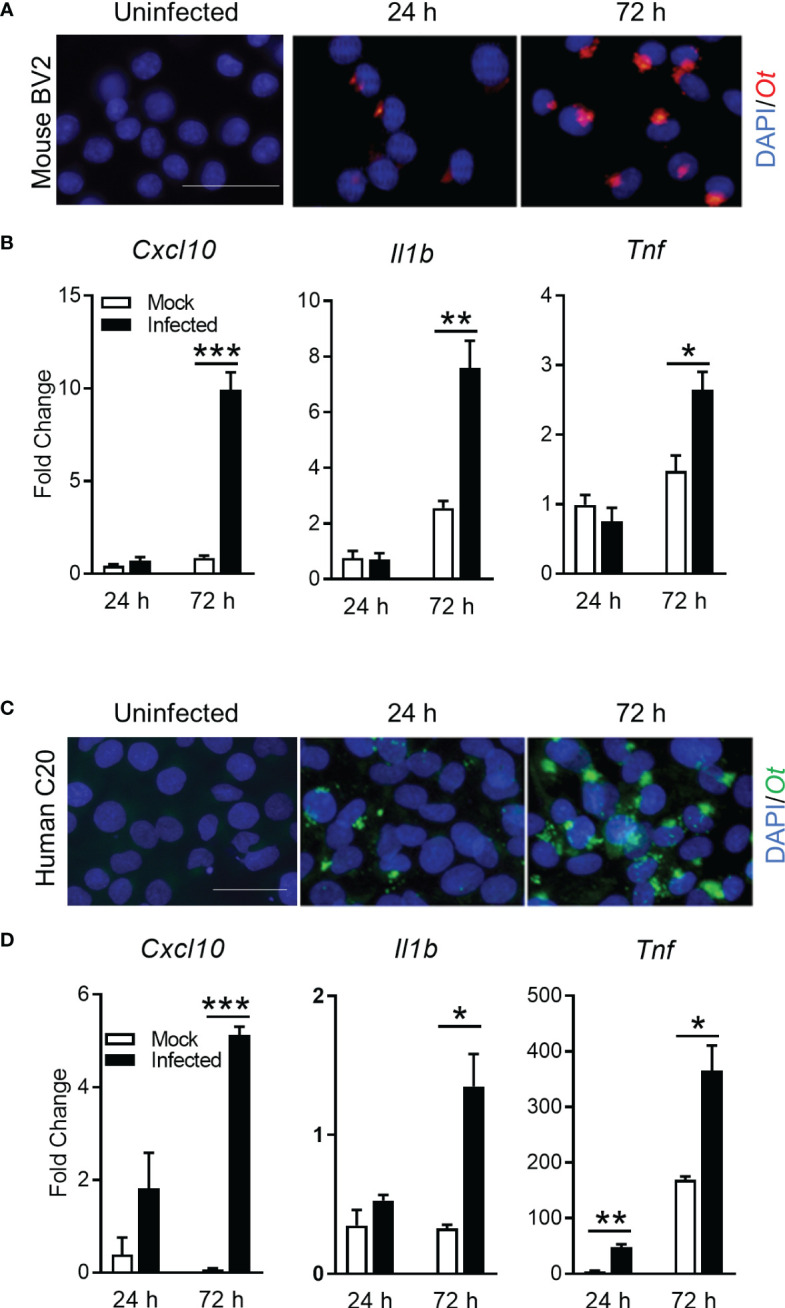
Scrub typhus, an acute febrile illness caused by (), is prevalent in endemic areas with one million new cases annually. Clinical observations suggest central nervous system (CNS) involvement in severe scrub typhus cases. Acute encephalitis syndrome (AES) associated with infection is a major public health problem; however, the underlying mechanisms of neurological disorder remain poorly understood. By using a well-established murine model of severe scrub typhus and brain RNA-seq, we studied the brain transcriptome dynamics and identified the activated neuroinflammation pathways. Our data indicated a strong enrichment of several immune signaling and inflammation-related pathways at the onset of disease and prior to host death. The strongest upregulation of expression included genes involved in interferon (IFN) responses, defense response to bacteria, immunoglobulin-mediated immunity, IL-6/JAK-STAT signaling, and TNF signaling via NF-κB. We also found a significant increase in the expression of core genes related to blood-brain barrier (BBB) disruption and dysregulation in severe infection. Brain tissue immunostaining and infection of microglia revealed microglial activation and proinflammatory cytokine production, suggesting a crucial role of microglia in neuroinflammation during scrub typhus. This study provides new insights into neuroinflammation in scrub typhus, highlighting the impact of excessive IFN responses, microglial activation, and BBB dysregulation on disease pathogenesis.
恙虫病是一种由 引起的急性发热性疾病,在流行地区每年有 100 万例新发病例。临床观察表明,严重恙虫病病例中存在中枢神经系统 (CNS) 受累。感染引起的急性脑炎综合征 (AES) 是一个主要的公共卫生问题;然而,神经系统疾病的潜在机制仍知之甚少。通过使用一种成熟的严重恙虫病小鼠模型和大脑 RNA 测序,我们研究了大脑转录组的动态变化,并确定了激活的神经炎症途径。我们的数据表明,在疾病发作和宿主死亡之前,几种免疫信号和炎症相关途径的表达明显富集。表达上调最强的包括参与干扰素 (IFN) 反应、对细菌的防御反应、免疫球蛋白介导的免疫、IL-6/JAK-STAT 信号和 TNF 信号通过 NF-κB 的基因。我们还发现,与严重 感染相关的血脑屏障 (BBB) 破坏和失调的核心基因表达显著增加。脑组织免疫染色和小胶质细胞感染显示小胶质细胞激活和促炎细胞因子产生,提示小胶质细胞在恙虫病中的神经炎症中起关键作用。这项研究为恙虫病中的神经炎症提供了新的见解,强调了过度的 IFN 反应、小胶质细胞激活和 BBB 失调对疾病发病机制的影响。