Kuratomi Kei, Johnsen Laura, Kitagami Shinji, Hatano Aya, Murayama Kou
Faculty of Education, Gifu Shotoku Gakuen University, 1-1, Takakuwanishi, Yanaizu-Cho, Gifu, Japan.
Community Based Neurorehabilitation Team, Berkshire Healthcare NHS Foundation Trust, London Road, Thatcham, RG18 3AS UK.
Motiv Emot. 2023;47(4):509-523. doi: 10.1007/s11031-022-09996-5. Epub 2022 Dec 28.
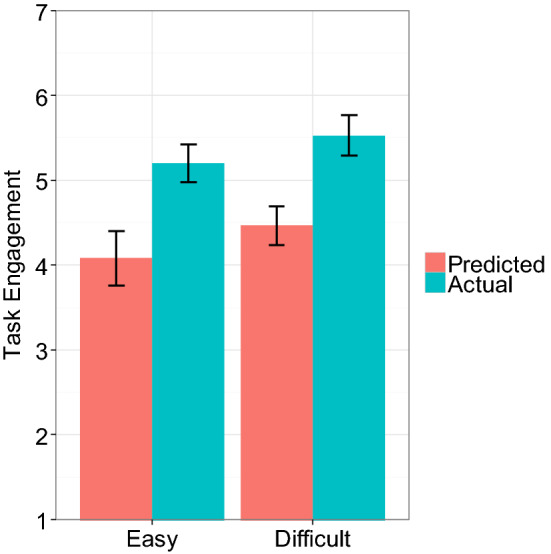
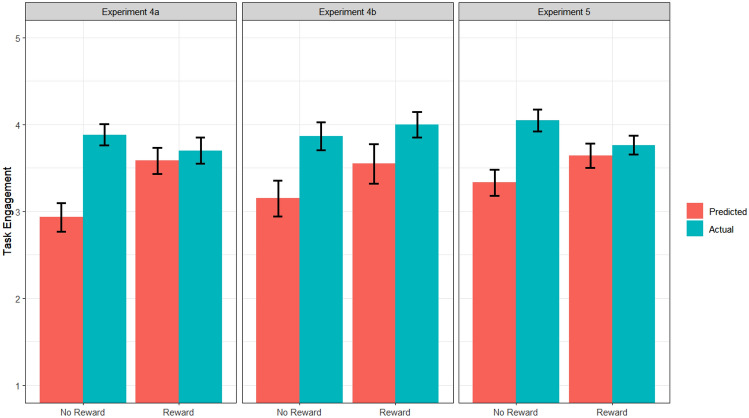
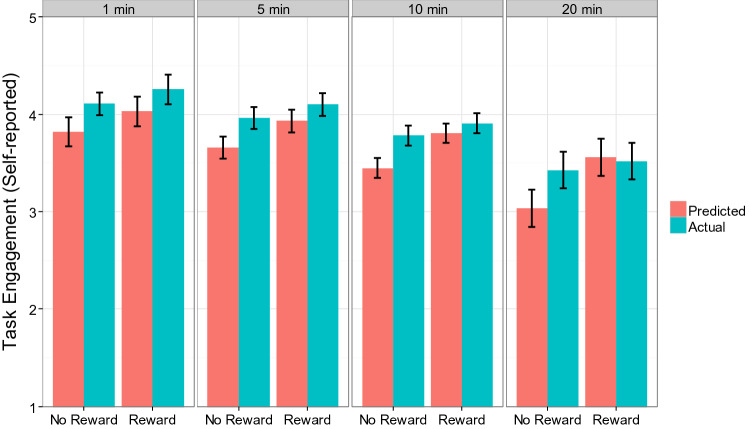
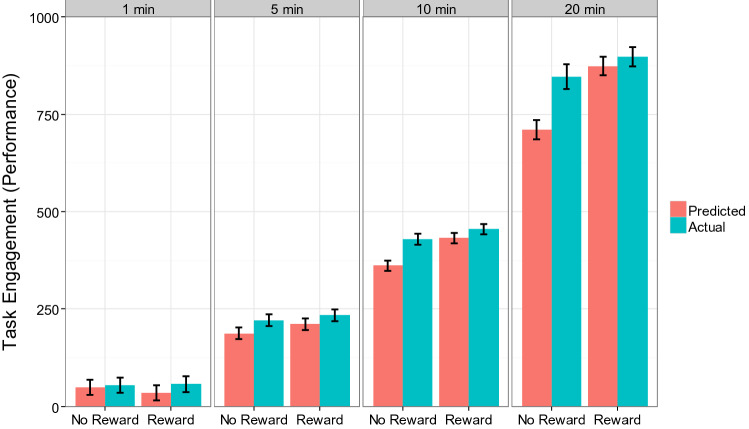
Research has shown that we are endowed with a remarkable capacity to motivate ourselves in the absence of extrinsic incentives (i.e. intrinsic motivation). However, little research has been conducted to investigate whether we accurately appreciate the power of intrinsic motivation. The current research aimed to examine the metacognitive accuracy of the extent to which people can motivate themselves without performance-based extrinsic incentives. Participants were presented with a relatively long and repetitive task without extrinsic incentives, and before doing the task, they were asked to predict their motivation on completion of the task. Across seven experiments using a variety of tasks with different populations from different countries, participants were consistently engaged in the task more actively than they predicted. When participants were provided with performance-based monetary rewards, however, this bias was diminished. These results indicate that we tend to underappreciate our capability to sustain our motivation without extrinsic incentives.
The online version contains supplementary material available at 10.1007/s11031-022-09996-5.
研究表明,在没有外部激励的情况下,我们具备显著的自我激励能力(即内在动机)。然而,很少有研究探讨我们是否准确认识到内在动机的力量。当前的研究旨在考察人们在没有基于绩效的外部激励时自我激励程度的元认知准确性。参与者被给予一项相对冗长且重复的无外部激励任务,在执行任务前,他们被要求预测自己完成任务时的动机。在七项实验中,使用了来自不同国家的不同人群的各种任务,参与者实际参与任务的积极性始终高于他们的预测。然而,当为参与者提供基于绩效的金钱奖励时,这种偏差就会减小。这些结果表明,我们往往低估了自己在没有外部激励时维持动机的能力。
在线版本包含补充材料,可在10.1007/s11031-022-09996-5获取。