Sorbonne Université, INSERM, CNRS, Institut de la Vision, 17 rue Moreau, F-75012, Paris, France.
First Department of Neurology, Faculty of Medicine, Masaryk University and St. Anne's Teaching Hospital, Brno, Czech Republic.
Cerebellum. 2024 Apr;23(2):802-832. doi: 10.1007/s12311-023-01577-7. Epub 2023 Jul 10.
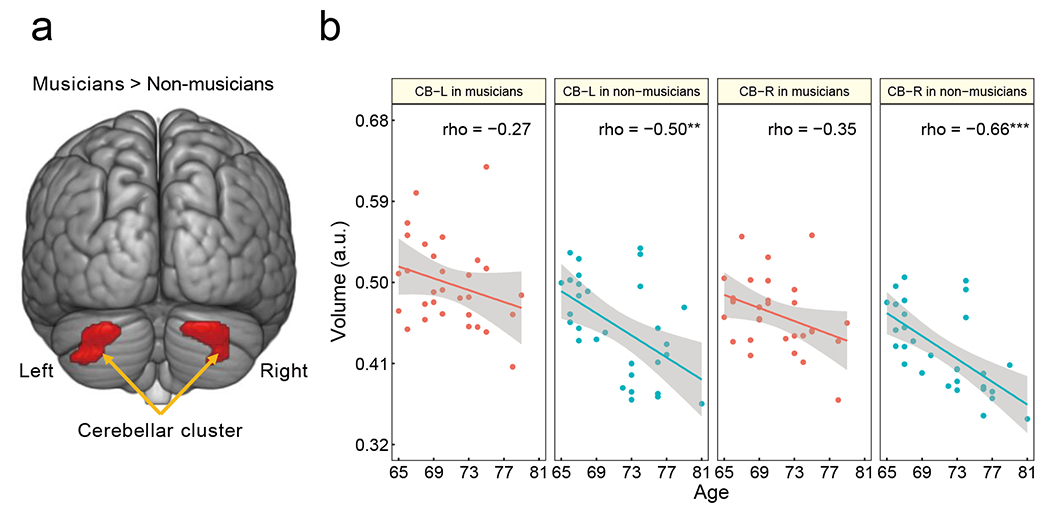
Given the key roles of the cerebellum in motor, cognitive, and affective operations and given the decline of brain functions with aging, cerebellar circuitry is attracting the attention of the scientific community. The cerebellum plays a key role in timing aspects of both motor and cognitive operations, including for complex tasks such as spatial navigation. Anatomically, the cerebellum is connected with the basal ganglia via disynaptic loops, and it receives inputs from nearly every region in the cerebral cortex. The current leading hypothesis is that the cerebellum builds internal models and facilitates automatic behaviors through multiple interactions with the cerebral cortex, basal ganglia and spinal cord. The cerebellum undergoes structural and functional changes with aging, being involved in mobility frailty and related cognitive impairment as observed in the physio-cognitive decline syndrome (PCDS) affecting older, functionally-preserved adults who show slowness and/or weakness. Reductions in cerebellar volume accompany aging and are at least correlated with cognitive decline. There is a strongly negative correlation between cerebellar volume and age in cross-sectional studies, often mirrored by a reduced performance in motor tasks. Still, predictive motor timing scores remain stable over various age groups despite marked cerebellar atrophy. The cerebello-frontal network could play a significant role in processing speed and impaired cerebellar function due to aging might be compensated by increasing frontal activity to optimize processing speed in the elderly. For cognitive operations, decreased functional connectivity of the default mode network (DMN) is correlated with lower performances. Neuroimaging studies highlight that the cerebellum might be involved in the cognitive decline occurring in Alzheimer's disease (AD), independently of contributions of the cerebral cortex. Grey matter volume loss in AD is distinct from that seen in normal aging, occurring initially in cerebellar posterior lobe regions, and is associated with neuronal, synaptic and beta-amyloid neuropathology. Regarding depression, structural imaging studies have identified a relationship between depressive symptoms and cerebellar gray matter volume. In particular, major depressive disorder (MDD) and higher depressive symptom burden are associated with smaller gray matter volumes in the total cerebellum as well as the posterior cerebellum, vermis, and posterior Crus I. From the genetic/epigenetic standpoint, prominent DNA methylation changes in the cerebellum with aging are both in the form of hypo- and hyper-methylation, and the presumably increased/decreased expression of certain genes might impact on motor coordination. Training influences motor skills and lifelong practice might contribute to structural maintenance of the cerebellum in old age, reducing loss of grey matter volume and therefore contributing to the maintenance of cerebellar reserve. Non-invasive cerebellar stimulation techniques are increasingly being applied to enhance cerebellar functions related to motor, cognitive, and affective operations. They might enhance cerebellar reserve in the elderly. In conclusion, macroscopic and microscopic changes occur in the cerebellum during the lifespan, with changes in structural and functional connectivity with both the cerebral cortex and basal ganglia. With the aging of the population and the impact of aging on quality of life, the panel of experts considers that there is a huge need to clarify how the effects of aging on the cerebellar circuitry modify specific motor, cognitive, and affective operations both in normal subjects and in brain disorders such as AD or MDD, with the goal of preventing symptoms or improving the motor, cognitive, and affective symptoms.
鉴于小脑在运动、认知和情感操作中的关键作用,以及随着年龄的增长大脑功能的下降,小脑回路引起了科学界的关注。小脑在运动和认知操作的时间方面都起着关键作用,包括对空间导航等复杂任务。从解剖学上看,小脑通过双突触环与基底神经节相连,并接收来自大脑皮层几乎所有区域的输入。目前的主导假设是,小脑通过与大脑皮层、基底神经节和脊髓的多次相互作用,建立内部模型并促进自动行为。随着年龄的增长,小脑会发生结构和功能上的变化,与移动脆弱性和相关认知障碍有关,如影响功能保留的老年成年人的生理认知下降综合征(PCDS),表现为缓慢和/或虚弱。小脑体积随年龄增长而减少,与认知能力下降至少呈负相关。在横断面研究中,小脑体积与年龄之间存在强烈的负相关,通常与运动任务表现下降相对应。尽管小脑明显萎缩,但预测性运动定时评分在不同年龄组中仍保持稳定。小脑额叶网络可能在处理速度中发挥重要作用,由于年龄导致的小脑功能障碍可能通过增加额叶活动来代偿,以优化老年人的处理速度。对于认知操作,默认模式网络(DMN)的功能连接减少与表现下降有关。神经影像学研究强调,小脑可能参与了阿尔茨海默病(AD)中发生的认知能力下降,而与大脑皮层的贡献无关。AD 中的灰质体积损失与正常衰老时不同,最初发生在小脑后部区域,与神经元、突触和β淀粉样蛋白神经病理学有关。关于抑郁症,结构影像学研究已经确定了抑郁症状与小脑灰质体积之间的关系。具体而言,重度抑郁症(MDD)和更高的抑郁症状负担与小脑总灰质体积以及小脑后部、蚓部和后 Crus I 灰质体积减少有关。从遗传/表观遗传的角度来看,小脑随年龄增长的显著 DNA 甲基化变化既有低甲基化又有高甲基化,并且某些基因的表达增加/减少可能会影响运动协调。训练会影响运动技能,终身练习可能有助于老年时小脑结构的维持,减少灰质体积的损失,从而有助于维持小脑储备。非侵入性小脑刺激技术越来越多地应用于增强与运动、认知和情感操作相关的小脑功能。它们可能会增强老年人的小脑储备。总之,在整个生命周期中,小脑会发生宏观和微观变化,与大脑皮层和基底神经节的结构和功能连接都发生了变化。随着人口老龄化以及老龄化对生活质量的影响,专家组认为,迫切需要阐明衰老对小脑回路的影响如何改变正常受试者以及 AD 或 MDD 等脑部疾病中特定的运动、认知和情感操作,目标是预防症状或改善运动、认知和情感症状。