HHMI, Brandeis University, Waltham, MA 02454.
Proc Natl Acad Sci U S A. 2023 Jul 18;120(29):e2303779120. doi: 10.1073/pnas.2303779120. Epub 2023 Jul 10.
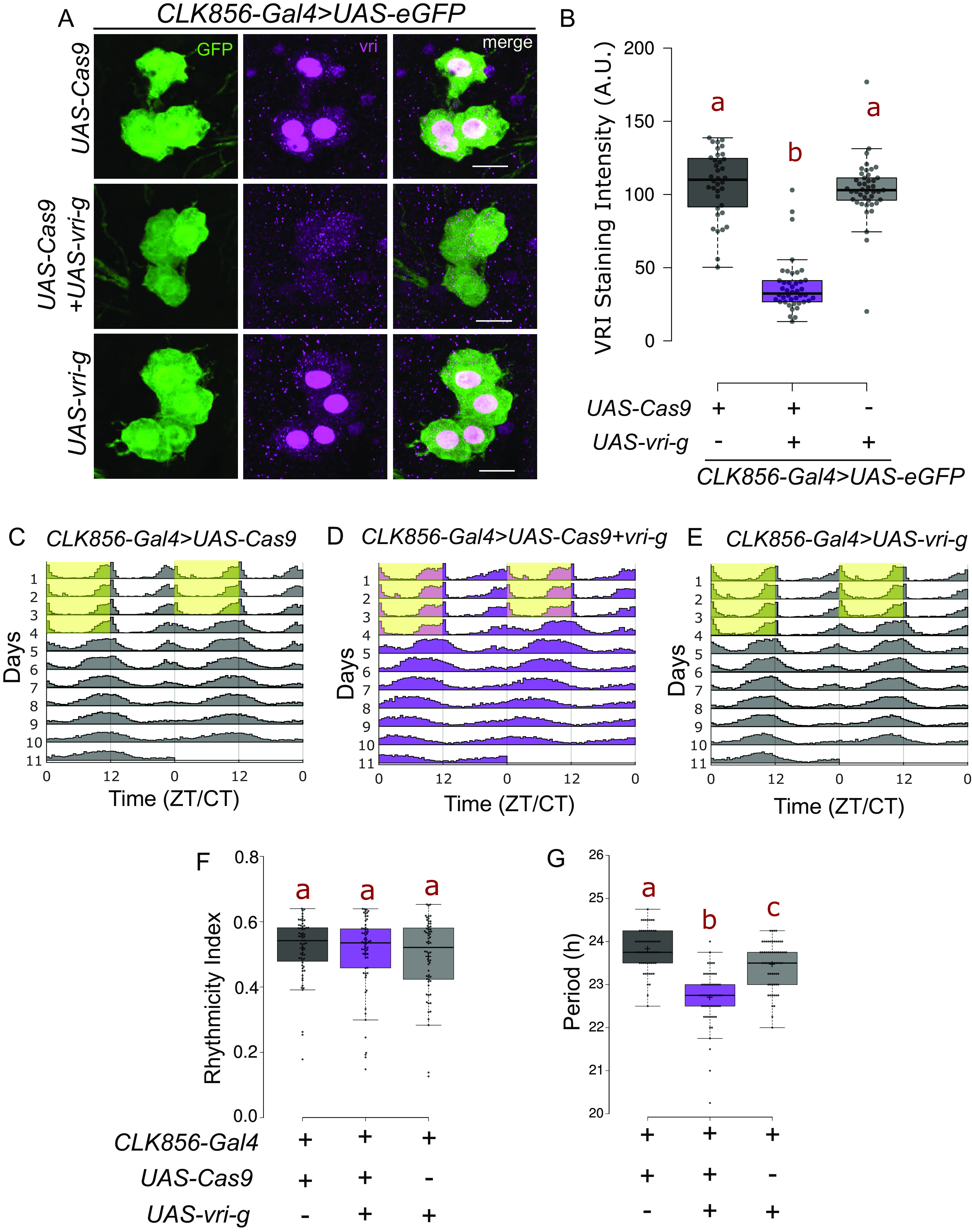
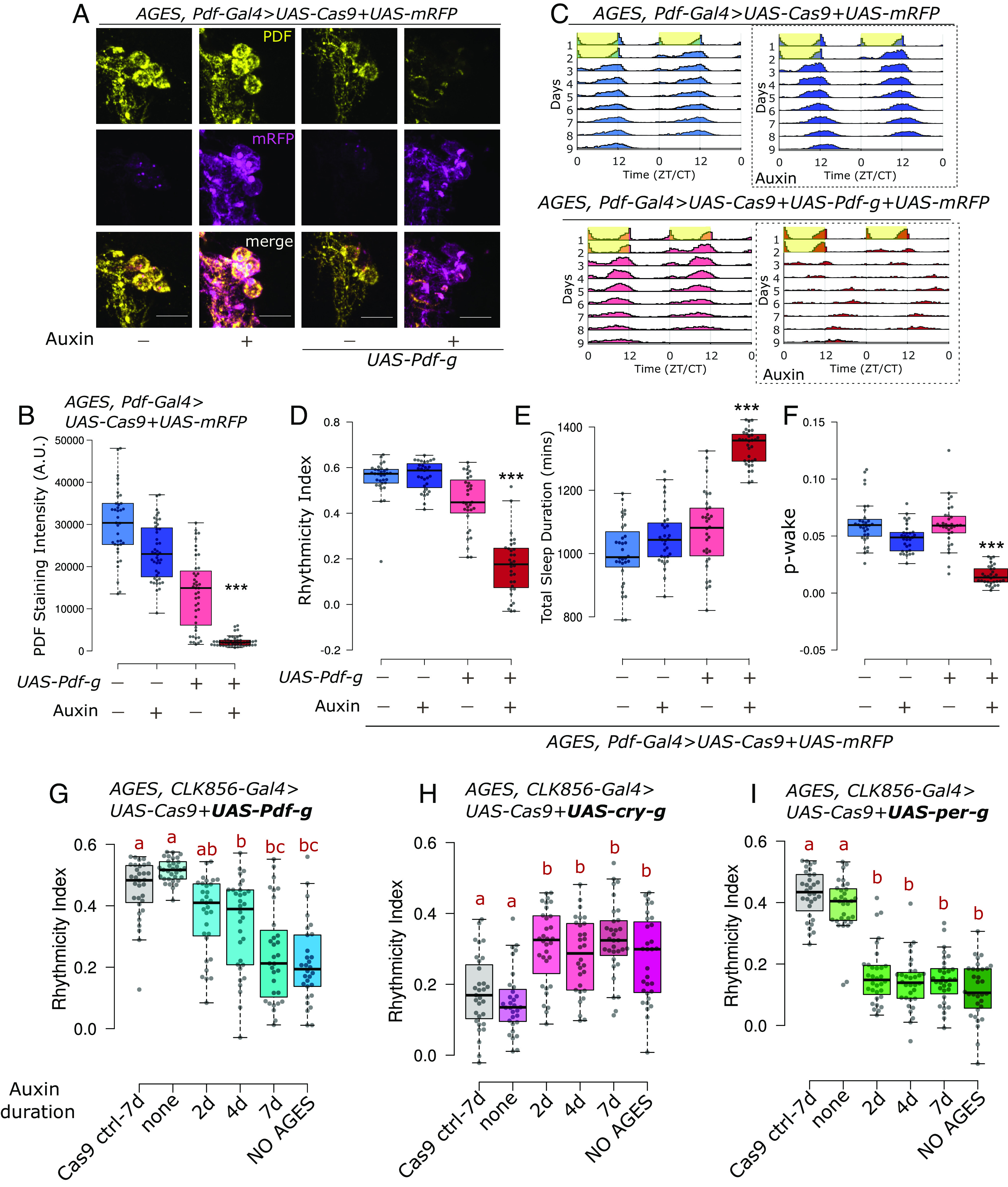
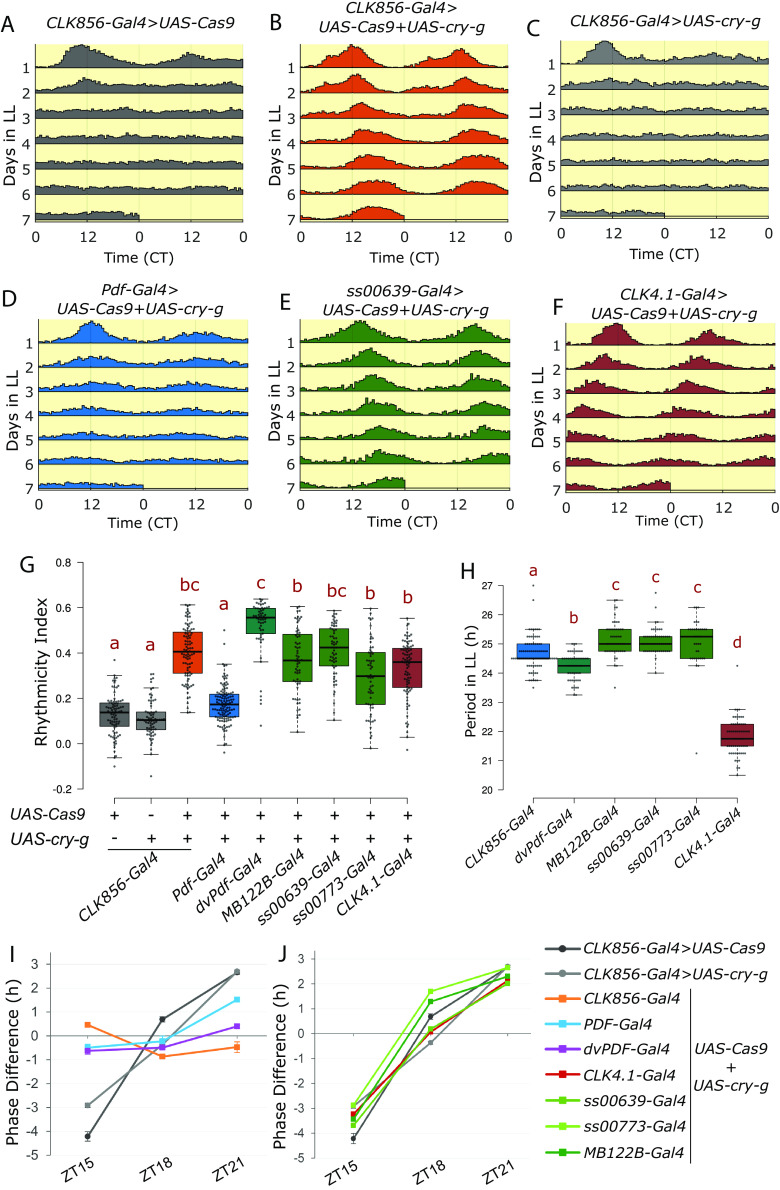
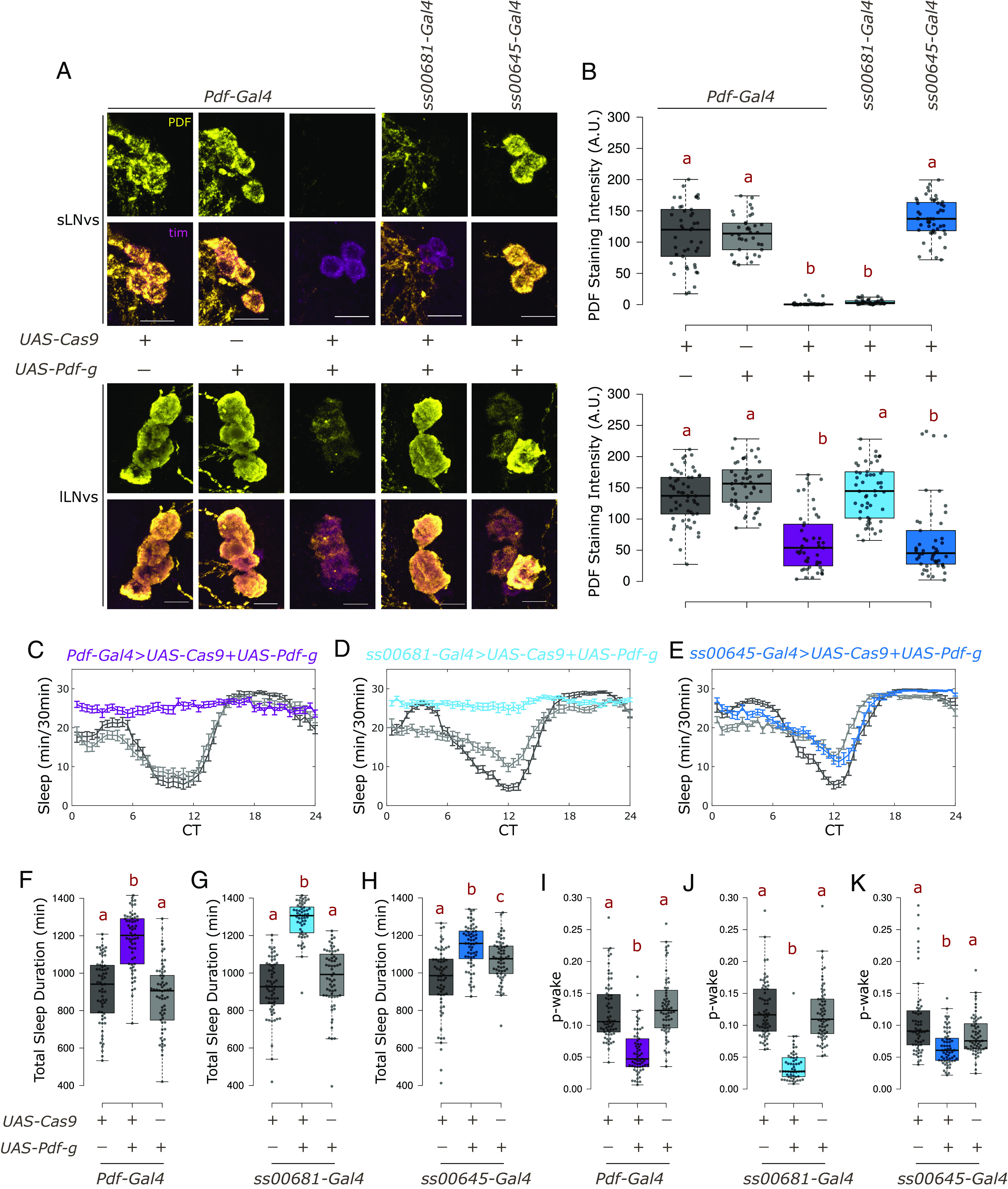
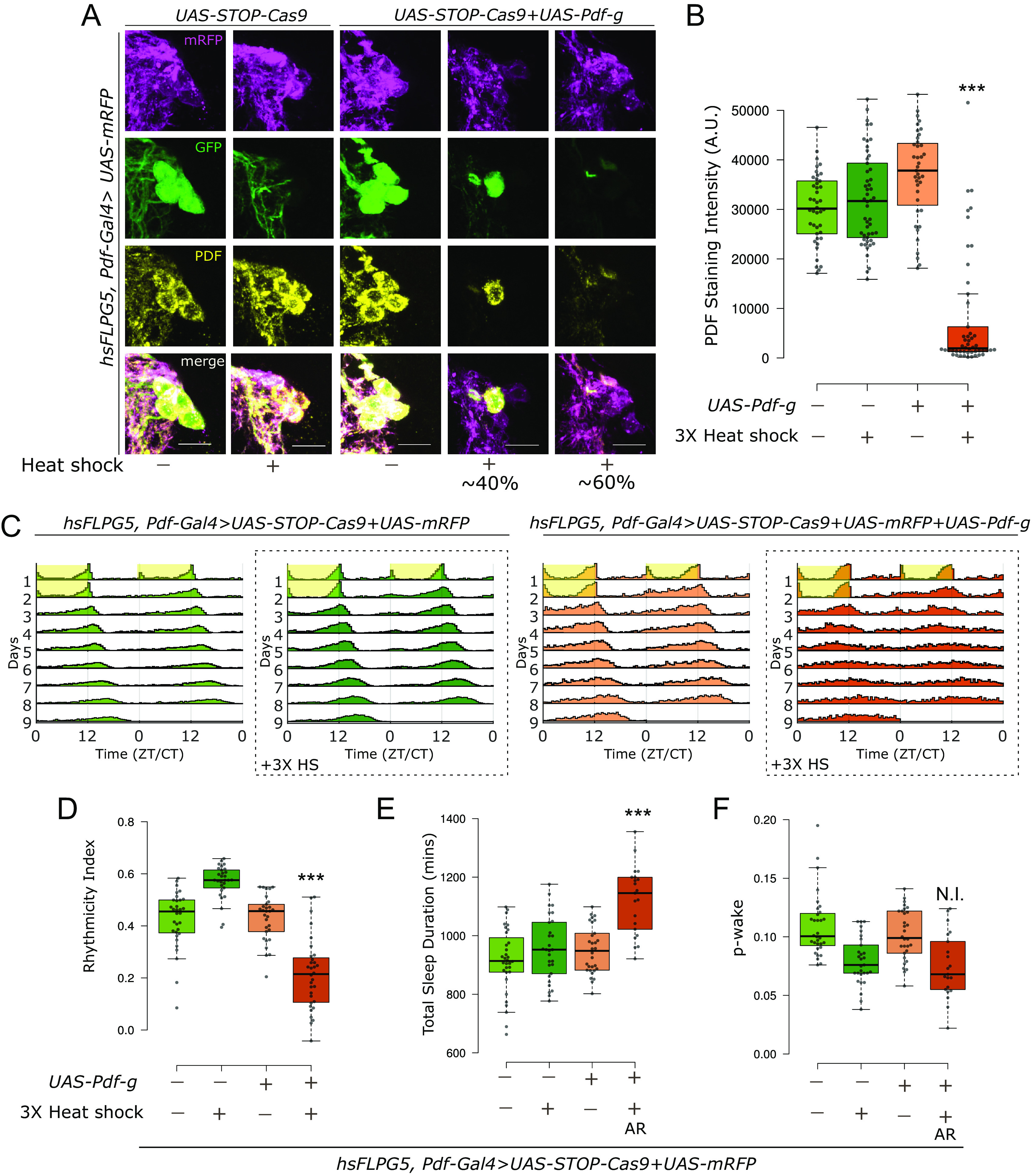
Circadian behavioral rhythms in are regulated by about 75 pairs of brain neurons. They all express the core clock genes but have distinct functions and gene expression profiles. To understand the importance of these distinct molecular programs, neuron-specific gene manipulations are essential. Although RNAi based methods are standard to manipulate gene expression in a cell-specific manner, they are often ineffective, especially in assays involving smaller numbers of neurons or weaker Gal4 drivers. We and others recently exploited a neuron-specific CRISPR-based method to mutagenize genes within circadian neurons. Here, we further explore this approach to mutagenize three well-studied clock genes: the transcription factor gene the photoreceptor gene (), and the neuropeptide gene (pigment dispersing factor). The CRISPR-based strategy not only reproduced their known phenotypes but also assigned function for different light-mediated phenotypes to discrete, different subsets of clock neurons. We further tested two recently published methods for temporal regulation in adult neurons, inducible Cas9 and the auxin-inducible gene expression system. The results were not identical, but both approaches successfully showed that the adult-specific knockout of the neuropeptide reproduces the canonical loss-of-function mutant phenotypes. In summary, a CRISPR-based strategy is a highly effective, reliable, and general method to temporally manipulate gene function in specific adult neurons.
节律神经元中的昼夜行为节律受大约 75 对脑神经元调控。它们都表达核心时钟基因,但具有不同的功能和基因表达谱。为了了解这些不同的分子程序的重要性,对特定神经元的基因操作是必不可少的。尽管基于 RNAi 的方法是用于以细胞特异性方式操纵基因表达的标准方法,但它们通常效果不佳,尤其是在涉及较少神经元或较弱 Gal4 驱动子的实验中。我们和其他人最近利用基于 CRISPR 的神经元特异性方法来诱变昼夜节律神经元内的基因。在这里,我们进一步探索了这种方法来诱变三个研究充分的时钟基因:转录因子基因 ()、感光基因 ()和神经肽基因 (黑色素扩散因子)。基于 CRISPR 的策略不仅重现了它们已知的表型,而且还将不同的光介导表型的 功能分配给了离散的、不同的时钟神经元亚群。我们进一步测试了两种最近发表的用于成年神经元时间调节的方法,诱导型 Cas9 和激素诱导的基因表达系统。结果并不完全相同,但这两种方法都成功地表明,神经肽 的成年特异性敲除重现了典型的功能丧失突变体表型。总之,基于 CRISPR 的策略是一种高效、可靠和通用的方法,可以在特定的成年神经元中临时操纵基因功能。