Department of Biology, Howard Hughes Medical Institute, Brandeis University, Waltham, MA 02451.
Department of Biology, College of Science, Northeastern University, Boston, MA 02136.
Proc Natl Acad Sci U S A. 2022 Aug 23;119(34):e2206066119. doi: 10.1073/pnas.2206066119. Epub 2022 Aug 15.
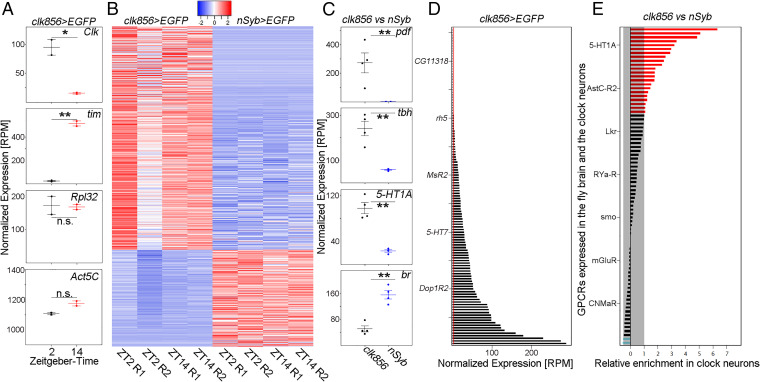
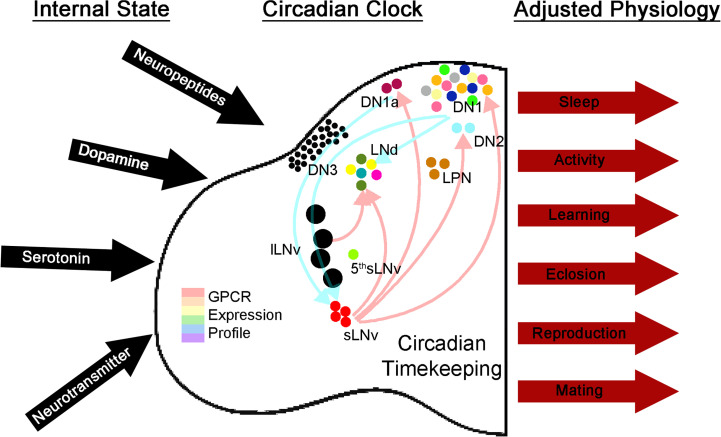
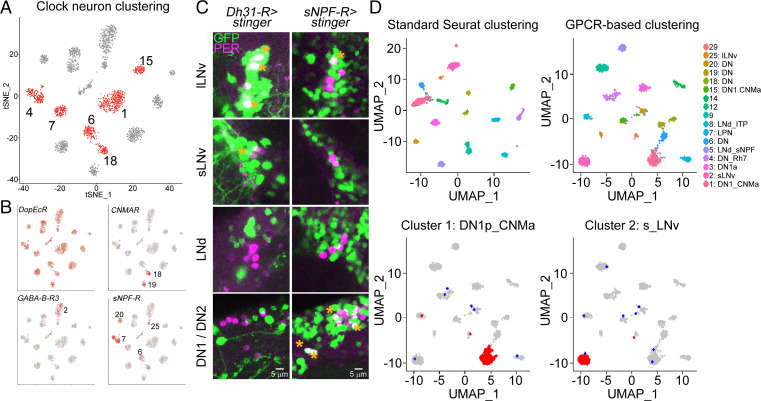
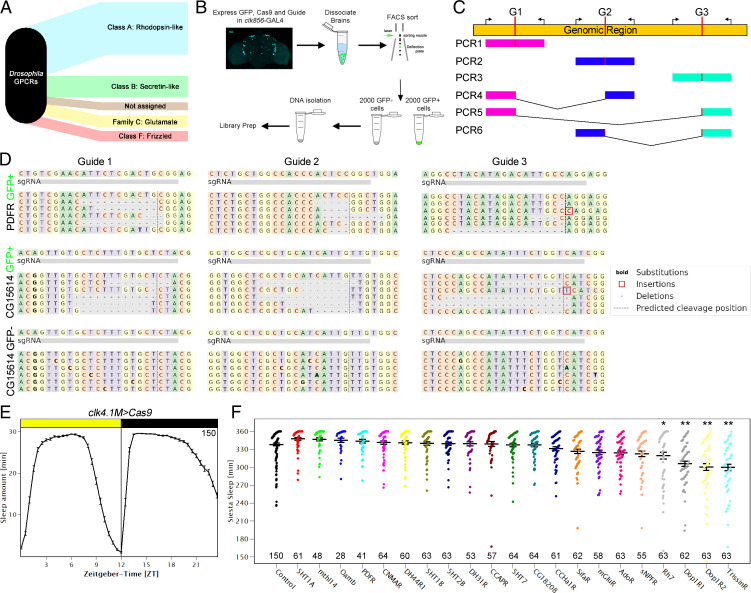
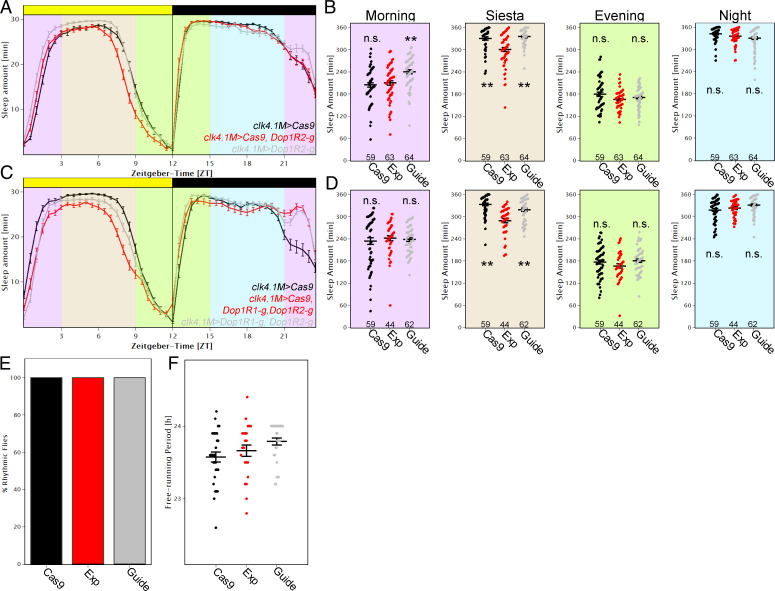
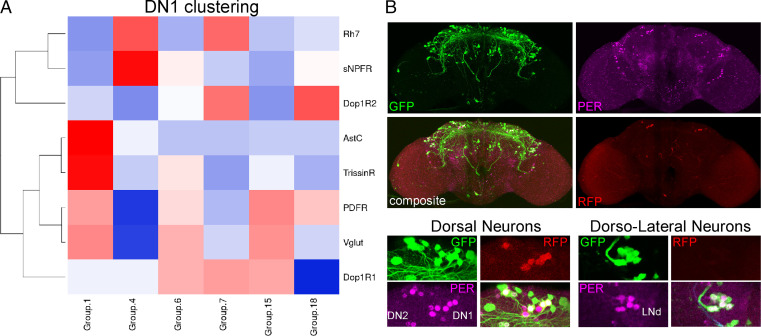
The metronome-like circadian regulation of sleep timing must still adapt to an uncertain environment. Recent studies in indicate that neuromodulation not only plays a key role in clock neuron synchronization but also affects interactions between the clock network and brain sleep centers. We show here that the targets of neuromodulators, G Protein Coupled Receptors (GPCRs), are highly enriched in the fly brain circadian clock network. Single-cell sequencing indicates that they are not only enriched but also differentially expressed and contribute to clock neuron identity. We generated a comprehensive guide library to mutagenize individual GPCRs in specific neurons and verified the strategy by introducing a targeted sequencing approach. Combined with a behavioral screen, the mutagenesis strategy revealed a role of dopamine in sleep regulation by identifying two dopamine receptors and a clock neuron subpopulation that gate the timing of sleep.
睡眠时机的生物钟样节律调节仍必须适应不确定的环境。 表明,神经调制不仅在时钟神经元同步中起关键作用,而且还影响时钟网络与大脑睡眠中心之间的相互作用。 我们在这里表明,神经调质的靶标,G 蛋白偶联受体(GPCR),在果蝇大脑生物钟网络中高度富集。 单细胞测序表明,它们不仅丰富,而且差异表达,并有助于时钟神经元的身份。 我们生成了一个全面的指导文库,以在特定神经元中诱变单个 GPCR,并通过引入靶向测序方法验证了该策略。 结合行为筛选,该诱变策略通过鉴定两种多巴胺受体和一个时钟神经元亚群来识别多巴胺在睡眠调节中的作用,该亚群控制睡眠的时间。