Department of Chemistry, Government V.Y.T. PG Autonomous College, Durg, Chhattisgarh, India.
Department of Applied Chemistry, Bhilai Institute of Technology, Durg, 490001, India.
Sci Rep. 2023 Jul 11;13(1):11186. doi: 10.1038/s41598-023-38471-5.
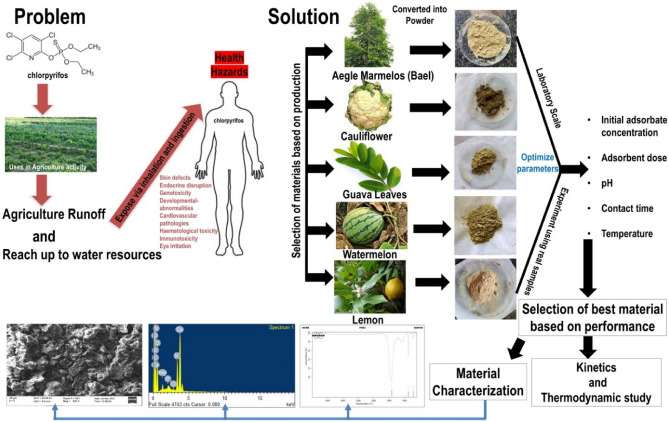
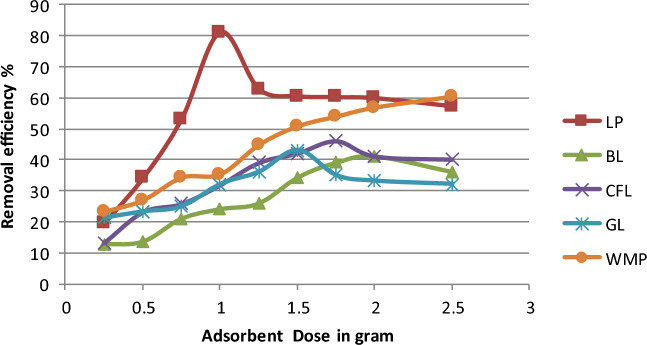
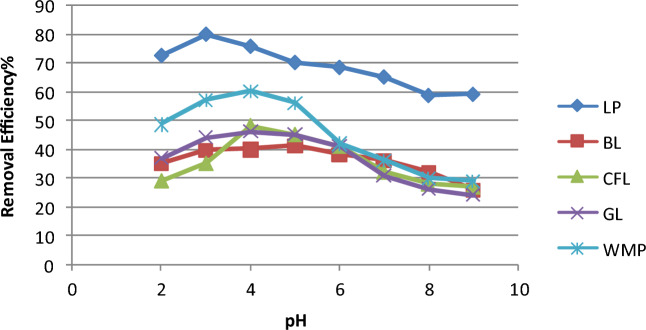
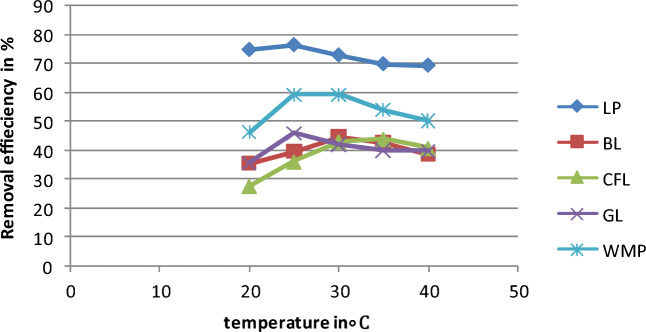
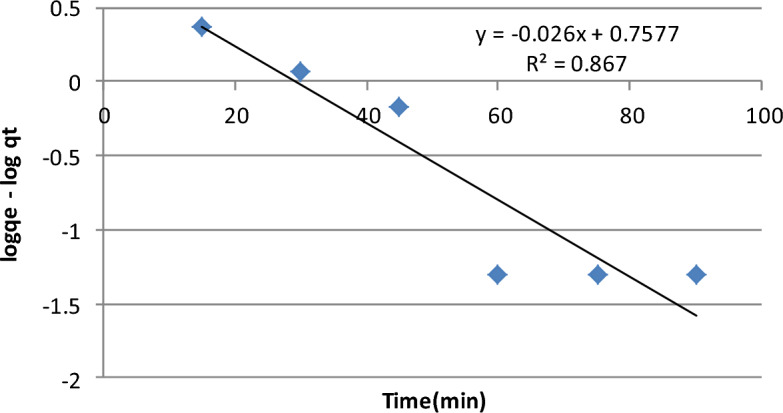
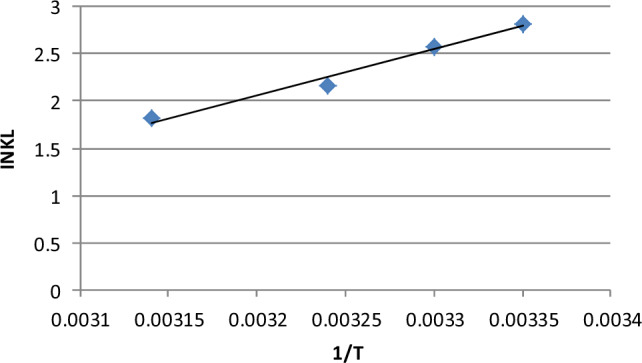
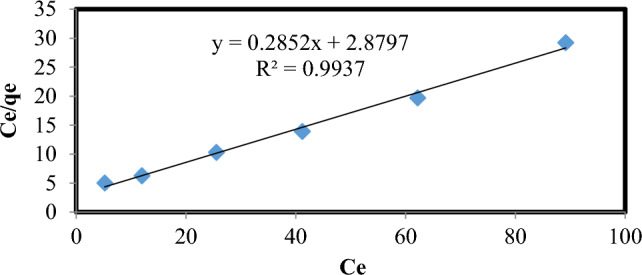
The emerging contaminant chlorpyrifos, an insecticide, is generally used in agricultural fields to control termites, ants, and mosquitoes for the proper growth of feed and food crops. Chlorpyrifos reaches water sources for multiple reasons, and people who use water from nearby sources is exposed to chlorpyrifos. Due to its overuse in modern agriculture, the level of chlorpyrifos in water has drastically grown. The present study aims to address the problem arising from the utilization of chlorpyrifos-contaminated water. Natural bioadsorbents Bael, Cauliflower, Guava leaves Watermelon, and lemon peel were employed to remove chlorpyrifos from contaminated water under specific conditions of various factors, such as initial adsorbate concentration, dose of bioadsorbent, contact time, pH, and temperature. Maximum removal efficiency of 77% was obtained with lemon peel. The maximum adsorption capacity (qe) was 6.37 mg g. The kinetic experiments revealed that the pseudo second order model (R = 0.997) provided a better explanation of the mechanism of sorption. The isotherm showed that chlorpyrifos adsorbed in lemon peel in a monolayer and was best suited by the Langmuir model (R = 0.993). The adsorption process was exothermic and spontaneous, according to thermodynamic data.
新兴污染物毒死蜱是一种杀虫剂,通常用于农业领域,以控制白蚁、蚂蚁和蚊子,从而促进饲料和粮食作物的正常生长。毒死蜱由于多种原因到达水源,而使用附近水源的人则会接触到毒死蜱。由于在现代农业中的过度使用,水中的毒死蜱含量急剧增加。本研究旨在解决使用受毒死蜱污染的水所带来的问题。在各种因素的特定条件下,使用天然生物吸附剂印度梨果、菜花、番石榴叶、西瓜和柠檬皮从受污染的水中去除毒死蜱。用柠檬皮获得了 77%的最大去除效率。最大吸附容量(qe)为 6.37 mg/g。动力学实验表明,准二级模型(R=0.997)更好地解释了吸附机制。等温线表明,毒死蜱在柠檬皮中单层吸附,最适合朗缪尔模型(R=0.993)。根据热力学数据,吸附过程是放热和自发的。