Inter-University Laboratory of Human Movement Biology (LIBM), Savoie Mont-Blanc University, Chambéry, France.
French Society of Sports Physical Therapy (SFMKS Lab), Pierrefitte-sur-Seine, France.
Sports Health. 2024 Jan-Feb;16(1):47-57. doi: 10.1177/19417381231183647. Epub 2023 Jul 11.
Lateral ankle sprain (LAS) is the most common sports-related injury. However, there are currently no published evidence-based criteria to guide the patient's return to sport (RTS) and this decision is generally time-based. The aim of this study was to assess the psychometric properties of a new score (Ankle-GO) and its predictive ability for RTS at the same level of play after LAS.
The Ankle-GO is robust for discriminating and predicting RTS outcomes.
Prospective diagnostic study.
Level 2.
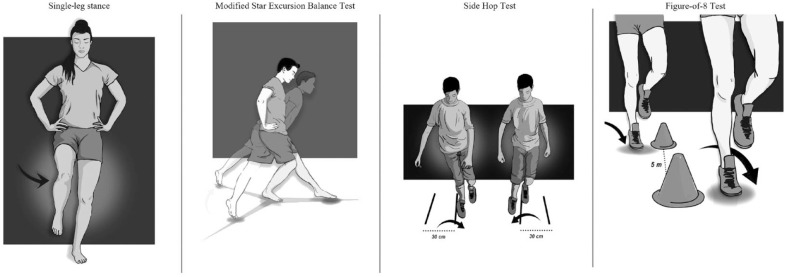
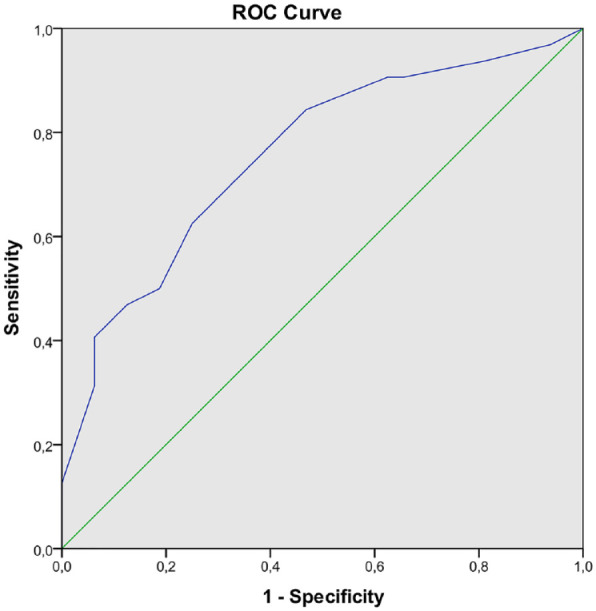
The Ankle-GO was administered to 30 healthy participants and 64 patients at 2 and 4 months after LAS. The score was calculated as the sum of 6 tests for a maximum of 25 points. Construct validity, internal consistency, discriminant validity, and test-retest reliability were used to validate the score. The predictive value for the RTS was also validated based on the receiver operating characteristic (ROC) curve.
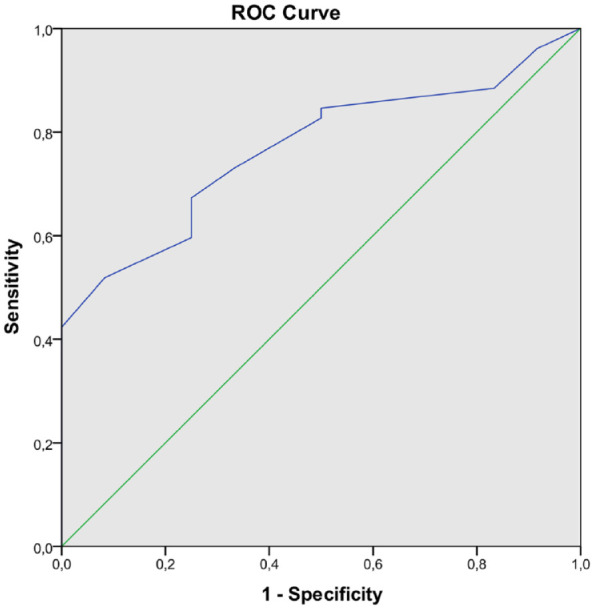
The internal consistency of the score was good (Cronbach's alpha coefficient of 0.79) with no ceiling or floor effect. Test-retest reliability was excellent (intraclass coefficient correlation = 0.99) with a minimum detectable change of 1.2 points. The 2-month scores were significantly lower than 4-month and control group scores (7.7 ± 4, 13.9 ± 4.6, and 19.6 ± 3.4 points, respectively, < 0.01). Ankle-GO values were also significantly higher in patients who returned to their preinjury level at 4 months compared with those who did not ( < 0.01). The predictive value of the 2-month Ankle-GO score was fair for a RTS at the same or higher than preinjury level at 4 months (area under ROC curve, 0.77; 95% CI, 0.65-0.89; < 0.01).
The Ankle-GO appears to be a valid and robust score for clinicians to predict and discriminate RTS in patients after LAS.
Ankle-GO is the first objective score to help in the decision-making of the RTS after LAS. At 2 months, patients with an Ankle-GO score <8 points are unlikely to RTS at the same preinjury level.
外侧踝关节扭伤(LAS)是最常见的与运动相关的损伤。然而,目前没有发表的循证标准来指导患者重返运动(RTS),而这个决定通常是基于时间的。本研究的目的是评估一种新的评分(Ankle-GO)的心理测量特性及其在 LAS 后相同运动水平下 RTS 的预测能力。
Ankle-GO 能够很好地区分和预测 RTS 结果。
前瞻性诊断研究。
2 级。
30 名健康参与者和 64 名 LAS 后 2 个月和 4 个月的患者接受了 Ankle-GO 评估。该评分的计算方法是将 6 项测试的得分相加,最高得分为 25 分。采用结构效度、内部一致性、判别效度和重测信度来验证评分。还根据接收者操作特征(ROC)曲线验证了 RTS 的预测价值。
评分的内部一致性良好(克朗巴赫α系数为 0.79),无天花板或地板效应。重测信度极好(组内相关系数相关性=0.99),最小可检测变化为 1.2 分。2 个月的评分明显低于 4 个月和对照组的评分(分别为 7.7±4、13.9±4.6 和 19.6±3.4 分,<0.01)。在 4 个月时,与未返回受伤前运动水平的患者相比,返回受伤前运动水平的患者的 Ankle-GO 值也明显更高(<0.01)。2 个月的 Ankle-GO 评分对 4 个月时相同或更高水平的 RTS 具有良好的预测价值(ROC 曲线下面积为 0.77;95%CI,0.65-0.89;<0.01)。
Ankle-GO 似乎是一种有效的、可靠的评分,可用于预测和区分 LAS 后患者的 RTS。
Ankle-GO 是第一个有助于 LAS 后 RTS 决策的客观评分。在 2 个月时,Ankle-GO 评分<8 分的患者不太可能以相同的受伤前水平重返运动。