Goodall Daniel J, Warecka Dominika, Hawkins Michelle, Rudolph Christian J
Division of Biosciences, College of Health, Medicine and Life Sciences, Brunel University London, Uxbridge, United Kingdom.
Department of Biology, University of York, York, United Kingdom.
Front Microbiol. 2023 Jun 26;14:1180848. doi: 10.3389/fmicb.2023.1180848. eCollection 2023.
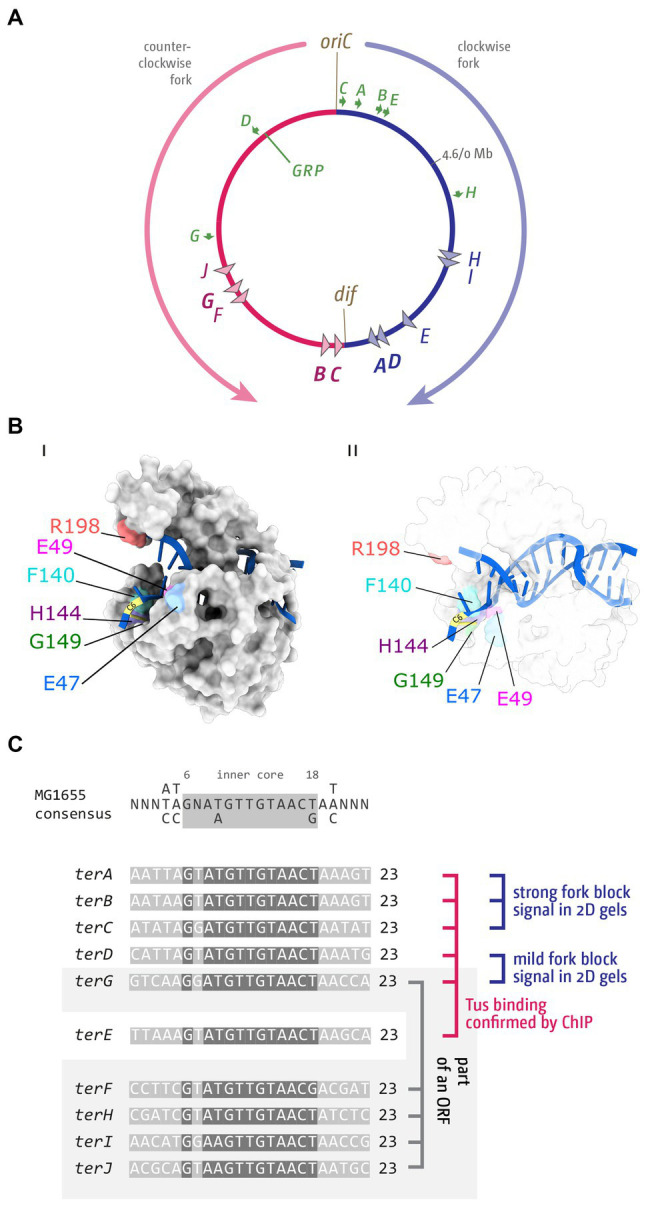
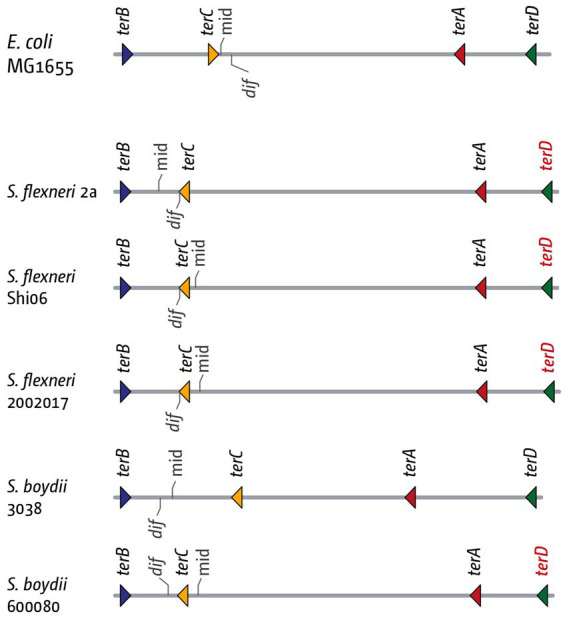
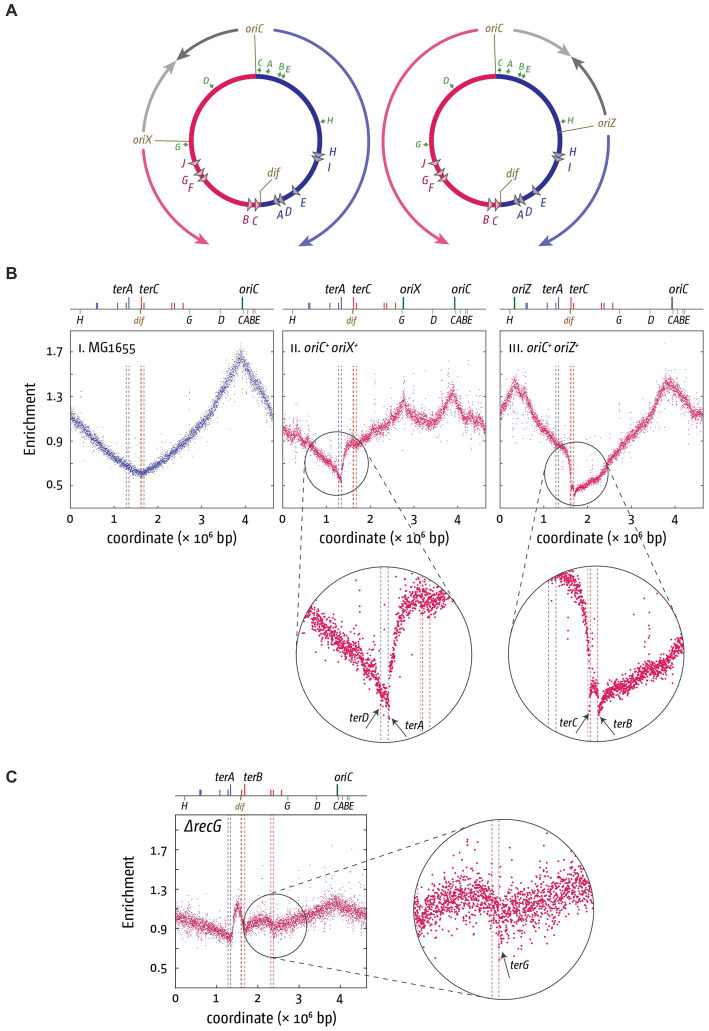
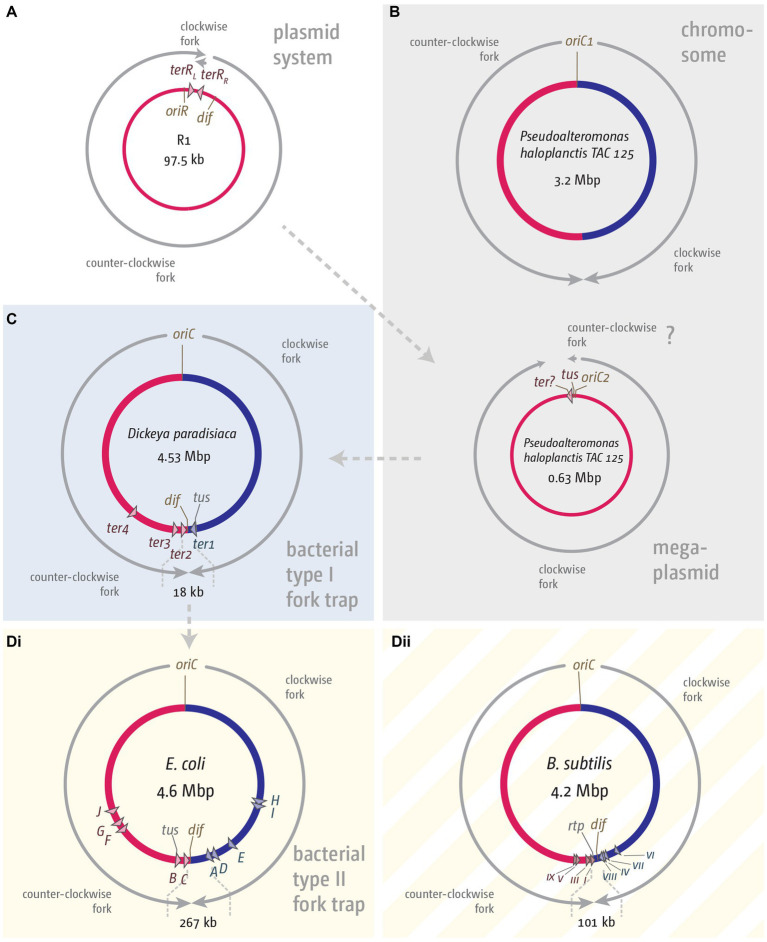
Faithful transmission of the genome from one generation to the next is key to life in all cellular organisms. In the majority of bacteria, the genome is comprised of a single circular chromosome that is normally replicated from a single origin, though additional genetic information may be encoded within much smaller extrachromosomal elements called plasmids. By contrast, the genome of a eukaryote is distributed across multiple linear chromosomes, each of which is replicated from multiple origins. The genomes of archaeal species are circular, but are predominantly replicated from multiple origins. In all three cases, replication is bidirectional and terminates when converging replication fork complexes merge and 'fuse' as replication of the chromosomal DNA is completed. While the mechanics of replication initiation are quite well understood, exactly what happens during termination is far from clear, although studies in bacterial and eukaryotic models over recent years have started to provide some insight. Bacterial models with a circular chromosome and a single bidirectional origin offer the distinct advantage that there is normally just one fusion event between two replication fork complexes as synthesis terminates. Moreover, whereas termination of replication appears to happen in many bacteria wherever forks happen to meet, termination in some bacterial species, including the well-studied bacteria and , is more restrictive and confined to a 'replication fork trap' region, making termination even more tractable. This region is defined by multiple genomic terminator () sites, which, if bound by specific terminator proteins, form unidirectional fork barriers. In this review we discuss a range of experimental results highlighting how the fork fusion process can trigger significant pathologies that interfere with the successful conclusion of DNA replication, how these pathologies might be resolved in bacteria without a fork trap system and how the acquisition of a fork trap might have provided an alternative and cleaner solution, thus explaining why in bacterial species that have acquired a fork trap system, this system is remarkably well maintained. Finally, we consider how eukaryotic cells can cope with a much-increased number of termination events.
基因组从一代到下一代的忠实传递是所有细胞生物生存的关键。在大多数细菌中,基因组由单个环状染色体组成,通常从单个起点进行复制,不过额外的遗传信息可能编码在称为质粒的小得多的染色体外元件中。相比之下,真核生物的基因组分布在多个线性染色体上,每个染色体都从多个起点进行复制。古细菌物种的基因组是环状的,但主要从多个起点进行复制。在所有这三种情况下,复制都是双向的,当聚合的复制叉复合体合并并“融合”时终止,此时染色体DNA的复制完成。虽然复制起始的机制已相当清楚,但终止过程中究竟发生了什么还远未明确,尽管近年来对细菌和真核生物模型的研究已开始提供一些见解。具有环状染色体和单个双向起点的细菌模型具有独特的优势,即随着合成终止,两个复制叉复合体之间通常只有一次融合事件。此外,虽然复制终止似乎在许多细菌中发生在复制叉相遇的任何地方,但在一些细菌物种中,包括经过充分研究的细菌和,终止更为严格,局限于一个“复制叉陷阱”区域,这使得终止更容易处理。该区域由多个基因组终止子()位点定义,如果被特定的终止子蛋白结合,就会形成单向的叉状屏障。在这篇综述中,我们讨论了一系列实验结果,强调了叉融合过程如何引发重大病变,干扰DNA复制成功完成,在没有叉陷阱系统的细菌中这些病变可能如何解决,以及获得叉陷阱可能如何提供了一种替代且更清晰的解决方案,从而解释了为什么在已经获得叉陷阱系统的细菌物种中,这个系统得到了很好的维持。最后,我们考虑真核细胞如何应对数量大幅增加的终止事件。