Dimude Juachi U, Stein Monja, Andrzejewska Ewa E, Khalifa Mohammad S, Gajdosova Alexandra, Retkute Renata, Skovgaard Ole, Rudolph Christian J
Division of Biosciences, College of Health and Life Sciences, Brunel University London, Uxbridge UB8 3PH, UK.
School of Life Sciences, University of Warwick, Gibbet Hill Campus, Coventry CV4 7AL, UK.
Genes (Basel). 2018 Jul 27;9(8):376. doi: 10.3390/genes9080376.
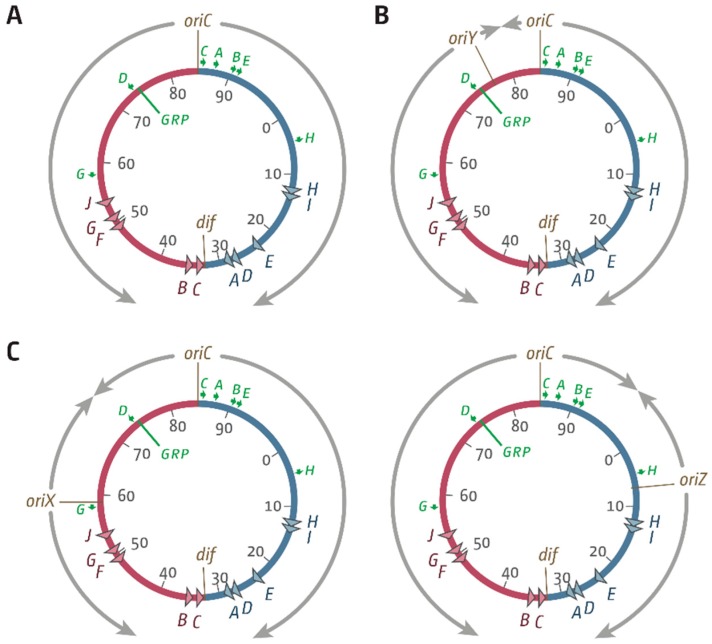
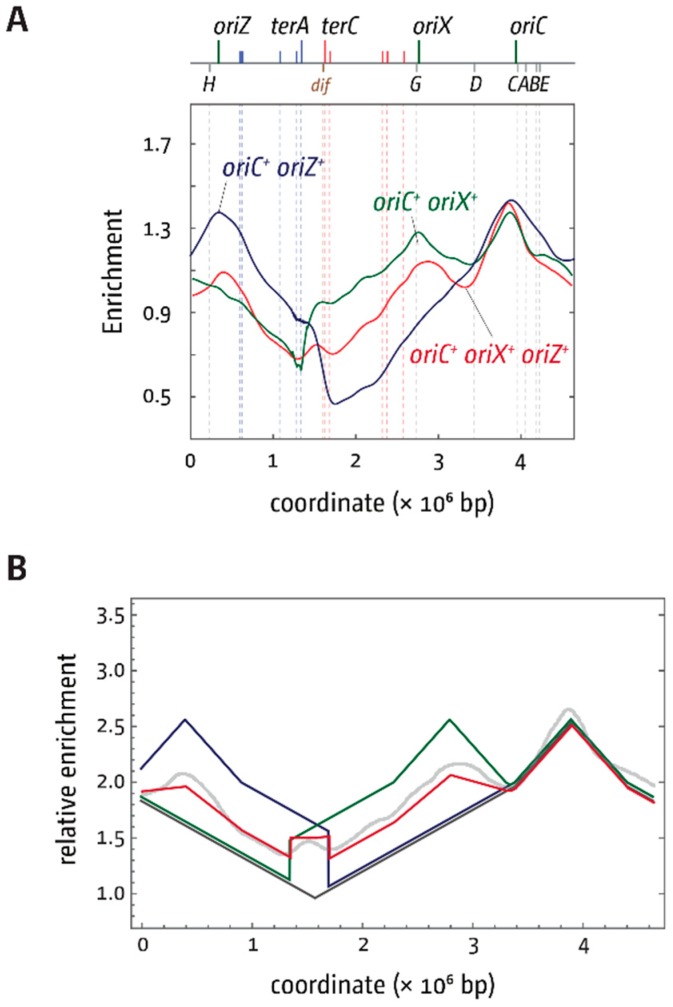
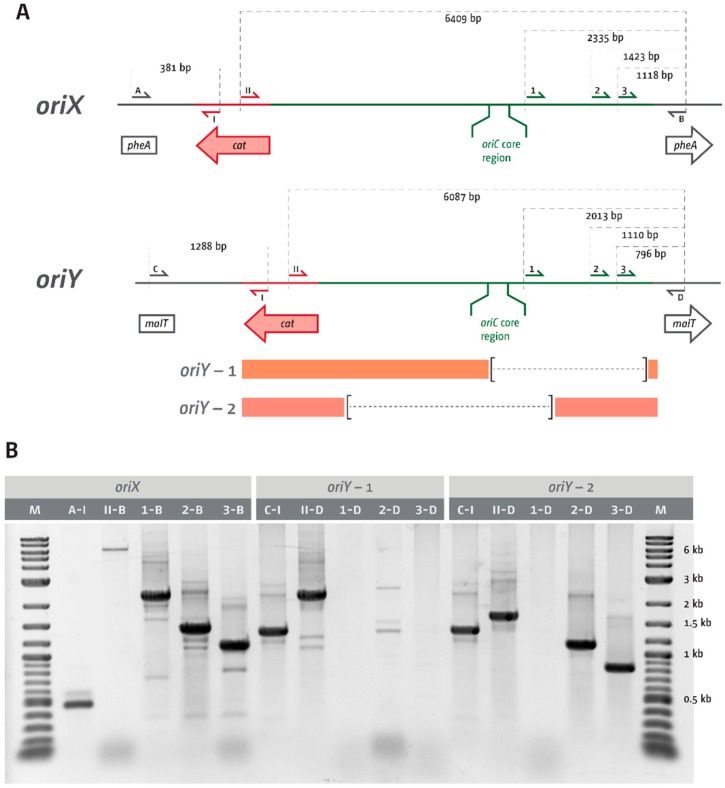
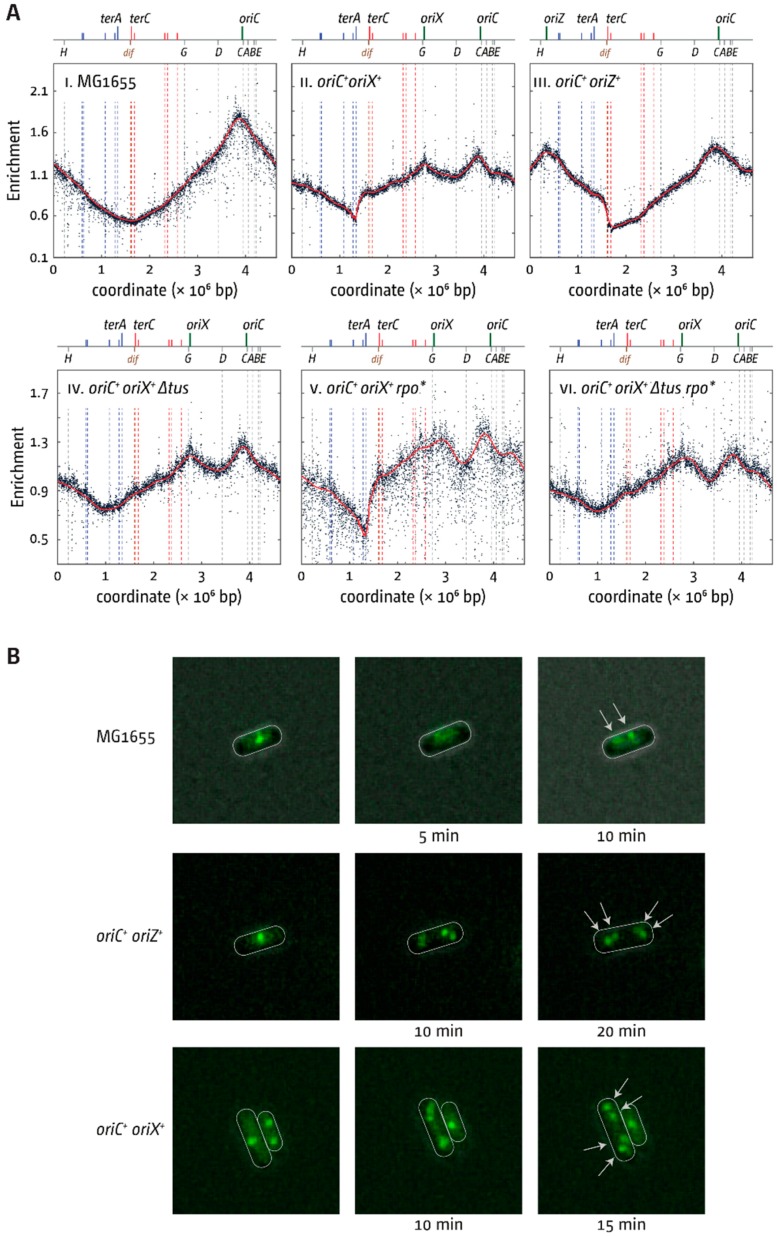
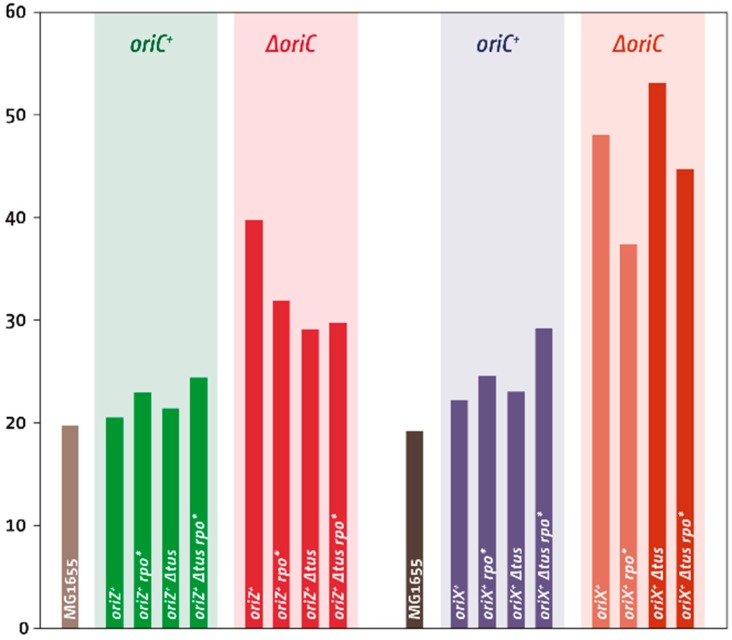
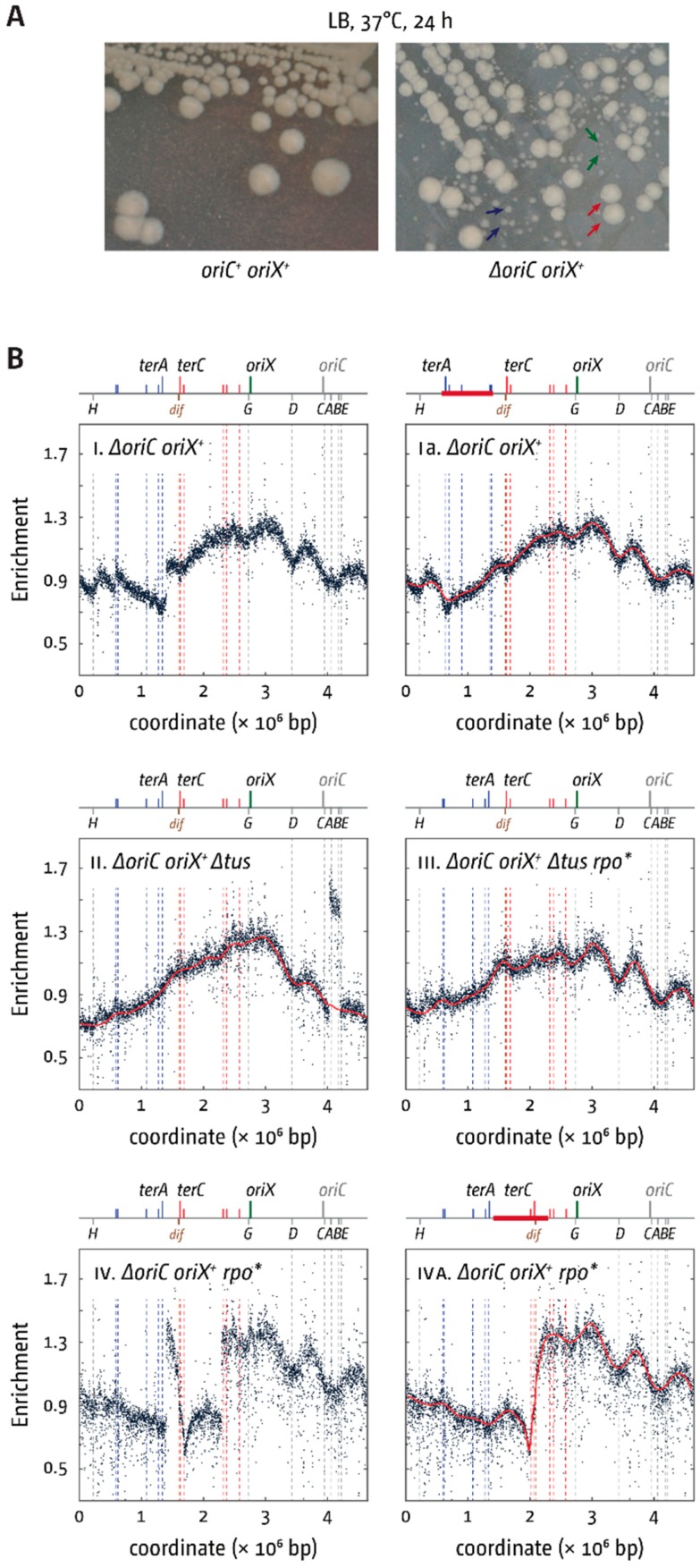
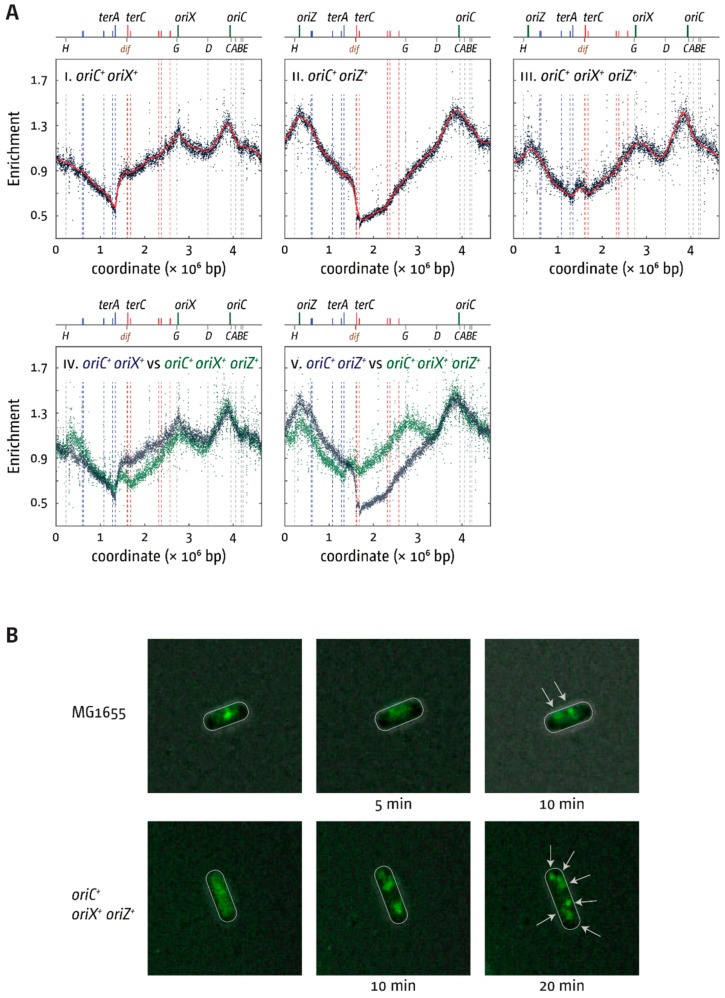
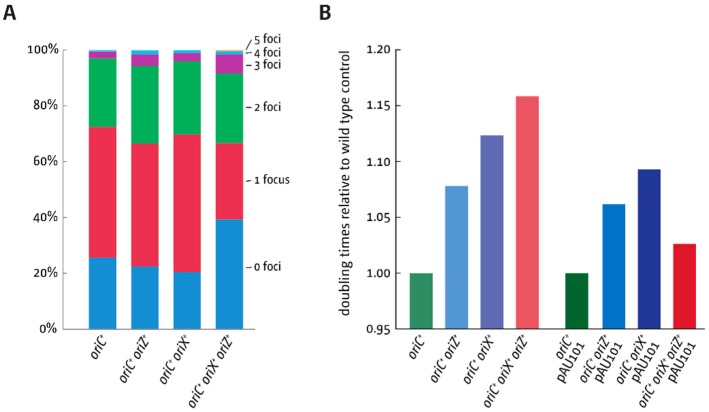
The bacterium contains a single circular chromosome with a defined architecture. DNA replication initiates at a single origin called Two replication forks are assembled and proceed in opposite directions until they fuse in a specialised zone opposite the origin. This termination area is flanked by polar replication fork pause sites that allow forks to enter, but not to leave. Thus, the chromosome is divided into two replichores, each replicated by a single replication fork. Recently, we analysed the replication parameters in cells, in which an ectopic origin termed was integrated in the right-hand replichore. Two major obstacles to replication were identified: (1) head-on replication⁻transcription conflicts at highly transcribed operons, and (2) the replication fork trap. Here, we describe replication parameters in cells with ectopic origins, termed and , integrated into the left-hand replichore, and a triple origin construct with integrated in the left-hand and in the right-hand replichore. Our data again highlight both replication⁻transcription conflicts and the replication fork trap as important obstacles to DNA replication, and we describe a number of spontaneous large genomic rearrangements which successfully alleviate some of the problems arising from having an additional origin in an ectopic location. However, our data reveal additional factors that impact efficient chromosome duplication, highlighting the complexity of chromosomal architecture.
该细菌含有一条具有特定结构的单一环状染色体。DNA复制从一个称为oriC的单一原点开始。两个复制叉组装完成并向相反方向进行,直到它们在原点对面的一个特殊区域融合。这个终止区域两侧是极性复制叉暂停位点,允许复制叉进入,但不允许离开。因此,染色体被分为两个复制子,每个复制子由一个复制叉进行复制。最近,我们分析了在细胞中的复制参数,其中一个称为oriR的异位原点整合到右手复制子中。确定了复制的两个主要障碍:(1)在高度转录的rRNA操纵子处的迎头复制-转录冲突,以及(2)复制叉陷阱。在这里,我们描述了将异位原点oriL和oriR整合到左手复制子中的细胞以及在左手复制子中整合oriL且在右手复制子中整合oriR的三原点构建体中的复制参数。我们的数据再次强调了复制-转录冲突和复制叉陷阱是DNA复制的重要障碍,并且我们描述了一些自发的大型基因组重排,这些重排成功缓解了由于在异位位置存在额外原点而产生的一些问题。然而,我们的数据揭示了影响有效染色体复制的其他因素,突出了染色体结构的复杂性。