Institute of Nutritional Sciences, Nutrigenomics Section, Friedrich Schiller University Jena, Jena, Germany.
Institute of Nutritional Sciences, Department of Nutritional Physiology, Friedrich Schiller University Jena, Jena, Germany.
Redox Biol. 2023 Sep;65:102807. doi: 10.1016/j.redox.2023.102807. Epub 2023 Jul 4.
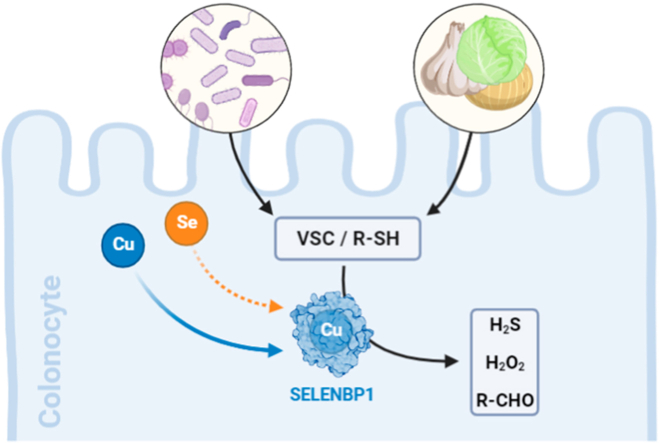
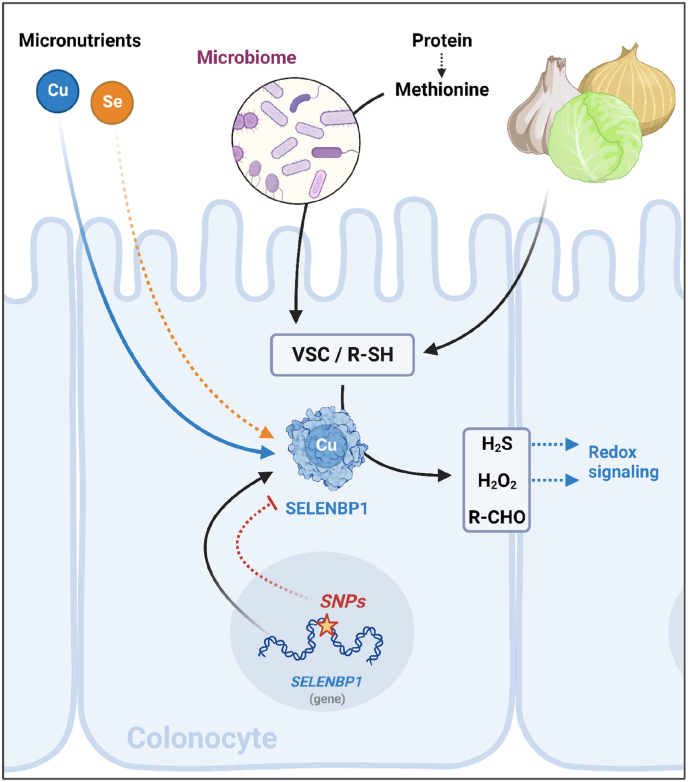
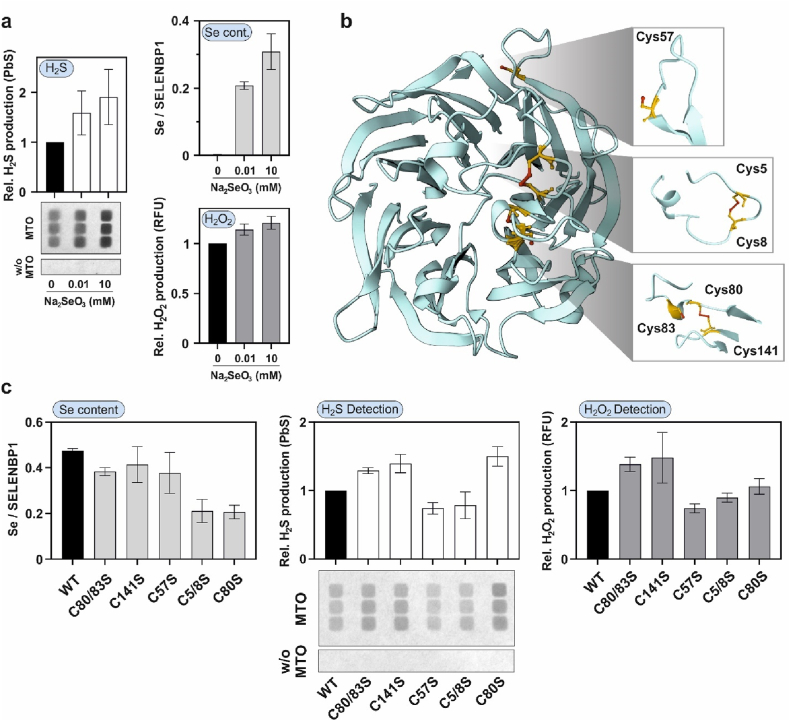
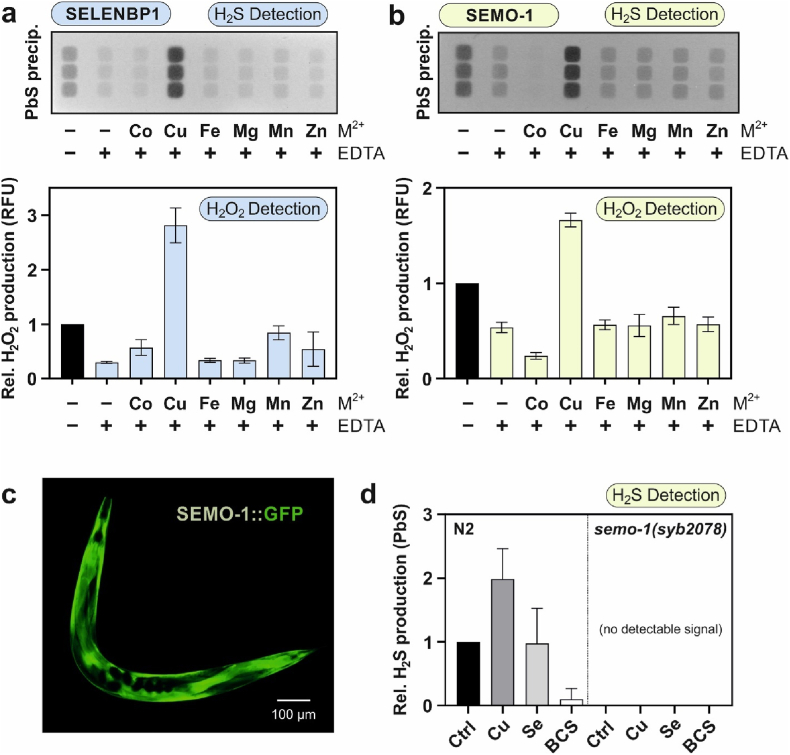
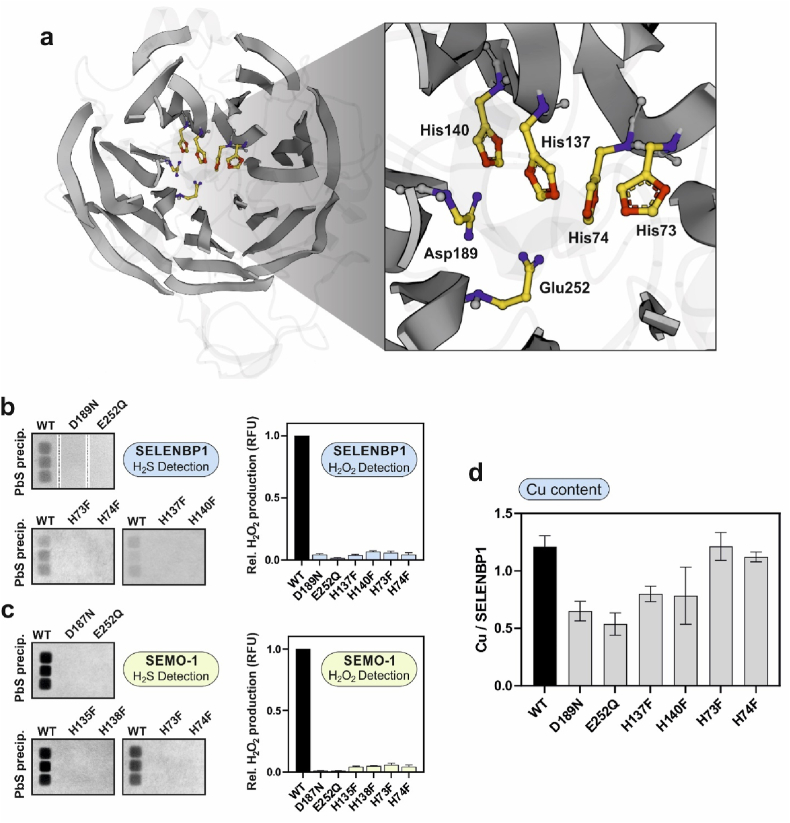
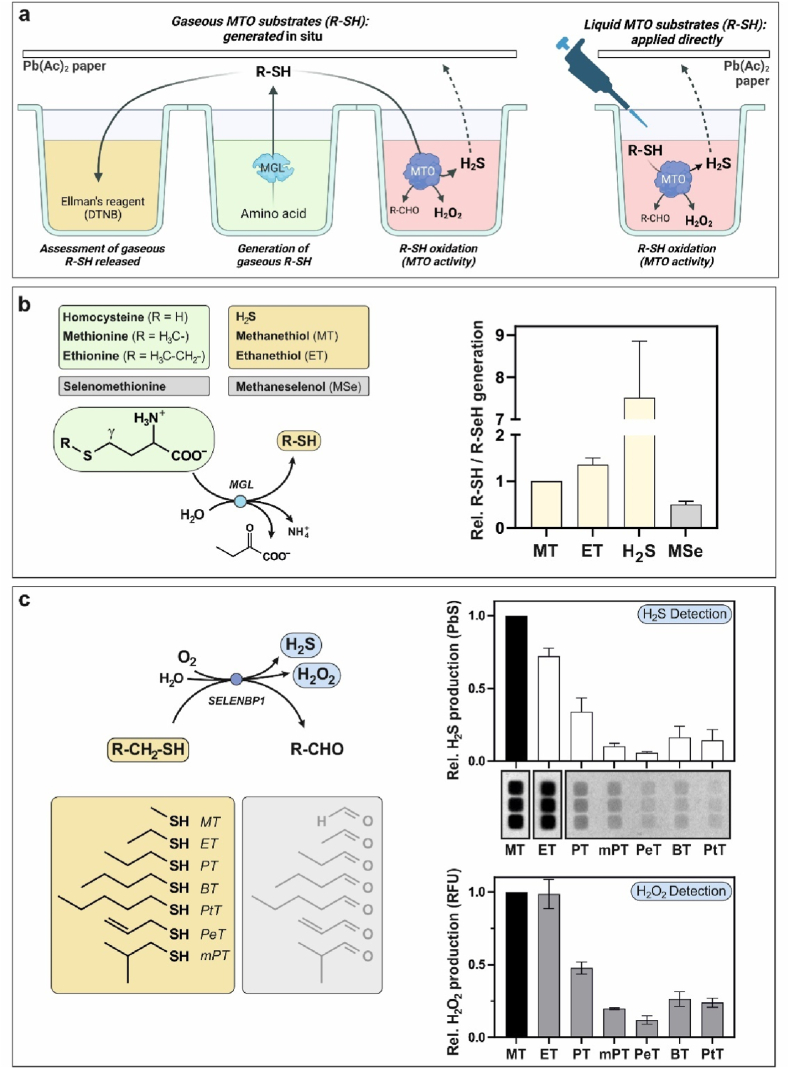
Selenium-binding protein 1 (SELENBP1) was reported to act as a methanethiol oxidase (MTO) in humans, catalyzing the conversion of methanethiol to hydrogen peroxide, hydrogen sulfide and formaldehyde. Here, we identify copper ions as essential to this novel MTO activity. Site-directed mutagenesis of putative copper-binding sites in human SELENBP1 produced as recombinant protein in E. coli resulted in loss of its enzymatic function. On the other hand, the eponymous binding of selenium (as selenite) was no requirement for MTO activity and only moderately increased SELENBP1-catalyzed oxidation of methanethiol. Furthermore, SEMO-1, the SELENBP1 ortholog recently identified in the nematode C. elegans, also requires copper ions, and MTO activity was enhanced or abrogated, respectively, if worms were grown in the presence of cupric chloride or of a Cu chelator. In addition to methanethiol, we identified novel substrates of SELENBP1 from the group of volatile sulfur compounds, ranging from ethanethiol to 1-pentanethiol as well as 2-propene-1-thiol. Gut microbiome-derived methanethiol as well as food-derived volatile sulfur compounds (VSCs) account for malodors that may contribute to extraoral halitosis in humans, if not metabolized properly. As SELENBP1 is particularly abundant in tissues exposed to VSCs, such as colon, liver, and lung, it appears to contribute to copper-dependent VSC degradation.
硒结合蛋白 1(SELENBP1)在人类中被报道作为甲硫醇氧化酶(MTO)起作用,催化甲硫醇转化为过氧化氢、硫化氢和甲醛。在这里,我们确定铜离子是这种新型 MTO 活性所必需的。在大肠埃希菌中产生的人 SELENBP1 的假定铜结合位点的定点突变导致其酶活性丧失。另一方面,硒(作为亚硒酸盐)的特征结合对于 MTO 活性不是必需的,并且仅适度增加 SELENBP1 催化的甲硫醇氧化。此外,最近在秀丽隐杆线虫中鉴定的 SELENBP1 同源物 SEMO-1 也需要铜离子,如果线虫在含有氯化铜或 Cu 螯合剂的情况下生长,则 MTO 活性分别增强或被消除。除了甲硫醇之外,我们还从挥发性硫化合物组中鉴定出 SELENBP1 的新型底物,范围从乙硫醇到 1-戊硫醇以及 2-丙烯-1-硫醇。肠道微生物组衍生的甲硫醇以及食物衍生的挥发性硫化合物(VSCs)是导致口臭的原因,如果不能被适当代谢,可能会导致人类口腔外口臭。由于 SELENBP1 在暴露于 VSCs 的组织中特别丰富,例如结肠、肝脏和肺,因此它似乎有助于铜依赖性 VSC 降解。