School of Public Health, Faculty of Health Sciences, University of the Witwatersrand, Johannesburg, South Africa.
Health Systems Research Unit, South African Medical Research Council, Cape Town, South Africa.
BMC Health Serv Res. 2023 Jul 14;23(1):753. doi: 10.1186/s12913-023-09747-3.
Reliable and timely laboratory results are crucial for monitoring the Prevention of the Mother-to-Child Transmission (PMTCT) cascade, particularly to enable early HIV diagnosis and early intervention. We sought to explore whether and how laboratory services have been prepared to absorb new testing requirements following PMTCT Test-and-Treat policy changes in three districts of Zambia.
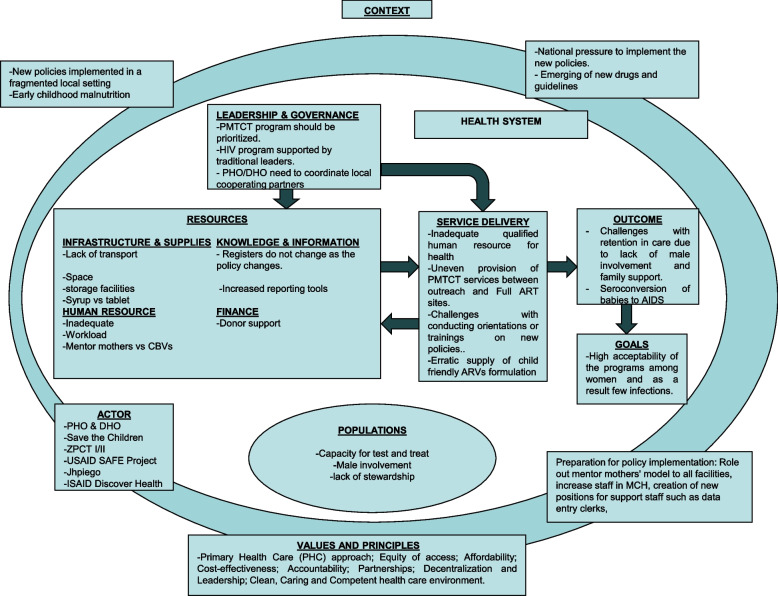
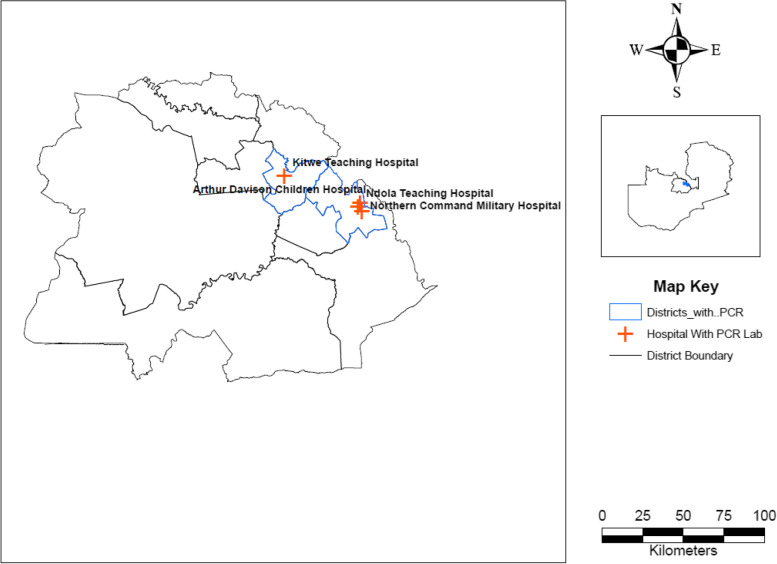
We employed in-depth interviews and thematic data analysis, informed by the health system dynamic framework. Twenty-Six health workers were purposively selected and a document review of laboratory services in the context of PMTCT was undertaken. All face-to-face interviews were conducted in three local government areas in the Copperbelt Province (one urban and two rural) between February 2019 and July 2020. We extracted notes and markings from the transcripts for coding. Different codes were sorted into potential themes and the data extracted were put within the identified themes. Trustworthiness was confirmed by keeping records of all data field notes, transcripts, and reflexive journals.
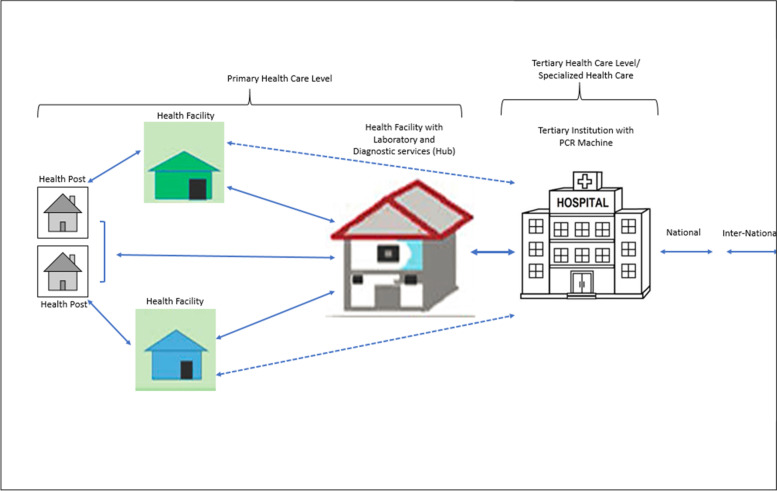
The findings revealed that the health system inputs (infrastructure and supplies, human resources, knowledge, and information and finance) and service delivery were unequal between the rural and urban sites, and this affected the ability of health facilities to apply the new testing requirements, especially, in the rural-based health facilities. The major barriers identified include gaps in the capacity of the existing laboratory system to perform crucial PMTCT clinical and surveillance functions in a coordinated manner and insufficient skilled human resources to absorb the increased testing demands. The centralized laboratory system for HIV testing of mothers and exposed neonates meant facilities had to send specimens to other facilities and districts which resulted in high turnaround time and hence delayed HIV diagnosis.
New guidelines implemented without sufficient capacitation of health system laboratory capacity severely limited the effectiveness of PMTCT program implementation. This study documented the areas relating to health system inputs and laboratory service delivery where greater support to enable the absorption of the new testing requirements is needed.
可靠和及时的实验室结果对于监测预防母婴传播(PMTCT)级联至关重要,特别是为了能够及早进行 HIV 诊断和早期干预。我们试图探讨在赞比亚三个地区实施 PMTCT 检测和治疗政策变化后,实验室服务是否以及如何准备吸收新的检测要求。
我们采用深入访谈和主题数据分析,以卫生系统动态框架为指导。在 2019 年 2 月至 2020 年 7 月期间,我们在铜带省的三个地方政府区域(一个城市和两个农村)有目的地选择了 26 名卫生工作者,并对 PMTCT 背景下的实验室服务进行了文件审查。所有面对面访谈均在这三个地方政府区域进行。我们从访谈记录中提取注释和标记进行编码。不同的代码被归类为潜在的主题,提取的数据被放入已确定的主题中。通过记录所有数据记录、访谈记录和反思日志来确认可信度。
研究结果表明,卫生系统投入(基础设施和用品、人力资源、知识以及信息和资金)和服务提供在城乡之间存在不平等,这影响了卫生设施应用新检测要求的能力,特别是在农村卫生设施中。确定的主要障碍包括现有实验室系统在协调运作方面执行关键 PMTCT 临床和监测功能的能力差距,以及吸收增加的检测需求的熟练人力资源不足。用于检测母亲和暴露新生儿的 HIV 的集中化实验室系统意味着设施必须将标本送到其他设施和地区,这导致周转时间延长,从而延迟了 HIV 诊断。
在没有充分加强卫生系统实验室能力的情况下实施新指南,严重限制了 PMTCT 方案实施的有效性。本研究记录了与卫生系统投入和实验室服务提供相关的领域,这些领域需要更多的支持,以吸收新的检测要求。