International Centre for Diarrhoeal Disease Research, Bangladesh (ICDDR, B), Dhaka, Bangladesh.
Institute of Statistical Research and Training, University of Dhaka, Dhaka, Bangladesh.
Medicine (Baltimore). 2023 Jul 14;102(28):e34285. doi: 10.1097/MD.0000000000034285.
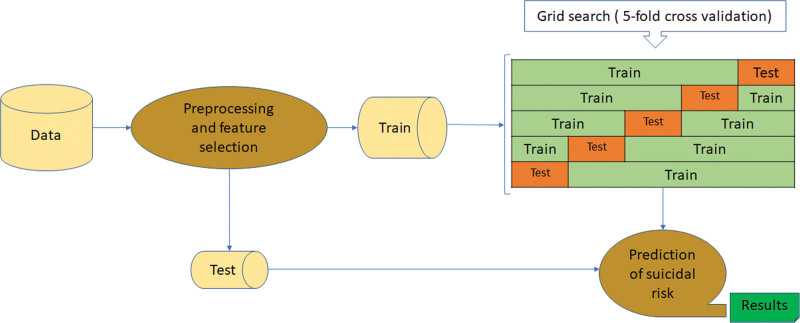
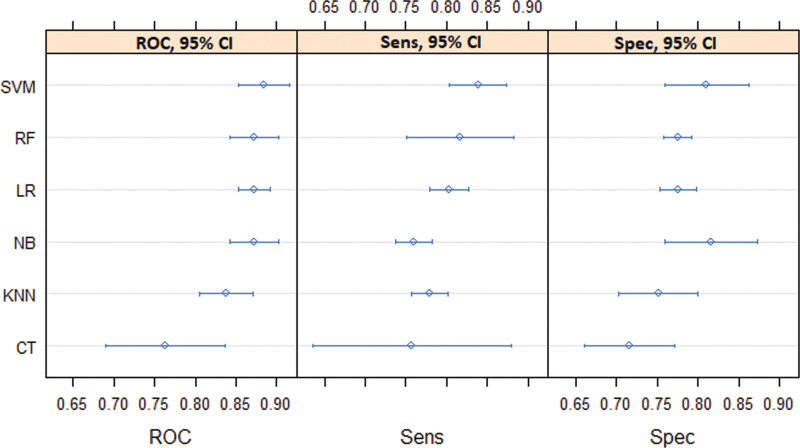
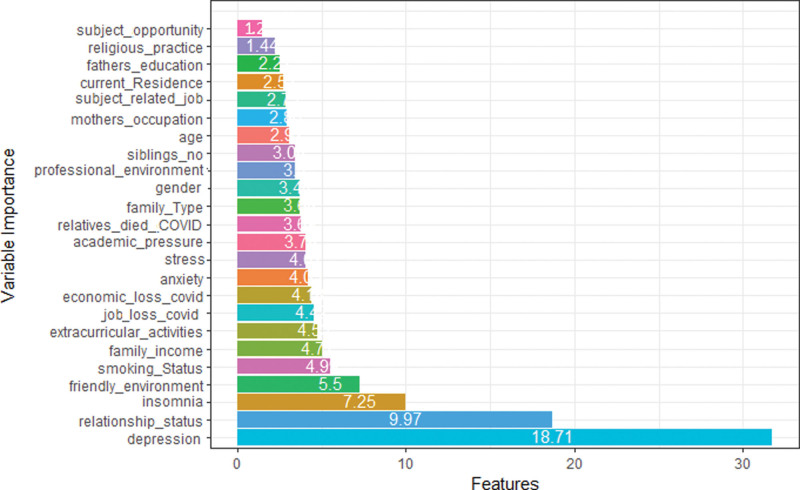
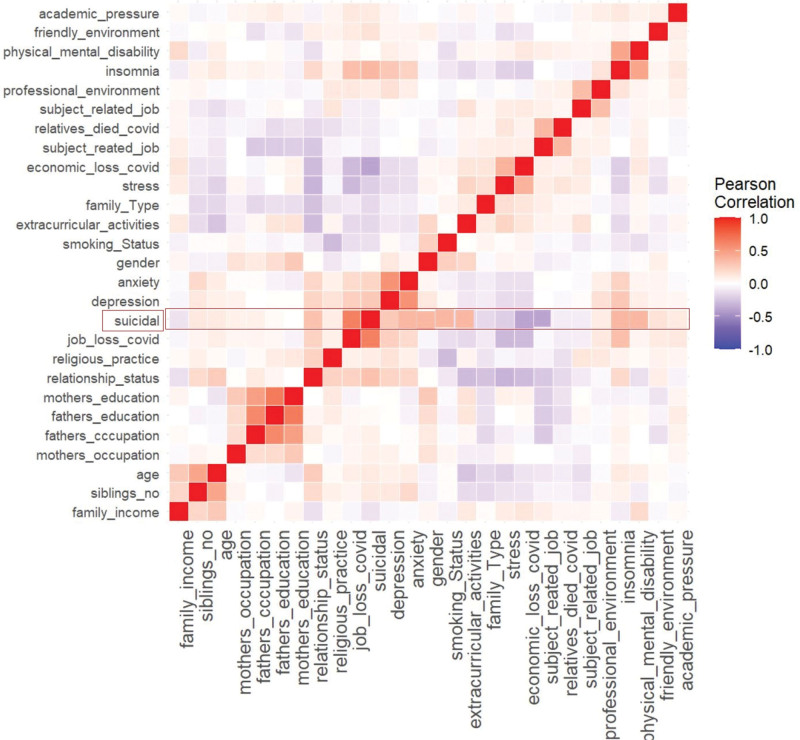
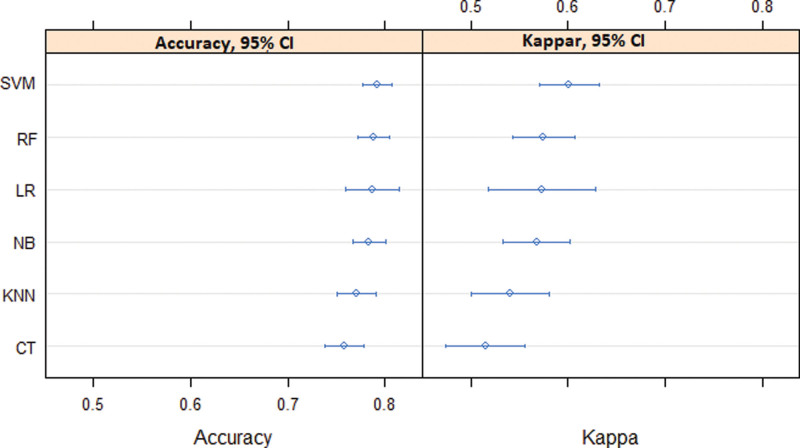
Psychological and behavioral stress has increased enormously during Coronavirus Disease 2019 (COVID-19) pandemic. However, early prediction and intervention to address psychological distress and suicidal behaviors are crucial to prevent suicide-related deaths. This study aimed to develop a machine algorithm to predict suicidal behaviors and identify essential predictors of suicidal behaviors among university students in Bangladesh during the COVID-19 pandemic. An anonymous online survey was conducted among university students in Bangladesh from June 1 to June 30, 2022. A total of 2391 university students completed and submitted the questionnaires. Five different Machine Learning models (MLMs) were applied to develop a suitable algorithm for predicting suicidal behaviors among university students. In predicting suicidal behaviors, the most crucial background and demographic features were relationship status, friendly environment in the family, family income, family type, and sex. In addition, features related to the impact of the COVID-19 pandemic were identified as job loss, economic loss, and loss of family/relatives due to COVID-19. Moreover, factors related to mental health include depression, anxiety, stress, and insomnia. The performance evaluation and comparison of the MLM showed that all models behaved consistently and were comparable in predicting suicidal risk. However, the Support Vector Machine was the best and most consistent performing model among all MLMs in terms of accuracy (79%), Kappa (0.59), receiver operating characteristic (0.89), sensitivity (0.81), and specificity (0.81). Support Vector Machine is the best-performing model for predicting suicidal risks among university students in Bangladesh and can help in designing appropriate and timely suicide prevention interventions.
心理和行为压力在 2019 年冠状病毒病(COVID-19)大流行期间大大增加。然而,早期预测和干预以解决心理困扰和自杀行为对于预防自杀相关死亡至关重要。本研究旨在开发一种机器算法,以预测孟加拉国大学生在 COVID-19 大流行期间的自杀行为,并确定自杀行为的重要预测因素。 2022 年 6 月 1 日至 6 月 30 日,对孟加拉国的大学生进行了一项匿名在线调查。共有 2391 名大学生完成并提交了问卷。应用了五种不同的机器学习模型(MLMs)来开发一种适合预测孟加拉国大学生自杀行为的算法。 在预测自杀行为时,最重要的背景和人口统计学特征是关系状况、家庭中的友好环境、家庭收入、家庭类型和性别。此外,还确定了与 COVID-19 大流行影响相关的特征,包括失业、经济损失以及因 COVID-19 而失去家人/亲戚。此外,与心理健康相关的因素包括抑郁、焦虑、压力和失眠。MLM 的性能评估和比较表明,所有模型在预测自杀风险方面表现一致且可比较。然而,支持向量机在准确性(79%)、Kappa(0.59)、接收者操作特征(0.89)、灵敏度(0.81)和特异性(0.81)方面是所有 MLM 中表现最好和最一致的模型。支持向量机是预测孟加拉国大学生自杀风险的最佳表现模型,可帮助设计适当和及时的自杀预防干预措施。