Laboratory of Molecular Neurobiology, Experimental Neurosciences, IRCCS Fondazione Santa Lucia, 00179 Rome, Italy.
Department of Systems Medicine, Università di Roma Tor Vergata, 00133 Rome, Italy.
Cells. 2023 Jun 22;12(13):1691. doi: 10.3390/cells12131691.
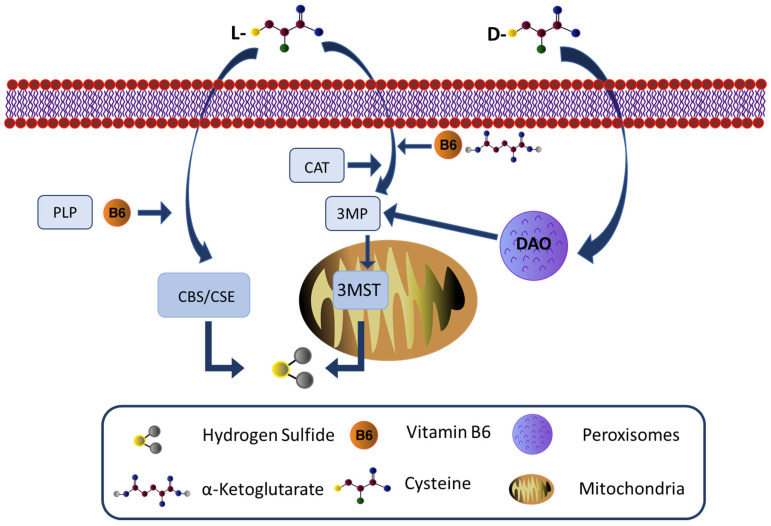
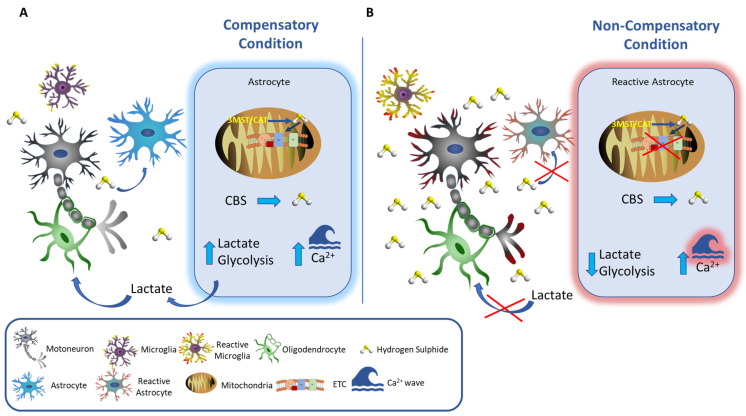
Ever since its presence was reported in the brain, the nature and role of hydrogen sulfide (HS) in the Central Nervous System (CNS) have changed. Consequently, HS has been elected as the third gas transmitter, along with carbon monoxide and nitric oxide, and a number of studies have focused on its neuromodulatory and protectant functions in physiological conditions. The research on HS has highlighted its many facets in the periphery and in the CNS, and its role as a double-faced compound, switching from protective to toxic depending on its concentration. In this review, we will focus on the bell-shaped nature of HS as an angiogenic factor and as a molecule released by glial cells (mainly astrocytes) and non-neuronal cells acting on the surrounding environment (paracrine) or on the releasing cells themselves (autocrine). Finally, we will discuss its role in Amyotrophic Lateral Sclerosis, a paradigm of a neurodegenerative disease.
自从在大脑中发现其存在以来,硫化氢 (HS) 在中枢神经系统 (CNS) 中的性质和作用已经发生了变化。因此,HS 已被选为继一氧化碳和一氧化氮之后的第三种气体递质,许多研究都集中在其在生理条件下的神经调节和保护作用上。对 HS 的研究突出了其在外周和中枢神经系统中的多方面作用,以及其作为双面化合物的作用,根据其浓度从保护作用转变为毒性作用。在这篇综述中,我们将重点介绍 HS 作为血管生成因子的钟形性质,以及作为由神经胶质细胞(主要是星形胶质细胞)和非神经元细胞释放的分子的作用,这些分子作用于周围环境(旁分泌)或释放细胞本身(自分泌)。最后,我们将讨论其在肌萎缩侧索硬化症中的作用,这是一种神经退行性疾病的范例。