• 文献检索
  • 文档翻译
  • 深度研究
  • 学术资讯
  • Suppr Zotero 插件Zotero 插件
  • 邀请有礼
  • 套餐&价格
  • 历史记录
应用&插件
Suppr Zotero 插件Zotero 插件浏览器插件Mac 客户端Windows 客户端微信小程序
定价
高级版会员购买积分包购买API积分包
服务
文献检索文档翻译深度研究API 文档MCP 服务
关于我们
关于 Suppr公司介绍联系我们用户协议隐私条款
关注我们

Suppr 超能文献

核心技术专利:CN118964589B侵权必究
粤ICP备2023148730 号-1Suppr @ 2026

文献检索

告别复杂PubMed语法,用中文像聊天一样搜索,搜遍4000万医学文献。AI智能推荐,让科研检索更轻松。

立即免费搜索

文件翻译

保留排版,准确专业,支持PDF/Word/PPT等文件格式,支持 12+语言互译。

免费翻译文档

深度研究

AI帮你快速写综述,25分钟生成高质量综述,智能提取关键信息,辅助科研写作。

立即免费体验

广义线性模型预测塞内加尔三个疟疾流行地区的疟疾发病率。

Generalized Linear Models to Forecast Malaria Incidence in Three Endemic Regions of Senegal.

机构信息

ICTEAM Institute, UCLouvain, B-1348 Louvain-la-Neuve, Belgium.

Molecular Biology Unit/Bacteriology-Virology Lab, CNHU A. Le Dantec/Université Cheikh Anta Diop, Dakar Fann P.O. Box 5005, Senegal.

出版信息

Int J Environ Res Public Health. 2023 Jul 5;20(13):6303. doi: 10.3390/ijerph20136303.

DOI:10.3390/ijerph20136303
PMID:37444150
原文链接:https://pmc.ncbi.nlm.nih.gov/articles/PMC10341430/
Abstract

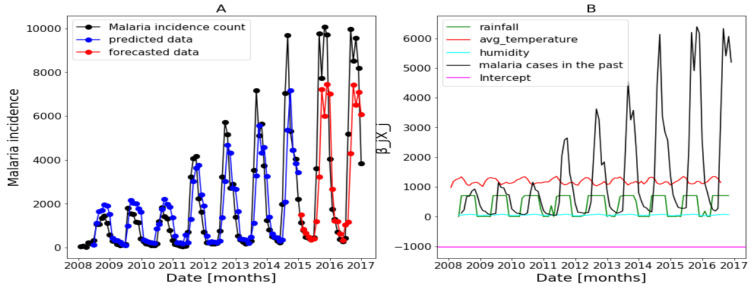
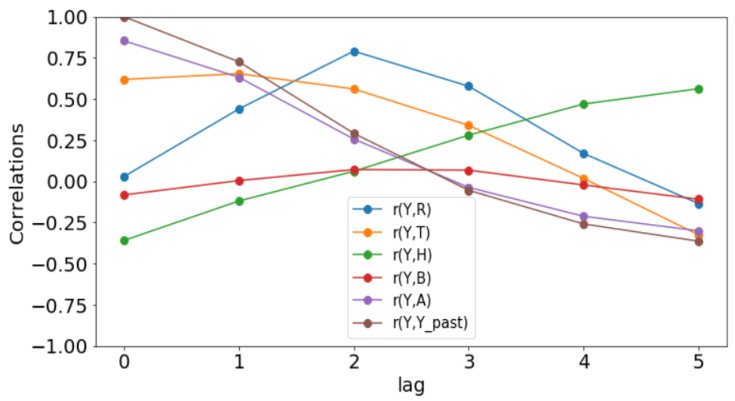
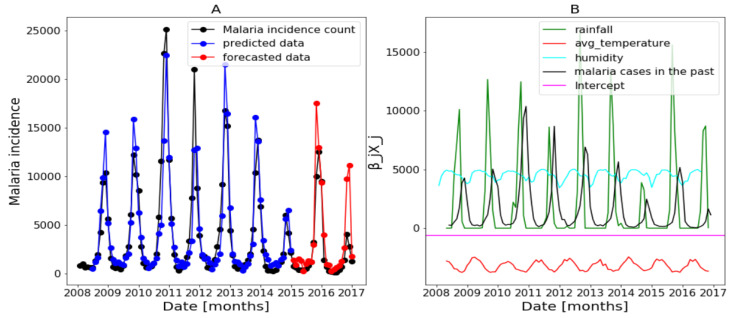
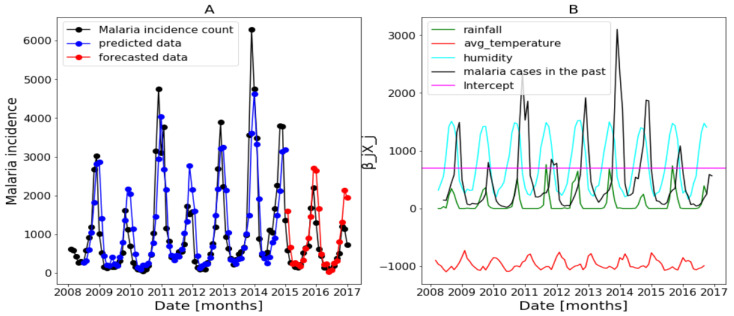
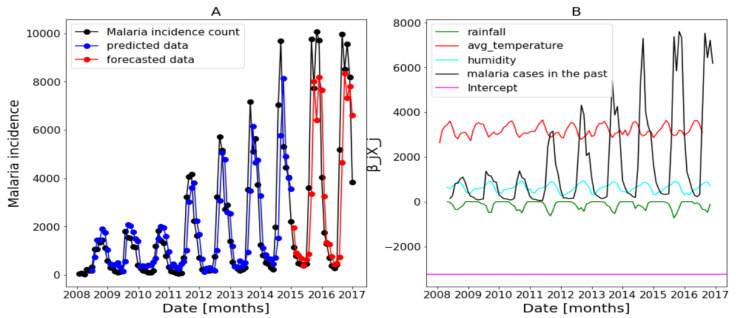
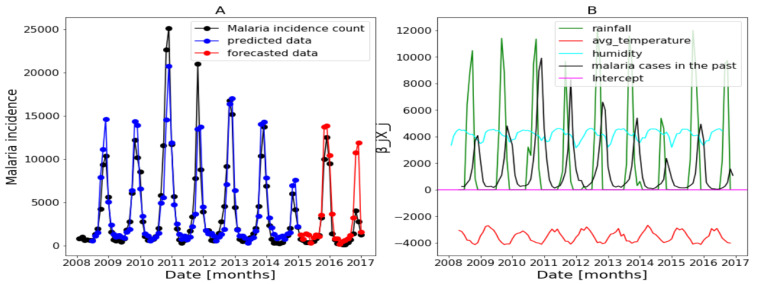
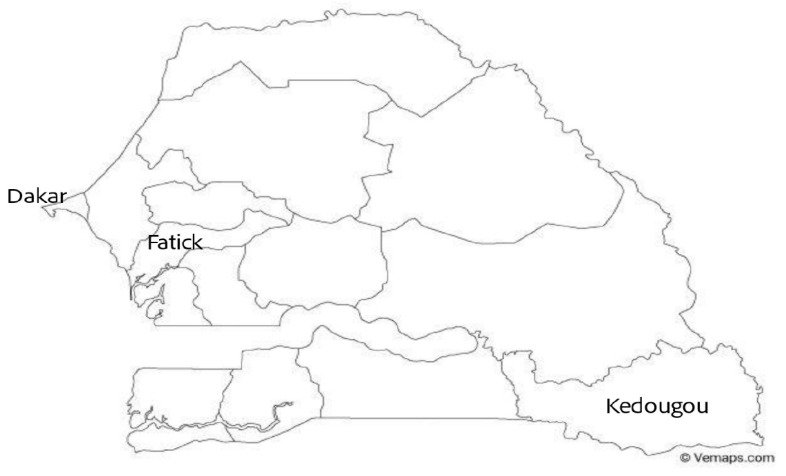
Affecting millions of individuals yearly, malaria is one of the most dangerous and deadly tropical diseases. It is a major global public health problem, with an alarming spread of parasite transmitted by mosquito (Anophele). Various studies have emerged that construct a mathematical and statistical model for malaria incidence forecasting. In this study, we formulate a generalized linear model based on Poisson and negative binomial regression models for forecasting malaria incidence, taking into account climatic variables (such as the monthly rainfall, average temperature, relative humidity), other predictor variables (the insecticide-treated bed-nets (ITNs) distribution and Artemisinin-based combination therapy (ACT)) and the history of malaria incidence in Dakar, Fatick and Kedougou, three different endemic regions of Senegal. A forecasting algorithm is developed by taking the meteorological explanatory variable Xj at time t-𝓁j, where is the observation time and 𝓁j is the lag in Xj that maximizes its correlation with the malaria incidence. We saturated the rainfall in order to reduce over-forecasting. The results of this study show that the Poisson regression model is more adequate than the negative binomial regression model to forecast accurately the malaria incidence taking into account some explanatory variables. The application of the saturation where the over-forecasting was observed noticeably increases the quality of the forecasts.

摘要

每年影响数百万人,疟疾是最危险和致命的热带疾病之一。它是一个主要的全球公共卫生问题,寄生虫通过蚊子(疟蚊属)传播的情况令人震惊。已经出现了各种研究,构建了疟疾发病率预测的数学和统计模型。在这项研究中,我们基于泊松和负二项回归模型制定了一个广义线性模型,以预测达喀尔、法蒂克和盖迪奥三个塞内加尔不同流行地区的疟疾发病率,考虑到气候变量(如每月降雨量、平均温度、相对湿度)、其他预测变量(经杀虫剂处理的蚊帐(ITN)分布和青蒿素为基础的联合疗法(ACT))以及疟疾发病率的历史。通过在气象解释变量 Xj 在时间 t-𝓁j 时采取预测算法,其中 是观察时间, 𝓁j 是 Xj 的滞后时间,它与疟疾发病率的相关性最大。我们饱和了降雨量,以减少过度预测。这项研究的结果表明,泊松回归模型比负二项回归模型更适合在考虑一些解释变量的情况下准确预测疟疾发病率。在观察到过度预测的情况下应用饱和度明显提高了预测的质量。
https://cdn.ncbi.nlm.nih.gov/pmc/blobs/4cc2/10341430/03b6f1528190/ijerph-20-06303-g021.jpg
https://cdn.ncbi.nlm.nih.gov/pmc/blobs/4cc2/10341430/48ce753b773e/ijerph-20-06303-g001.jpg
https://cdn.ncbi.nlm.nih.gov/pmc/blobs/4cc2/10341430/d748a9e445ae/ijerph-20-06303-g002.jpg
https://cdn.ncbi.nlm.nih.gov/pmc/blobs/4cc2/10341430/a6a3b1e257e5/ijerph-20-06303-g003.jpg
https://cdn.ncbi.nlm.nih.gov/pmc/blobs/4cc2/10341430/1dc0395a151b/ijerph-20-06303-g004.jpg
https://cdn.ncbi.nlm.nih.gov/pmc/blobs/4cc2/10341430/61b66479736b/ijerph-20-06303-g005.jpg
https://cdn.ncbi.nlm.nih.gov/pmc/blobs/4cc2/10341430/d3dd05217a2b/ijerph-20-06303-g006.jpg
https://cdn.ncbi.nlm.nih.gov/pmc/blobs/4cc2/10341430/7bf034f4b19f/ijerph-20-06303-g007.jpg
https://cdn.ncbi.nlm.nih.gov/pmc/blobs/4cc2/10341430/5546429f0cb6/ijerph-20-06303-g008.jpg
https://cdn.ncbi.nlm.nih.gov/pmc/blobs/4cc2/10341430/3209c567dd03/ijerph-20-06303-g009.jpg
https://cdn.ncbi.nlm.nih.gov/pmc/blobs/4cc2/10341430/c40e0d25900b/ijerph-20-06303-g010.jpg
https://cdn.ncbi.nlm.nih.gov/pmc/blobs/4cc2/10341430/0125f2ce3dbd/ijerph-20-06303-g011.jpg
https://cdn.ncbi.nlm.nih.gov/pmc/blobs/4cc2/10341430/3ff263d187e8/ijerph-20-06303-g012.jpg
https://cdn.ncbi.nlm.nih.gov/pmc/blobs/4cc2/10341430/bd3a5fa0ac39/ijerph-20-06303-g013.jpg
https://cdn.ncbi.nlm.nih.gov/pmc/blobs/4cc2/10341430/ce61444ee707/ijerph-20-06303-g014.jpg
https://cdn.ncbi.nlm.nih.gov/pmc/blobs/4cc2/10341430/5d106af82f01/ijerph-20-06303-g015a.jpg
https://cdn.ncbi.nlm.nih.gov/pmc/blobs/4cc2/10341430/7912cf103111/ijerph-20-06303-g016.jpg
https://cdn.ncbi.nlm.nih.gov/pmc/blobs/4cc2/10341430/b85e2906e279/ijerph-20-06303-g017.jpg
https://cdn.ncbi.nlm.nih.gov/pmc/blobs/4cc2/10341430/aeb252eaac39/ijerph-20-06303-g018.jpg
https://cdn.ncbi.nlm.nih.gov/pmc/blobs/4cc2/10341430/a460fc1faf64/ijerph-20-06303-g019.jpg
https://cdn.ncbi.nlm.nih.gov/pmc/blobs/4cc2/10341430/3e80080853df/ijerph-20-06303-g020.jpg
https://cdn.ncbi.nlm.nih.gov/pmc/blobs/4cc2/10341430/03b6f1528190/ijerph-20-06303-g021.jpg
https://cdn.ncbi.nlm.nih.gov/pmc/blobs/4cc2/10341430/48ce753b773e/ijerph-20-06303-g001.jpg
https://cdn.ncbi.nlm.nih.gov/pmc/blobs/4cc2/10341430/d748a9e445ae/ijerph-20-06303-g002.jpg
https://cdn.ncbi.nlm.nih.gov/pmc/blobs/4cc2/10341430/a6a3b1e257e5/ijerph-20-06303-g003.jpg
https://cdn.ncbi.nlm.nih.gov/pmc/blobs/4cc2/10341430/1dc0395a151b/ijerph-20-06303-g004.jpg
https://cdn.ncbi.nlm.nih.gov/pmc/blobs/4cc2/10341430/61b66479736b/ijerph-20-06303-g005.jpg
https://cdn.ncbi.nlm.nih.gov/pmc/blobs/4cc2/10341430/d3dd05217a2b/ijerph-20-06303-g006.jpg
https://cdn.ncbi.nlm.nih.gov/pmc/blobs/4cc2/10341430/7bf034f4b19f/ijerph-20-06303-g007.jpg
https://cdn.ncbi.nlm.nih.gov/pmc/blobs/4cc2/10341430/5546429f0cb6/ijerph-20-06303-g008.jpg
https://cdn.ncbi.nlm.nih.gov/pmc/blobs/4cc2/10341430/3209c567dd03/ijerph-20-06303-g009.jpg
https://cdn.ncbi.nlm.nih.gov/pmc/blobs/4cc2/10341430/c40e0d25900b/ijerph-20-06303-g010.jpg
https://cdn.ncbi.nlm.nih.gov/pmc/blobs/4cc2/10341430/0125f2ce3dbd/ijerph-20-06303-g011.jpg
https://cdn.ncbi.nlm.nih.gov/pmc/blobs/4cc2/10341430/3ff263d187e8/ijerph-20-06303-g012.jpg
https://cdn.ncbi.nlm.nih.gov/pmc/blobs/4cc2/10341430/bd3a5fa0ac39/ijerph-20-06303-g013.jpg
https://cdn.ncbi.nlm.nih.gov/pmc/blobs/4cc2/10341430/ce61444ee707/ijerph-20-06303-g014.jpg
https://cdn.ncbi.nlm.nih.gov/pmc/blobs/4cc2/10341430/5d106af82f01/ijerph-20-06303-g015a.jpg
https://cdn.ncbi.nlm.nih.gov/pmc/blobs/4cc2/10341430/7912cf103111/ijerph-20-06303-g016.jpg
https://cdn.ncbi.nlm.nih.gov/pmc/blobs/4cc2/10341430/b85e2906e279/ijerph-20-06303-g017.jpg
https://cdn.ncbi.nlm.nih.gov/pmc/blobs/4cc2/10341430/aeb252eaac39/ijerph-20-06303-g018.jpg
https://cdn.ncbi.nlm.nih.gov/pmc/blobs/4cc2/10341430/a460fc1faf64/ijerph-20-06303-g019.jpg
https://cdn.ncbi.nlm.nih.gov/pmc/blobs/4cc2/10341430/3e80080853df/ijerph-20-06303-g020.jpg
https://cdn.ncbi.nlm.nih.gov/pmc/blobs/4cc2/10341430/03b6f1528190/ijerph-20-06303-g021.jpg

相似文献

1
Generalized Linear Models to Forecast Malaria Incidence in Three Endemic Regions of Senegal.广义线性模型预测塞内加尔三个疟疾流行地区的疟疾发病率。
Int J Environ Res Public Health. 2023 Jul 5;20(13):6303. doi: 10.3390/ijerph20136303.
2
Temporal correlation analysis between malaria and meteorological factors in Motuo County, Tibet.西藏墨脱县疟疾与气象因素的时间相关性分析。
Malar J. 2011 Mar 4;10:54. doi: 10.1186/1475-2875-10-54.
3
Development of temporal modelling for forecasting and prediction of malaria infections using time-series and ARIMAX analyses: a case study in endemic districts of Bhutan.使用时间序列和 ARIMAX 分析进行疟疾感染的预测和预报的时间模型开发:来自不丹流行地区的案例研究。
Malar J. 2010 Sep 3;9:251. doi: 10.1186/1475-2875-9-251.
4
Folic acid supplementation and malaria susceptibility and severity among people taking antifolate antimalarial drugs in endemic areas.在流行地区,服用抗叶酸抗疟药物的人群中,叶酸补充剂与疟疾易感性和严重程度的关系。
Cochrane Database Syst Rev. 2022 Feb 1;2(2022):CD014217. doi: 10.1002/14651858.CD014217.
5
[Time-series analysis on the malaria morbidity affected by meteorological factors in Guangdong province].[广东省气象因素对疟疾发病影响的时间序列分析]
Zhonghua Yu Fang Yi Xue Za Zhi. 2012 Oct;46(10):892-7.
6
Effects of rainfall, temperature and topography on malaria incidence in elimination targeted district of Ethiopia.降雨、温度和地形对埃塞俄比亚消除目标区疟疾发病率的影响。
Malar J. 2021 Feb 19;20(1):104. doi: 10.1186/s12936-021-03641-1.
7
Forecasting malaria dynamics based on causal relations between control interventions, climatic factors, and disease incidence in western Kenya.基于肯尼亚西部控制干预措施、气候因素和疾病发病率之间的因果关系预测疟疾动态。
J Glob Health. 2024 Oct 11;14:04208. doi: 10.7189/jogh.14.04208.
8
Another challenge in malaria elimination efforts: the increase of malaria among adults after the implementation of long-lasting insecticide-treated nets (LLINs) in Dielmo, Senegal.消除疟疾工作面临的另一项挑战:在塞内加尔迪埃洛莫实施长效驱虫蚊帐(LLINs)后,成年人疟疾发病率上升。
Malar J. 2018 Oct 25;17(1):384. doi: 10.1186/s12936-018-2536-6.
9
The rise and fall of malaria in a West African rural community, Dielmo, Senegal, from 1990 to 2012: a 22 year longitudinal study.塞内加尔西部农村社区迪埃洛 1990 年至 2012 年疟疾的兴衰:一项 22 年的纵向研究。
Lancet Infect Dis. 2014 Jun;14(6):476-88. doi: 10.1016/S1473-3099(14)70712-1. Epub 2014 May 6.
10
Empirical model for estimating dengue incidence using temperature, rainfall, and relative humidity: a 19-year retrospective analysis in East Delhi.利用温度、降雨量和相对湿度估算登革热发病率的经验模型:东德里19年回顾性分析
Epidemiol Health. 2016 Nov 27;38:e2016052. doi: 10.4178/epih.e2016052. eCollection 2016.

引用本文的文献

1
Spatio-temporal modelling and prediction of malaria incidence in Mozambique using climatic indicators from 2001 to 2018.利用2001年至2018年的气候指标对莫桑比克疟疾发病率进行时空建模与预测
Sci Rep. 2025 Apr 8;15(1):11971. doi: 10.1038/s41598-025-97072-6.
2
Predicting malaria outbreak in The Gambia using machine learning techniques.利用机器学习技术预测冈比亚的疟疾疫情。
PLoS One. 2024 May 16;19(5):e0299386. doi: 10.1371/journal.pone.0299386. eCollection 2024.

本文引用的文献

1
Negative binomial mixed models for analyzing longitudinal CD4 count data.用于分析纵向 CD4 计数数据的负二项混合模型。
Sci Rep. 2020 Oct 7;10(1):16742. doi: 10.1038/s41598-020-73883-7.
2
Modelling Malaria Incidence in the Limpopo Province, South Africa: Comparison of Classical and Bayesian Methods of Estimation.南非林波波省疟疾发病率建模:经典与贝叶斯估计方法比较。
Int J Environ Res Public Health. 2020 Jul 13;17(14):5016. doi: 10.3390/ijerph17145016.
3
A Dynamical and Zero-Inflated Negative Binomial Regression Modelling of Malaria Incidence in Limpopo Province, South Africa.
南非林波波省疟疾发病率的动态零膨胀负二项回归模型。
Int J Environ Res Public Health. 2019 Jun 5;16(11):2000. doi: 10.3390/ijerph16112000.
4
Scaling up malaria intervention "packages" in Senegal: using cost effectiveness data for improving allocative efficiency and programmatic decision-making.在塞内加尔扩大疟疾干预“套餐”:利用成本效益数据提高配置效率和决策制定。
Malar J. 2018 Apr 10;17(1):159. doi: 10.1186/s12936-018-2305-6.
5
A Weather-Based Prediction Model of Malaria Prevalence in Amenfi West District, Ghana.加纳阿门菲西区基于天气的疟疾流行预测模型
Malar Res Treat. 2017;2017:7820454. doi: 10.1155/2017/7820454. Epub 2017 Jan 31.
6
Analysis of a temperature- and rainfall-dependent model for malaria transmission dynamics.疟疾传播动力学的温度和降雨依赖模型分析
Math Biosci. 2017 May;287:72-92. doi: 10.1016/j.mbs.2016.03.013. Epub 2016 Apr 21.
7
Remote sensing-based time series models for malaria early warning in the highlands of Ethiopia.基于遥感的时间序列模型在埃塞俄比亚高地进行疟疾预警。
Malar J. 2012 May 14;11:165. doi: 10.1186/1475-2875-11-165.
8
Estimating the burden of malaria in Senegal: Bayesian zero-inflated binomial geostatistical modeling of the MIS 2008 data.估算塞内加尔的疟疾负担:基于 MIS 2008 数据的贝叶斯零膨胀二项式地统计学建模。
PLoS One. 2012;7(3):e32625. doi: 10.1371/journal.pone.0032625. Epub 2012 Mar 5.
9
Point and interval estimation of the population size using a zero-truncated negative binomial regression model.使用零截断负二项回归模型对总体规模进行点估计和区间估计。
Biom J. 2008 Dec;50(6):1035-50. doi: 10.1002/bimj.200810455.
10
Spatio-temporal analysis of the role of climate in inter-annual variation of malaria incidence in Zimbabwe.津巴布韦疟疾发病率年际变化中气候作用的时空分析
Int J Health Geogr. 2006 May 15;5:20. doi: 10.1186/1476-072X-5-20.