Eckerdt Frank, Platanias Leonidas C
Robert H. Lurie Comprehensive Cancer Center of Northwestern University, Chicago, IL 60611, USA.
Division of Hematology-Oncology, Department of Medicine, Northwestern University, Chicago, IL 60611, USA.
Cancers (Basel). 2023 Jul 1;15(13):3458. doi: 10.3390/cancers15133458.
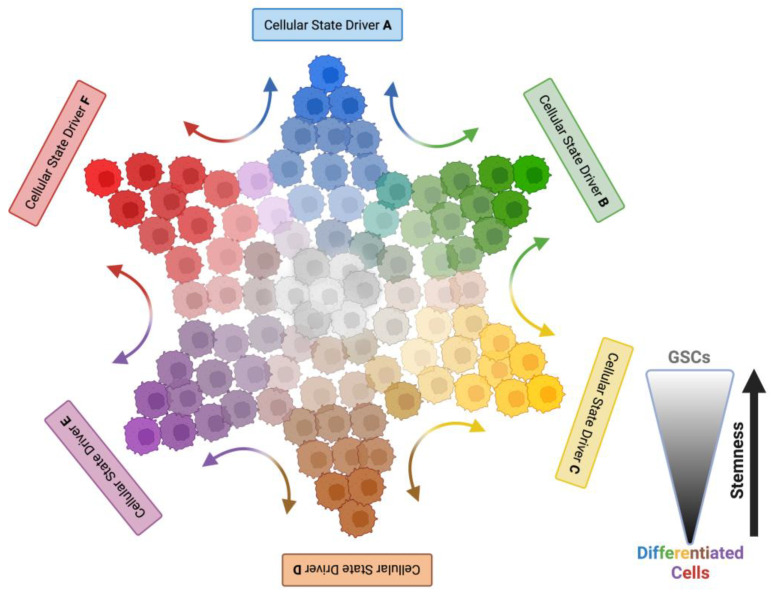
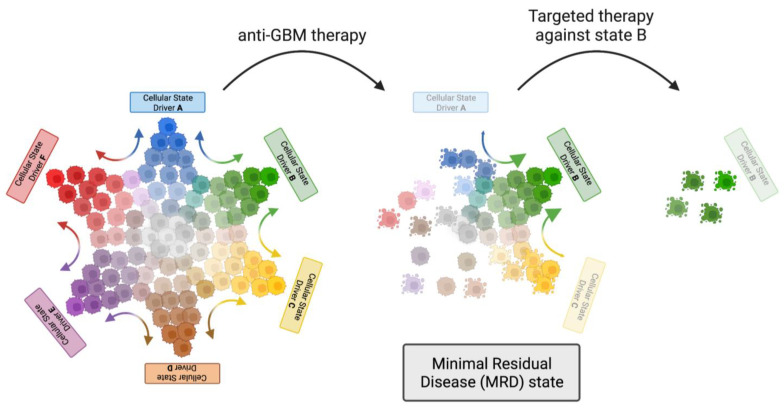
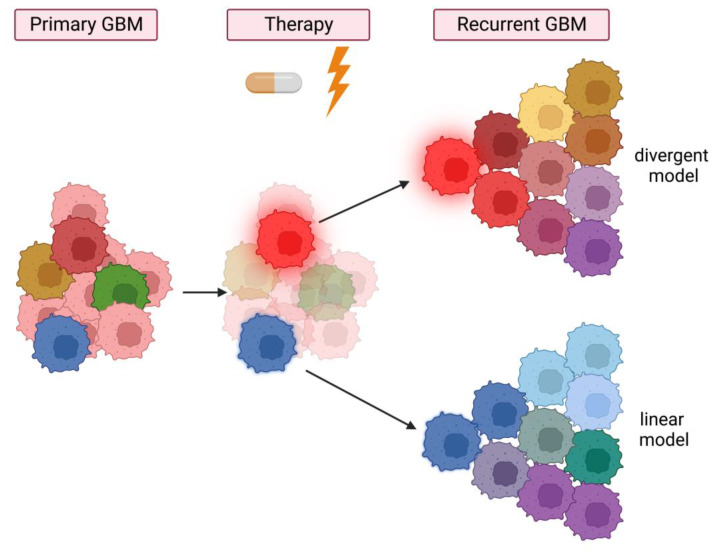
Since their discovery at the beginning of this millennium, glioma stem cells (GSCs) have sparked extensive research and an energetic scientific debate about their contribution to glioblastoma (GBM) initiation, progression, relapse, and resistance. Different molecular subtypes of GBM coexist within the same tumor, and they display differential sensitivity to chemotherapy. GSCs contribute to tumor heterogeneity and recapitulate pathway alterations described for the three GBM subtypes found in patients. GSCs show a high degree of plasticity, allowing for interconversion between different molecular GBM subtypes, with distinct proliferative potential, and different degrees of self-renewal and differentiation. This high degree of plasticity permits adaptation to the environmental changes introduced by chemo- and radiation therapy. Evidence from mouse models indicates that GSCs repopulate brain tumors after therapeutic intervention, and due to GSC plasticity, they reconstitute heterogeneity in recurrent tumors. GSCs are also inherently resilient to standard-of-care therapy, and mechanisms of resistance include enhanced DNA damage repair, MGMT promoter demethylation, autophagy, impaired induction of apoptosis, metabolic adaptation, chemoresistance, and immune evasion. The remarkable oncogenic properties of GSCs have inspired considerable interest in better understanding GSC biology and functions, as they might represent attractive targets to advance the currently limited therapeutic options for GBM patients. This has raised expectations for the development of novel targeted therapeutic approaches, including targeting GSC plasticity, chimeric antigen receptor T (CAR T) cells, and oncolytic viruses. In this review, we focus on the role of GSCs as drivers of GBM and therapy resistance, and we discuss how insights into GSC biology and plasticity might advance GSC-directed curative approaches.
自本世纪初被发现以来,胶质瘤干细胞(GSCs)引发了广泛的研究以及关于它们在胶质母细胞瘤(GBM)起始、进展、复发和耐药性中所起作用的激烈科学辩论。GBM的不同分子亚型在同一肿瘤中共存,并且它们对化疗表现出不同的敏感性。GSCs导致肿瘤异质性,并重现了在患者中发现的三种GBM亚型所描述的信号通路改变。GSCs表现出高度的可塑性,允许在不同分子GBM亚型之间相互转换,具有不同的增殖潜能以及不同程度的自我更新和分化能力。这种高度的可塑性使得它们能够适应化疗和放疗所带来的环境变化。来自小鼠模型的证据表明,GSCs在治疗干预后会重新填充脑肿瘤,并且由于GSC的可塑性,它们会在复发性肿瘤中重建异质性。GSCs对标准治疗也具有内在的抗性,其抗性机制包括增强的DNA损伤修复、MGMT启动子去甲基化、自噬、凋亡诱导受损、代谢适应、化疗耐药和免疫逃逸。GSCs显著的致癌特性激发了人们对更好地理解GSC生物学和功能的浓厚兴趣,因为它们可能是推进目前GBM患者有限治疗选择的有吸引力的靶点。这引发了人们对开发新型靶向治疗方法的期望,包括靶向GSC可塑性、嵌合抗原受体T(CAR T)细胞和溶瘤病毒。在这篇综述中,我们聚焦于GSCs作为GBM驱动因素和治疗抗性的作用,并讨论对GSC生物学和可塑性的深入了解如何可能推进针对GSC的治愈性方法。